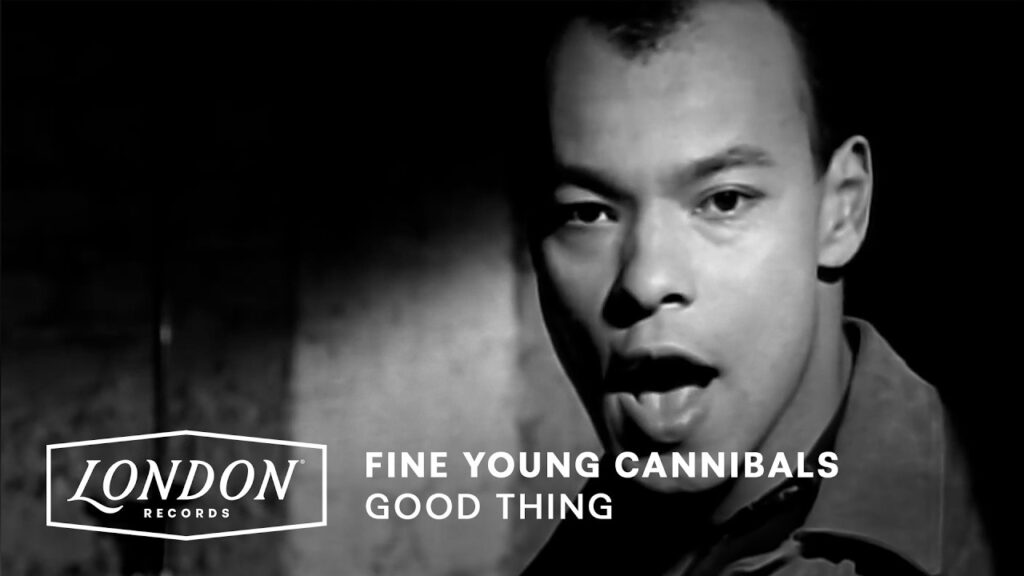
During the late 1980s, pop music was filled with polished production, synthesizers, and dance beats, but few bands managed to blend soul, rock, funk, and new wave as effortlessly as Fine Young Cannibals. Their 1989 single “Good Thing” became one of the defining hits of the era, showcasing the band’s unique sound and the unmistakable voice of Roland Gift. Bursting with infectious energy, razor-sharp rhythms, and vintage soul influences, the song climbed to the top of the charts and helped establish the trio as one of the most distinctive acts of the decade.
More than thirty-five years after its release, “Good Thing” remains a staple of 1980s playlists and classic pop radio. Its combination of retro influences and contemporary production has allowed it to age remarkably well, sounding just as vibrant today as it did when it first dominated the airwaves.
Fine Young Cannibals formed in Birmingham, England, in 1984 after bassist David Steele and guitarist Andy Cox left the ska band The Beat following its breakup. Looking for a fresh musical direction, the pair teamed up with actor and singer Roland Gift, whose expressive and instantly recognizable voice gave the new group a distinctive identity.
Their self-titled debut album introduced audiences to an eclectic mix of soul, pop, rock, and rhythm and blues, producing the international hit “Johnny Come Home” and a memorable cover of Elvis Presley’s “Suspicious Minds.” Although the debut was successful, the band took several years before releasing a follow-up, carefully refining their sound and experimenting with new recording techniques.
That patience paid off spectacularly. Their second album, The Raw & the Cooked, became one of the biggest releases of 1989, and “Good Thing” served as one of its standout tracks.
From its opening guitar lick, “Good Thing” immediately grabs the listener’s attention. The arrangement combines crisp electric guitar, punchy bass, energetic percussion, and subtle horn-inspired keyboard textures into a groove that feels simultaneously vintage and modern.
Producer David Z, best known for his work with artists including Prince, helped the band create a sound that honored classic American soul records while embracing contemporary pop production. Rather than burying the instruments beneath layers of effects, the mix emphasizes clarity and rhythm, allowing each musical element to shine.
The rhythm section is particularly impressive. Steele’s bass lines provide a constantly moving foundation, while the drums maintain an irresistible danceable pulse throughout the recording. Andy Cox’s economical guitar work demonstrates remarkable restraint, adding short, memorable phrases instead of flashy solos.
The arrangement constantly pushes forward without becoming cluttered. Every instrument has a purpose, creating a recording that feels lean, energetic, and remarkably fresh.
At the center of “Good Thing” is Roland Gift’s extraordinary vocal performance. Possessing one of the most distinctive voices in pop music, Gift effortlessly blends the emotional intensity of classic soul singers with the precision of contemporary pop.
His slightly strained, high-pitched tenor conveys urgency without sounding forced. Every phrase carries personality, making it nearly impossible to mistake him for any other vocalist of the era. That uniqueness became one of Fine Young Cannibals’ greatest strengths.
Gift also demonstrates exceptional control throughout the song. He shifts between smooth verses and explosive choruses with ease, injecting excitement into every line while maintaining perfect rhythmic precision. His performance transforms what could have been a simple dance track into something emotionally engaging.
Lyrically, “Good Thing” examines the uncertainty that often accompanies romantic relationships. The narrator questions whether a promising relationship will endure while expressing hope that genuine love can overcome doubt and misunderstanding. Rather than presenting romance as simple or effortless, the song acknowledges the emotional risks involved in opening one’s heart.
The lyrics strike an effective balance between optimism and caution. That emotional complexity gives the song greater depth than many dance-oriented hits of its era, allowing listeners to connect with both its infectious rhythm and its underlying message.
Released as the second single from The Raw & the Cooked in early 1989, “Good Thing” quickly became a worldwide success. In the United States, it reached No. 1 on the Billboard Hot 100, becoming the band’s second consecutive chart-topper following “She Drives Me Crazy.” Achieving back-to-back No. 1 singles was an extraordinary accomplishment for a British band with such an unconventional sound.
The song also performed strongly in Canada, Australia, New Zealand, and throughout Europe, helping propel The Raw & the Cooked to multi-platinum sales around the world. The album’s blend of soul, pop, dance, and alternative influences attracted an unusually broad audience, appealing to fans across multiple musical genres.
The music video complemented the song’s upbeat energy with colorful visuals and stylish performances that reflected the band’s quirky personality. During MTV’s peak years, the clip received heavy rotation, introducing Fine Young Cannibals to millions of viewers and further expanding their international popularity.
Although Fine Young Cannibals released only two studio albums before disbanding in the early 1990s, their influence has remained surprisingly strong. Their ability to merge vintage soul with contemporary production anticipated later artists who successfully blended retro influences with modern pop. Bands and producers continue to cite The Raw & the Cooked as an example of how classic musical styles can be reimagined without losing their authenticity.
“Good Thing” has also maintained a steady presence in films, television shows, commercials, and streaming playlists devoted to the best music of the 1980s. Its energetic groove makes it equally effective on the dance floor and as a nostalgic reminder of one of pop music’s most creative periods.
Perhaps its greatest achievement is how effortlessly it avoids feeling dated. While many late-1980s productions are instantly recognizable because of fashionable synthesizer sounds or studio effects, “Good Thing” relies primarily on timeless musicianship, soulful vocals, and exceptional songwriting. As a result, it continues to sound lively and contemporary decades after its release.
Today, “Good Thing” stands as one of Fine Young Cannibals’ defining recordings and one of the finest pop-soul singles of the 1980s. Its irresistible rhythm, inventive production, memorable melody, and Roland Gift’s unforgettable vocal performance combine to create a song that remains every bit as enjoyable as it was upon release.
For a band with a relatively brief recording career, Fine Young Cannibals left an extraordinary legacy. “Good Thing” demonstrates exactly why their music continues to find new audiences: it is stylish without being trendy, soulful without being nostalgic, and endlessly catchy without sacrificing substance. More than thirty-five years later, it remains exactly what its title promises—a very good thing indeed.
This post has already been read 85 times!