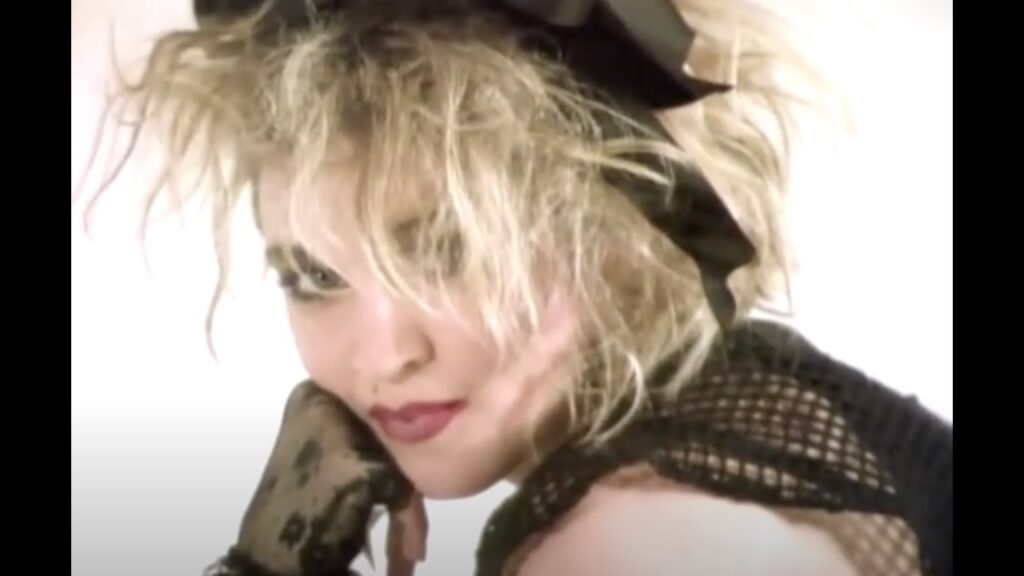
Before Madonna became the undisputed Queen of Pop, she was a determined young artist fighting to establish herself in a rapidly changing music industry. By 1983, dance music, new wave, and post-disco sounds were dominating clubs, but few performers possessed the ambition, charisma, and instinct for reinvention that Madonna brought to the scene. Among the songs that introduced her to the world, “Lucky Star” stands out as one of the most important. Released as the fifth and final single from her self-titled debut album in 1984, it became the breakthrough hit that launched her toward international superstardom.
With its irresistible groove, sparkling synthesizers, playful lyrics, and unforgettable hook, “Lucky Star” captured everything that would define Madonna’s career: confidence, optimism, danceable pop, and an uncanny ability to create songs that stayed in listeners’ heads long after they ended. More than forty years later, it remains one of the signature recordings from the early days of one of popular music’s most influential careers.
Madonna Louise Ciccone arrived in New York City in 1978 with little money but enormous determination. Originally hoping to become a professional dancer, she soon found herself drawn toward songwriting and performing. After playing in several bands, including Breakfast Club and Emmy, she began recording dance-oriented demos that caught the attention of DJ and producer Mark Kamins.
Kamins introduced Madonna to Seymour Stein of Sire Records, who signed the young singer despite her limited recording experience. It proved to be one of the smartest decisions in pop music history.
Her debut singles, “Everybody” and “Burning Up,” became popular in dance clubs, establishing Madonna as an exciting new voice. However, mainstream success remained elusive. That changed with the release of her debut album, Madonna, which steadily gained momentum through a series of increasingly successful singles.
“Lucky Star” arrived at exactly the right moment, becoming the song that elevated Madonna from a rising dance artist to a genuine pop sensation.
Musically, “Lucky Star” perfectly captures the sound of early-1980s dance-pop while maintaining a freshness that still feels infectious today. Built around bright synthesizers, crisp drum machines, funky bass lines, and clean rhythm guitar, the arrangement balances electronic production with an undeniable sense of groove.
Producer Reggie Lucas initially handled much of the album’s production, although Madonna later expressed dissatisfaction with portions of the mixes. John “Jellybean” Benitez, who became both an important collaborator and Madonna’s boyfriend at the time, contributed additional remix work that helped shape the single’s final sound.
The result is sleek without feeling mechanical. Every instrument serves the song’s rhythm, creating an energetic backdrop that practically demands movement. Unlike many heavily layered productions of the decade, “Lucky Star” remains surprisingly uncluttered, allowing its memorable melody to take center stage.
The song also reflects Madonna’s growing confidence as a songwriter. She co-wrote the track herself, demonstrating early on that she intended to play an active creative role in her career rather than simply perform material written by others.
Madonna’s vocal performance is youthful, playful, and filled with personality. While she had not yet developed the broader vocal range heard on later recordings, she already possessed the qualities that made her instantly recognizable: expressive phrasing, rhythmic precision, and an ability to communicate confidence with effortless charm.
Rather than overwhelming the song with vocal power, she leans into its flirtatious spirit. Her delivery feels conversational and natural, perfectly matching the upbeat mood of the music. The slight edge in her voice adds character, making the performance feel authentic instead of polished to perfection.
The layered backing vocals contribute additional warmth, reinforcing the song’s joyful atmosphere while giving the chorus extra momentum. Even in these early recordings, Madonna understood how vocal arrangements could enhance a pop song without overshadowing its central hook.
Lyrically, “Lucky Star” is a lighthearted celebration of romantic attraction and emotional optimism. The narrator compares the object of her affection to a guiding star, expressing the excitement and happiness that accompany falling for someone special. Rather than focusing on heartbreak or uncertainty, the song radiates positivity and youthful enthusiasm.
Its straightforward approach proved to be one of its greatest strengths. Madonna delivered the lyrics with confidence and sincerity, making the emotions feel relatable rather than overly sentimental. The result was a song that appealed equally to dance club audiences and mainstream pop listeners.
Released in September 1984, “Lucky Star” became Madonna’s first Top 5 hit on the Billboard Hot 100, reaching No. 4. It also performed strongly on dance and international charts, helping establish her as one of the most exciting new artists in popular music.
The success of “Lucky Star” completed an extraordinary run of singles from her debut album, joining “Holiday,” “Borderline,” and “Burning Up” in turning Madonna into a multi-platinum success. More importantly, it laid the groundwork for what would become one of the most remarkable careers in music history.
The music video played an equally important role in the song’s success. Featuring Madonna dancing in a simple white outfit accented with black accessories, layered jewelry, lace gloves, and her now-iconic collection of bracelets and crucifixes, the video became a sensation on MTV. Her fashion choices quickly influenced millions of young fans around the world, helping establish Madonna as not only a musical star but also a cultural trendsetter.
Unlike many elaborate videos of the era, “Lucky Star” relied primarily on Madonna’s charisma. She danced confidently in front of minimal sets, proving that a compelling performer could captivate audiences without expensive special effects. The clip helped define the visual identity that would accompany her meteoric rise throughout the remainder of the decade.
The song’s influence extends far beyond its chart performance. “Lucky Star” helped establish the blueprint for modern dance-pop, blending club rhythms with accessible pop songwriting in a way that countless artists would later emulate. It also marked the beginning of Madonna’s long tradition of combining memorable music with striking visual presentation.
Over the decades, “Lucky Star” has remained a staple of Madonna’s catalog. It appears regularly on greatest hits compilations, receives frequent airplay on classic pop stations, and continues to energize audiences whenever it appears in concert setlists or retrospective performances. New generations continue to discover it as an introduction to Madonna’s remarkable career.
Perhaps most importantly, the song captures a moment before global superstardom transformed its creator into one of the world’s most recognizable entertainers. There is an innocence and excitement in “Lucky Star” that reflects an artist standing at the threshold of history, full of confidence but still unaware of just how enormous her impact would become.
Today, “Lucky Star” stands as one of the essential pop singles of the 1980s. Its infectious melody, vibrant production, playful lyrics, and charismatic performance remain as enjoyable as ever. More than simply an early hit, it represents the moment Madonna’s extraordinary journey truly began.
Looking back, it’s easy to hear why the song connected so powerfully with audiences. It possessed everything listeners wanted from great pop music: a memorable chorus, irresistible rhythm, and an artist whose confidence was impossible to ignore. “Lucky Star” didn’t just introduce Madonna to the mainstream—it announced the arrival of a performer who would go on to redefine popular music for decades to come.
This post has already been read 80 times!