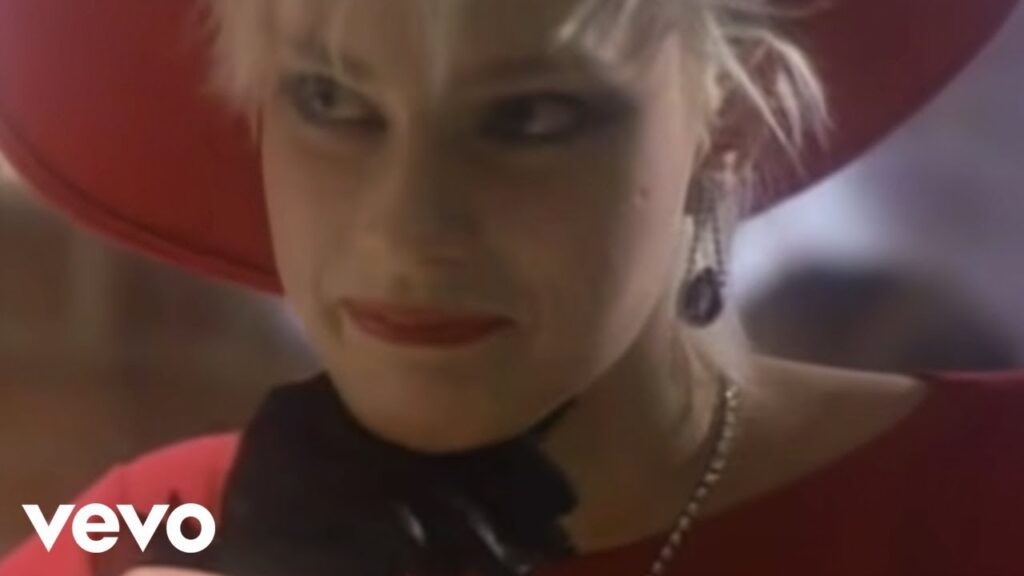
Every decade produces songs that perfectly capture the emotional tensions of their time, and “‘Til Tuesday’s “Voices Carry” stands among the finest examples of the 1980s. Released in 1985, the song blended the shimmering textures of new wave with deeply personal storytelling, creating a hit that resonated with listeners far beyond the band’s Boston roots. Anchored by Aimee Mann’s unforgettable vocal performance and an instantly recognizable keyboard hook, “Voices Carry” became one of the defining songs of the MTV era and remains one of the most enduring pop-rock classics of the decade.
Although ‘Til Tuesday never matched the commercial success of “Voices Carry,” the song has taken on a life of its own. Its themes of emotional suppression, unequal relationships, and finding the courage to speak up continue to feel remarkably relevant, allowing each new generation to discover its powerful message.
‘Til Tuesday formed in Boston in 1982, bringing together vocalist and bassist Aimee Mann, keyboardist Robert Holmes, drummer Michael Hausman, and guitarist Joey Pesce. The city’s thriving music scene had long been known for producing innovative rock acts, and the band quickly developed a loyal following through energetic live performances and Mann’s thoughtful songwriting.
Their breakthrough came after winning a local Battle of the Bands competition, earning them increased attention from record labels. Epic Records eventually signed the group, giving them the opportunity to record what would become their debut album, Voices Carry.
The title track immediately stood out. Combining emotional honesty with polished musicianship, it showcased a level of sophistication that separated the band from many of their contemporaries in the rapidly growing new wave movement.
One of the most interesting aspects of “Voices Carry” is the story behind its lyrics. Aimee Mann originally wrote the song about a relationship from a female perspective involving another woman. Before the album’s release, however, the lyrics were altered to present the relationship as male-female, a decision made largely because record executives believed the original version would be too controversial for mainstream audiences in the mid-1980s.
Even with those changes, the song retained its emotional intensity. Rather than losing its authenticity, the revised lyrics broadened the story into a universal examination of relationships in which one person attempts to control or silence the other.
Musically, “Voices Carry” is a superb example of mid-1980s new wave production. The recording opens with atmospheric synthesizers before gradually introducing crisp guitars, melodic bass, and tightly controlled drums. Every element is carefully arranged, creating a sense of restrained tension that mirrors the emotional conflict within the lyrics.
Producer Mike Thorne deserves significant credit for shaping the song’s distinctive sound. His production balances bright keyboard textures with sharp guitar lines, allowing the arrangement to remain spacious while steadily building toward its dramatic conclusion.
The rhythm section maintains a steady pulse throughout, never rushing the song’s emotional progression. Instead, each verse increases the sense of anticipation until the explosive final chorus provides a satisfying release.
Robert Holmes’ keyboard work plays a central role in establishing the song’s atmosphere. The shimmering synthesizer lines became one of the recording’s defining characteristics, helping create a sound that remains immediately recognizable decades later. Joey Pesce’s tasteful guitar work complements the keyboards beautifully, adding subtle textures rather than dominating the arrangement.
At the heart of “Voices Carry” is Aimee Mann’s remarkable vocal performance. Unlike many pop singers of the era who relied on dramatic vocal theatrics, Mann delivers the verses with quiet restraint, allowing the emotion to simmer beneath the surface.
Her calm, measured approach makes the song’s climactic moments even more powerful. As the tension builds, Mann gradually allows more frustration and determination into her voice without sacrificing precision or control. By the song’s unforgettable conclusion, her emotional release feels completely earned.
Mann’s unique vocal tone also contributed significantly to the band’s identity. Warm yet slightly detached, expressive yet understated, her voice perfectly suits songs exploring emotional complexity. “Voices Carry” remains one of the finest showcases of her abilities as both a singer and storyteller.
Lyrically, the song explores the experience of feeling silenced within a relationship. The narrator struggles with a partner who discourages emotional expression, creating an imbalance of power that becomes increasingly difficult to tolerate. Rather than responding with anger alone, the song focuses on the emotional isolation that results when someone’s thoughts and feelings are consistently dismissed.
Its message extends well beyond romantic relationships. Many listeners have connected the song to friendships, family dynamics, workplace situations, or any circumstance where they have felt pressured to remain quiet instead of expressing themselves honestly. That universality has played a major role in the song’s lasting appeal.
Released as the second single from the album in early 1985, “Voices Carry” became a major commercial breakthrough. It climbed to No. 8 on the Billboard Hot 100 and received extensive airplay across both pop and rock radio stations. The album itself earned widespread acclaim and established ‘Til Tuesday as one of the most promising new bands of the decade.
The music video elevated the song’s popularity even further. Directed by D.J. Webster, it portrayed a young woman whose controlling boyfriend repeatedly discourages her from expressing herself in public. The video’s memorable climax, set during a formal concert performance, became one of MTV’s defining moments of the mid-1980s. Its dramatic ending reinforced the song’s central theme of reclaiming one’s voice and refusing to remain silent.
Heavy rotation on MTV introduced millions of viewers to Aimee Mann and ‘Til Tuesday, helping transform “Voices Carry” into one of the year’s signature hits. The combination of a compelling narrative and an unforgettable performance made the video nearly as iconic as the song itself.
Although the band released additional albums and enjoyed modest success with songs like “Coming Up Close” and “What About Love,” they never duplicated the commercial impact of “Voices Carry.” After the group’s breakup in 1989, Aimee Mann embarked on a highly acclaimed solo career, earning widespread respect as one of America’s finest singer-songwriters.
The legacy of “Voices Carry,” however, has only grown stronger. It remains a staple of classic alternative and 1980s radio, frequently appearing on lists celebrating the greatest songs of the decade. Its emotional honesty and sophisticated songwriting continue to inspire musicians across multiple genres.
Today, “Voices Carry” stands as far more than a one-hit wonder. It is a beautifully crafted song that combines memorable melodies, intelligent lyrics, exceptional musicianship, and one of the most compelling vocal performances of the 1980s. More than forty years after its release, it continues to resonate with listeners who recognize the importance of being heard.
For ‘Til Tuesday, the song represented both a commercial triumph and an artistic statement. It proved that pop music could address complex emotional realities without sacrificing accessibility or memorable hooks. Through “Voices Carry,” the band created a timeless anthem about finding the courage to speak honestly—a message that remains every bit as powerful today as it was in 1985.
This post has already been read 81 times!