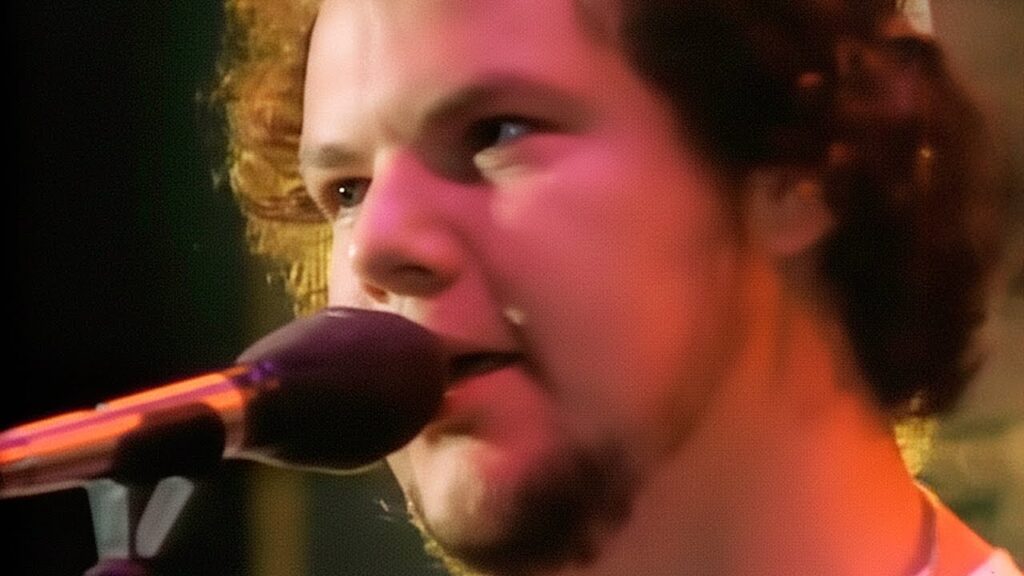
Movie theme songs have long occupied a special place in popular music, but only a select few have become classics that endure well beyond the films they were written to accompany. Christopher Cross’s “Arthur’s Theme (Best That You Can Do)” belongs firmly in that elite group. Released in 1981 for the romantic comedy Arthur, the song combined sophisticated songwriting, elegant production, and Cross’s unmistakably smooth vocals into one of the defining soft rock hits of the early 1980s. It not only became a chart-topping success but also earned an Academy Award for Best Original Song, cementing its place in both cinematic and musical history.
More than four decades later, “Arthur’s Theme” continues to evoke images of romance, New York City, and the hopeful belief that life’s greatest adventures are often found in unexpected places. Its timeless melody and uplifting message have ensured that it remains one of Christopher Cross’s most beloved recordings.
By 1981, Christopher Cross had become one of the biggest new stars in music. His self-titled debut album had been an extraordinary success, producing hit singles like “Ride Like the Wind” and the No. 1 smash “Sailing.” At the 1981 Grammy Awards, Cross accomplished something no artist had done before by winning Album of the Year, Record of the Year, Song of the Year, and Best New Artist in the same ceremony.
Following that remarkable breakthrough, Cross faced the challenge of maintaining his momentum. An opportunity arrived when producers of the Dudley Moore comedy Arthur sought a memorable song to accompany the film. Rather than simply writing a generic love ballad, an impressive team of songwriters came together to create something uniquely suited to the movie.
The song was written by Christopher Cross, Burt Bacharach, Carole Bayer Sager, and Peter Allen—a collaboration that brought together four remarkable musical talents. Bacharach contributed his signature sophistication, Bayer Sager crafted emotionally resonant lyrics, Allen added melodic ideas, and Cross supplied both musical contributions and the warm vocal performance that tied everything together.
The result was a song that perfectly captured the charm and optimism of the film while standing comfortably on its own as a pop classic.
Musically, “Arthur’s Theme” reflects the polished sophistication that defined much of Christopher Cross’s early work. Gentle piano, tasteful electric guitar, warm synthesizers, smooth bass, and restrained percussion blend seamlessly into a lush arrangement that feels both elegant and inviting.
Producer Burt Bacharach’s influence is evident throughout the recording. Known for his intricate chord progressions and sophisticated orchestration, Bacharach helped shape a song that moves effortlessly through subtle harmonic changes without ever losing its accessibility. The arrangement is rich yet never overcrowded, allowing each instrument to contribute without distracting from the melody.
The rhythm section provides a relaxed groove that gently carries the song forward, while carefully layered keyboards create a warm atmosphere. Delicate guitar fills add color without overwhelming the arrangement, reinforcing the recording’s understated beauty.
One of the song’s greatest strengths is its balance. Every production choice supports the melody, demonstrating that elegance often comes from restraint rather than excess.
Christopher Cross delivers a vocal performance that perfectly matches the song’s optimistic spirit. His smooth tenor remains one of the most recognizable voices in soft rock, characterized by warmth, clarity, and remarkable control.
Rather than relying on dramatic vocal flourishes, Cross sings with quiet confidence and sincerity. His conversational phrasing makes the lyrics feel personal, as though he is sharing a heartfelt reflection rather than delivering a theatrical performance.
As the song builds toward its soaring chorus, Cross increases the emotional intensity without sacrificing the relaxed tone established in the verses. His performance demonstrates that emotional impact doesn’t require overwhelming volume; sometimes subtlety communicates even more effectively.
The layered backing vocals further enrich the recording, providing depth while preserving the intimate quality that defines the song.
Lyrically, “Arthur’s Theme” celebrates optimism, perseverance, and the belief that love can transform even the most unlikely situations. Inspired by the film’s unconventional romance, the song suggests that happiness often comes from embracing life’s surprises rather than following carefully planned expectations.
Its message extends well beyond the movie itself. The lyrics encourage listeners to keep believing in possibility even when circumstances seem uncertain. That hopeful perspective has contributed greatly to the song’s lasting appeal, allowing audiences to connect with it regardless of whether they have seen Arthur.
One of the song’s most memorable lines was inspired by an unexpected moment. While traveling through New York, Christopher Cross reportedly saw a sign reading “When you get caught between the moon and New York City.” The phrase immediately captured his imagination and became the emotional centerpiece of the song, perfectly reflecting the magical atmosphere surrounding the film.
Released in September 1981, “Arthur’s Theme (Best That You Can Do)” quickly became a major commercial success. It reached No. 1 on the Billboard Hot 100 and performed strongly on the Adult Contemporary chart, where its smooth production and uplifting melody found an enthusiastic audience. Internationally, the song also enjoyed success in Canada, Australia, and several European countries.
Its greatest honor came in 1982 when it won the Academy Award for Best Original Song. The victory recognized not only its connection to the film but also the exceptional craftsmanship of its songwriting team. The song also received Golden Globe recognition and further solidified Christopher Cross’s reputation as one of the era’s premier soft rock artists.
The success of “Arthur’s Theme” demonstrated that movie songs could achieve lasting popularity without relying solely on the popularity of their films. While Arthur remains a beloved comedy, the song has taken on an independent life of its own, frequently appearing on soft rock compilations and playlists celebrating the best music of the 1980s.
Over the years, the recording has continued to receive regular airplay on adult contemporary and classic hits stations. It has also been featured in television programs, films, and retrospectives celebrating both Christopher Cross and the golden era of sophisticated pop songwriting.
Its influence can be heard in countless adult contemporary recordings that followed. The song’s graceful blend of pop accessibility, jazz-influenced harmony, and cinematic elegance became a model for later artists seeking to create emotionally rich yet commercially successful music.
Today, “Arthur’s Theme (Best That You Can Do)” stands as one of the finest movie theme songs ever written. Its beautiful melody, sophisticated arrangement, heartfelt lyrics, and Christopher Cross’s effortless vocal performance combine to create a recording that has lost none of its charm with the passing of time.
For Christopher Cross, the song represented another remarkable achievement during one of the most successful stretches of any artist’s career. Following the unprecedented triumph of his debut album, he proved that his success was no accident by delivering another timeless classic. More than forty years after it first topped the charts, “Arthur’s Theme” continues to remind listeners that life’s greatest rewards often arrive when we least expect them—and that sometimes the best we can do is simply believe in where the journey might lead.
This post has already been read 91 times!