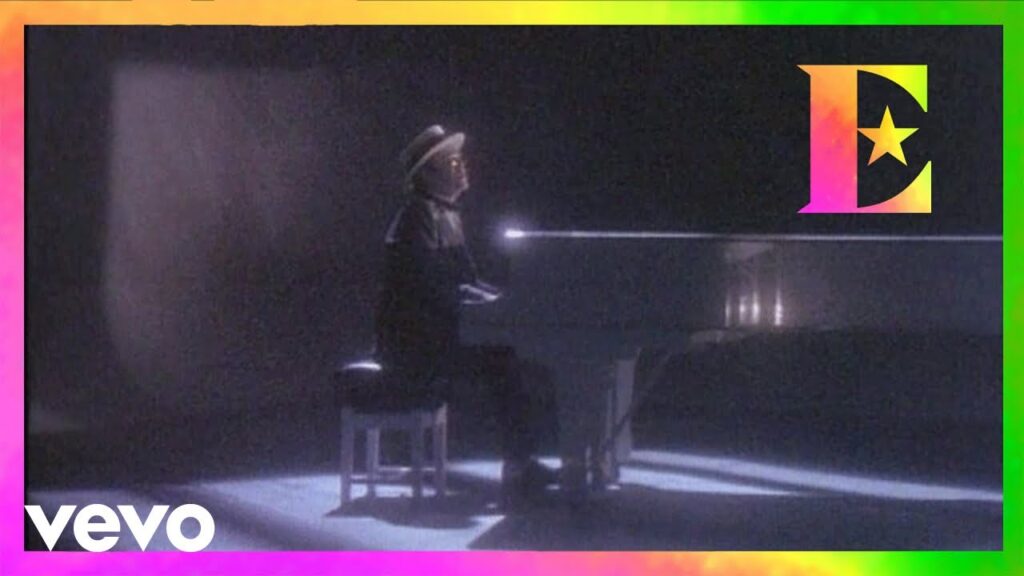
By 1983, Elton John had already built one of the most remarkable careers in popular music. The previous decade had produced an astonishing run of hit albums and singles, but the early 1980s found him looking to reestablish himself after a period of inconsistent commercial success. “I Guess That’s Why They Call It the Blues,” released on Too Low for Zero, accomplished exactly that. Written by Elton John, Bernie Taupin, and Davey Johnstone, the song became one of the defining ballads of the decade and reminded audiences why the Elton John and Bernie Taupin partnership was among the greatest in music history.
Combining heartfelt lyrics, an unforgettable melody, Elton’s expressive piano playing, and a memorable harmonica performance from Stevie Wonder, the song has endured as one of the highlights of Elton John’s 1980s catalog. More than four decades later, it remains a staple of classic hits radio and one of the most beloved songs in his extensive discography.
Song Overview
“I Guess That’s Why They Call It the Blues” is a mid-tempo pop ballad built around longing rather than heartbreak. Instead of chronicling the end of a relationship, the song explores the emotional challenge of being separated from someone you love while holding onto hope that you’ll soon be reunited.
That distinction gives the song a different emotional texture from many love songs. Rather than dwelling on despair, it acknowledges sadness while maintaining optimism. It’s reflective, romantic, and reassuring all at once.
The production strikes an ideal balance between polished early-1980s pop and timeless songwriting. Synthesizers are present but never overpower the arrangement, allowing Elton’s piano and vocals to remain the focal point.
Songwriting
Bernie Taupin’s lyrics are among his finest from the 1980s. They are simple enough to be universally relatable while still carrying genuine emotional weight.
The song never relies on elaborate metaphors or overly dramatic storytelling. Instead, it captures the quiet loneliness that accompanies temporary separation. Whether listeners relate it to a long-distance relationship, military deployment, work travel, or any other circumstance, the message feels personal.
Musically, Elton John delivers one of his strongest melodies of the era. The verses gently build anticipation before opening into a soaring chorus that is instantly memorable. It’s the kind of melody that feels familiar after a single listen.
Performance
Elton John’s vocal performance is wonderfully restrained.
Rather than overpowering the song with vocal gymnastics, he allows the emotion to develop naturally. His voice carries warmth, vulnerability, and optimism simultaneously, making every line believable.
His piano playing remains characteristically elegant, providing both rhythmic support and melodic flourishes without ever competing with the vocals.
The standout guest performance comes from Stevie Wonder, whose harmonica solo has become one of the most recognizable instrumental moments of the decade. His contribution doesn’t feel like a celebrity cameo—it feels like an essential part of the song’s emotional journey.
Production
Produced by Chris Thomas, the recording is remarkably well-balanced.
The drums, bass, keyboards, guitars, and piano all occupy their own space without cluttering the mix. The production reflects the polished sound of early-1980s pop while avoiding many of the era’s excesses.
Because the arrangement emphasizes musicianship over studio gimmicks, the song has aged gracefully. It still sounds fresh decades later.
Every production decision serves the melody rather than distracting from it.
Standout Moments
Several aspects elevate the song from excellent to unforgettable:
- Elton John’s heartfelt vocal delivery.
- Bernie Taupin’s emotionally accessible lyrics.
- Stevie Wonder’s iconic harmonica solo.
- A chorus that remains instantly recognizable.
- An arrangement that grows naturally without becoming overproduced.
These elements combine to create a recording that rewards repeated listening.
Weak Points
There are very few legitimate criticisms.
Listeners seeking a more energetic rock song may find the pace somewhat deliberate, and those who prefer Elton John’s flamboyant 1970s material may consider this a more restrained performance.
However, those characteristics are intentional. The measured tempo allows the emotion to breathe, making the eventual payoff even stronger.
Legacy
“I Guess That’s Why They Call It the Blues” helped launch Too Low for Zero into one of Elton John’s most successful albums of the 1980s alongside “I’m Still Standing.”
The song became an international hit and has remained a fixture of his live performances ever since. It demonstrated that Elton and Bernie Taupin still possessed the songwriting chemistry that had produced so many classics during the previous decade.
Its influence extends beyond chart success. The song has become a benchmark for sophisticated adult contemporary songwriting, proving that pop music can be emotionally direct without sacrificing musical craftsmanship.
Few artists have managed to create ballads that remain as universally loved across multiple generations.
Final Score
9.5/10
“I Guess That’s Why They Call It the Blues” is one of Elton John’s finest recordings of the 1980s and one of the strongest ballads of his entire career. Beautifully written, impeccably performed, and tastefully produced, it combines timeless songwriting with genuine emotional honesty. Stevie Wonder’s unforgettable harmonica performance provides the perfect finishing touch to a song that continues to resonate with listeners more than forty years after its release.
While Elton John has produced countless classics, this one stands comfortably among his very best.
This post has already been read 78 times!