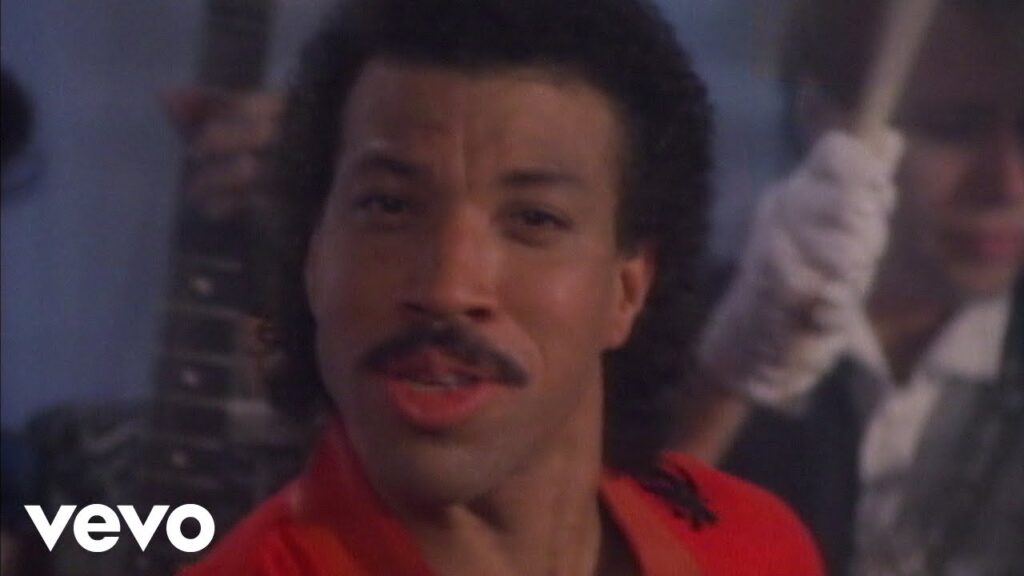
Released in 1986 as the title track from his third solo album, “Dancing on the Ceiling” showcased Lionel Richie’s remarkable ability to create joyful, crowd-pleasing pop music. By this point, Richie had already become one of the biggest stars in the world, following an extraordinary run of hits that included “Hello,” “All Night Long (All Night),” “Say You, Say Me,” and “Penny Lover.” Expectations were incredibly high, yet he responded with one of the most fun and visually memorable songs of the decade.
While some artists built careers on introspection or social commentary, Lionel Richie excelled at making listeners smile. “Dancing on the Ceiling” embraced pure entertainment, pairing an infectious melody with upbeat production and one of MTV’s most famous music videos. Decades later, the song remains synonymous with celebration and continues to fill dance floors, wedding receptions, and nostalgic 1980s playlists.
Song Overview
“Dancing on the Ceiling” celebrates the kind of party where excitement reaches such a level that reality itself seems to disappear. Rather than describing an ordinary gathering, Richie paints a picture of a room so full of energy that people appear to be defying gravity.
The concept is whimsical without becoming silly.
The song encourages listeners to let go of everyday worries and simply enjoy the moment. That carefree attitude is central to its enduring appeal.
Unlike many dance songs that rely on repetitive hooks alone, “Dancing on the Ceiling” combines infectious rhythms with genuine musical craftsmanship.
It’s impossible to hear the opening groove without feeling the urge to move.
Songwriting
Written by Lionel Richie, Mike Frenchik, and Carlos Rios, the song is built around a simple but highly effective premise.
The lyrics avoid unnecessary complexity, instead focusing on vivid imagery and an atmosphere of nonstop celebration. Every verse builds naturally toward a chorus that immediately invites audience participation.
Richie’s songwriting has always excelled at accessibility, and this song is no exception. He understands exactly how much detail to include while leaving enough room for listeners to imagine themselves in the middle of the party.
The melody is equally impressive.
It moves effortlessly between smooth verses and a chorus that ranks among the catchiest of the decade.
Performance
Lionel Richie delivers the song with the effortless charisma that made him one of pop music’s most beloved performers.
His vocals radiate warmth and enthusiasm without ever sounding forced. Rather than trying to overpower the arrangement, Richie rides the groove with confidence, allowing his natural charm to shine through.
His relaxed delivery makes the celebration feel authentic.
The backing musicians also deserve tremendous credit. Tight percussion, energetic guitars, lively keyboards, and punchy brass accents combine to create a performance bursting with life.
Every musician sounds like they’re having as much fun as the listener.
Production
Produced by Lionel Richie and James Anthony Carmichael, the recording captures mid-1980s pop production at its finest.
The arrangement blends synthesizers, funk-inspired bass lines, crisp drums, bright horn accents, and layered vocal harmonies into a vibrant sonic landscape.
Despite its polished sound, the production never feels sterile.
Instead, it maintains a live-band energy that gives the recording its infectious momentum.
One reason the song has aged well is its emphasis on groove rather than trendy studio tricks. The musicianship remains front and center throughout.
Standout Moments
Several qualities make “Dancing on the Ceiling” unforgettable:
- Lionel Richie’s joyful and charismatic vocal performance.
- An instantly recognizable chorus.
- Excellent blend of pop, funk, R&B, and dance music.
- Lively instrumentation that never loses energy.
- Production that perfectly captures the optimistic spirit of the mid-1980s.
Of course, no discussion would be complete without mentioning the groundbreaking music video.
Directed by Stanley Donen—the legendary filmmaker behind Singin’ in the Rain—the video famously featured Richie and a room full of dancers performing upside down after the set rotated 180 degrees. The elaborate production became one of MTV’s defining visual achievements and reportedly cost hundreds of thousands of dollars, making it one of the most expensive music videos of its time.
Weak Points
There are relatively few criticisms to make.
Some listeners may prefer Richie’s more emotionally driven ballads such as “Hello” or “Stuck on You,” finding “Dancing on the Ceiling” somewhat lightweight by comparison.
Additionally, because the song is so closely associated with its iconic video, its musical accomplishments are occasionally overshadowed by the visual spectacle.
Still, those observations do little to diminish the song’s effectiveness.
Its purpose is to entertain, and it accomplishes that brilliantly.
Legacy
“Dancing on the Ceiling” reached No. 2 on the Billboard Hot 100 and became another worldwide hit during Lionel Richie’s extraordinary run of success in the 1980s.
The song helped propel the Dancing on the Ceiling album to multi-platinum status while reinforcing Richie’s reputation as one of the era’s premier entertainers. Its unforgettable music video became an MTV staple, earning heavy rotation and influencing countless artists who sought to create visually ambitious productions.
Today, the song remains a fixture at parties, sporting events, weddings, and celebrations around the world. It captures the joyful optimism that defined much of 1980s pop music and continues to introduce new generations to Lionel Richie’s remarkable talent for writing songs that simply make people feel good.
Final Score
9.5/10
“Dancing on the Ceiling” is an irresistible celebration of fun, music, and pure entertainment. Lionel Richie’s effortless charisma, memorable songwriting, vibrant production, and one of the most iconic music videos of the MTV era combine to create a pop classic that has lost none of its charm. While it may not carry the emotional weight of some of Richie’s ballads, it succeeds spectacularly at what it sets out to do: make listeners smile, dance, and forget their worries for a few minutes. That’s the mark of truly great pop music.
This post has already been read 84 times!