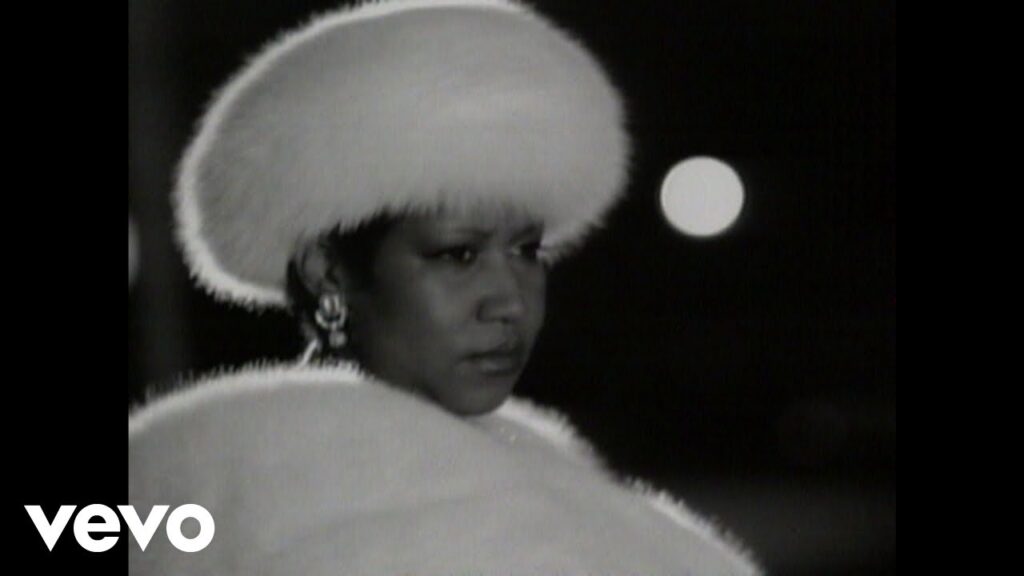
Released in 1985 as the lead single from Who’s Zoomin’ Who?, “Freeway of Love” marked one of the greatest comebacks in popular music history. Although Aretha Franklin had already spent nearly two decades earning the title “Queen of Soul,” the changing musical landscape of the late 1970s and early 1980s had made it more difficult for many legendary artists to maintain mainstream success. Rather than fading into nostalgia, Franklin embraced contemporary production while remaining true to the powerful voice that had made her an icon.
The result was “Freeway of Love,” an exhilarating blend of soul, R&B, funk, and pop that became one of the biggest hits of her career. Driven by a jubilant groove, an unforgettable chorus, and Clarence Clemons’ roaring saxophone, the song introduced Aretha Franklin to a new generation while reminding longtime fans why she remained one of the greatest vocalists in music history.
Today, “Freeway of Love” stands as one of the defining feel-good songs of the 1980s and one of the strongest comeback singles ever recorded.
Song Overview
“Freeway of Love” is a celebration of freedom, romance, and living life with confidence. Using the imagery of driving down an open highway, the song transforms a simple road trip into a metaphor for excitement, independence, and joyful adventure.
Rather than focusing on heartbreak or emotional struggle, Franklin invites listeners to enjoy the ride.
The upbeat message perfectly matches the energetic arrangement, creating a recording that radiates optimism from beginning to end.
It’s impossible not to smile when the song starts.
Songwriting
Written by Jeffrey Cohen and Narada Michael Walden, “Freeway of Love” is a masterclass in crafting infectious pop-soul.
The lyrics are playful without becoming shallow, filled with vivid imagery that perfectly complements the song’s energetic pace. The highway metaphor gives the composition a sense of movement that never lets up.
Musically, the song is built around an irresistible groove that gradually expands into one of the catchiest choruses of the decade.
Every section flows naturally into the next.
The writers wisely leave plenty of room for Franklin’s remarkable voice to become the song’s true centerpiece.
Performance
Aretha Franklin delivers an absolutely electrifying vocal performance.
By 1985, she had already proven herself countless times, yet she still sounds completely energized and fully engaged. Her voice effortlessly combines power, warmth, precision, and joy.
Few singers have ever possessed Franklin’s ability to make technically demanding vocals sound effortless.
Every phrase bursts with confidence.
She doesn’t merely sing over the arrangement—she commands it.
The supporting musicians are equally outstanding, particularly Clarence Clemons of the E Street Band, whose saxophone solo provides one of the recording’s defining moments. His muscular playing perfectly complements Franklin’s larger-than-life performance, creating a memorable musical conversation between voice and instrument.
Production
Produced by Narada Michael Walden, “Freeway of Love” embraces the polished sound of the mid-1980s while maintaining the soulful spirit that defined Franklin’s greatest work.
The arrangement features driving drums, funky bass, shimmering keyboards, bright synthesizers, energetic guitars, and powerful horn accents.
Unlike many heavily programmed productions of the era, the recording never loses its sense of live performance.
The musicians sound vibrant, and every instrument contributes to the song’s unstoppable momentum.
The mix remains remarkably clean, allowing Franklin’s vocals to soar above the groove without overwhelming the rest of the band.
Standout Moments
Several elements elevate “Freeway of Love” into classic status:
- Aretha Franklin’s extraordinary vocal performance.
- Clarence Clemons’ unforgettable saxophone solo.
- An irresistible groove that never loses energy.
- A joyful chorus that invites immediate sing-alongs.
- Narada Michael Walden’s polished yet soulful production.
The interplay between Franklin’s vocals and the saxophone is especially memorable, giving the recording an infectious energy that carries through to the final note.
Weak Points
There are surprisingly few weaknesses.
Some listeners who prefer Franklin’s gospel-inspired classics from the 1960s may find the glossy 1980s production less emotionally raw than songs like “Respect” or “(You Make Me Feel Like) A Natural Woman.”
Others may feel that the synthesizer-heavy arrangement firmly places the recording within its decade.
Even so, those production choices are part of the song’s identity.
Rather than chasing trends unsuccessfully, Franklin fully embraced contemporary sounds while remaining unmistakably herself.
Legacy
“Freeway of Love” became one of Aretha Franklin’s biggest hits of the 1980s, reaching No. 3 on the Billboard Hot 100 and topping the Hot R&B Singles chart. It earned Franklin a Grammy Award for Best Female R&B Vocal Performance, further proving that her extraordinary voice remained as powerful as ever.
The success of Who’s Zoomin’ Who? revitalized Franklin’s commercial career, introducing her to younger audiences through MTV while reaffirming her legendary status among longtime fans.
Today, “Freeway of Love” remains one of her signature recordings from the 1980s. It continues to appear in films, television shows, commercials, and sporting events, serving as a reminder that great artists can successfully reinvent themselves without sacrificing the qualities that made them legendary in the first place.
Final Score
9.5/10
“Freeway of Love” is an exhilarating showcase for one of the greatest voices ever recorded. Aretha Franklin’s commanding performance, paired with infectious songwriting, Clarence Clemons’ unforgettable saxophone, and Narada Michael Walden’s vibrant production, creates a song that is impossible to resist. More than just a comeback hit, it is a celebration of joy, confidence, and musical excellence that continues to sound every bit as exciting today as it did in 1985. It stands as one of the finest pop-soul recordings of the decade and a shining example of Aretha Franklin’s timeless brilliance.
This post has already been read 94 times!