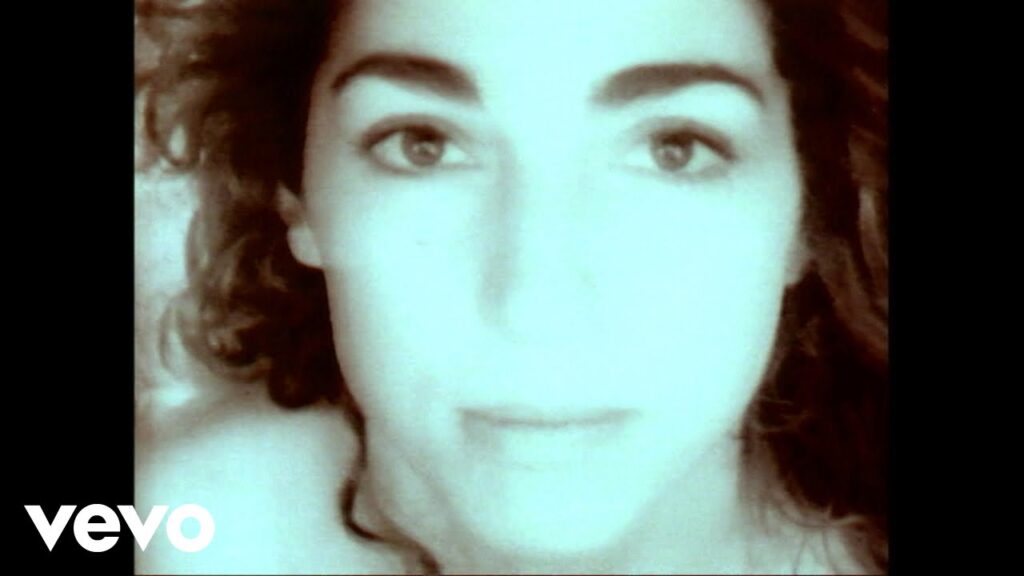
Released in 1989 as the second single from Cuts Both Ways, “Don’t Wanna Lose You” became Gloria Estefan’s first No. 1 hit on the Billboard Hot 100 as a solo artist. While she had already achieved enormous success as the lead singer of the Miami Sound Machine with energetic dance-pop hits like “Conga,” “Rhythm Is Gonna Get You,” and “Anything for You,” this heartfelt ballad revealed another side of her artistry.
Instead of relying on infectious Latin rhythms or upbeat pop hooks, “Don’t Wanna Lose You” succeeds through emotional honesty, elegant production, and one of the most sincere vocal performances of Estefan’s career. The song quickly became a favorite on pop and adult contemporary radio, further proving that she was far more than simply a dance music superstar.
Today, it remains one of the defining love songs of the late 1980s and one of Gloria Estefan’s signature recordings.
Song Overview
“Don’t Wanna Lose You” captures the fear and uncertainty that can arise when a meaningful relationship begins to drift apart.
The narrator reflects on misunderstandings, emotional distance, and the hope that love can still survive despite difficult circumstances. Rather than expressing anger or blame, the song focuses on vulnerability and the desire to repair what has been damaged.
Its emotional honesty is what makes it so effective.
Anyone who has worried about losing someone they deeply care about can immediately relate to its message.
The feelings are universal, making the song just as powerful today as it was upon its release.
Songwriting
Written by Gloria Estefan, “Don’t Wanna Lose You” demonstrates her considerable talent as both a performer and songwriter.
The melody unfolds naturally, allowing each verse to build toward an emotionally satisfying chorus that stays with the listener long after the song ends.
The lyrics avoid melodrama.
Instead, Estefan expresses heartbreak through simple, conversational language that feels authentic and deeply personal.
That restraint gives the song tremendous emotional credibility.
Rather than overwhelming listeners with elaborate imagery, it succeeds through sincerity.
Performance
Gloria Estefan delivers one of the strongest vocal performances of her career.
Her voice remains warm, expressive, and beautifully controlled throughout the recording. Rather than relying on vocal fireworks, she allows subtle phrasing and genuine emotion to carry the performance.
Every line feels believable.
She communicates longing, regret, hope, and determination with remarkable ease, making listeners feel every emotion contained within the song.
The supporting musicians provide tasteful accompaniment that never distracts from Estefan’s vocal.
Everything works together in service of the song.
Production
Produced by Emilio Estefan Jr. and Jorge Casas, the recording features polished late-1980s adult contemporary production that has aged remarkably well.
Gentle keyboards, understated guitars, soft percussion, tasteful bass, and elegant string arrangements create a lush backdrop without overwhelming the performance.
The production emphasizes warmth rather than spectacle.
Every musical element supports the emotional intimacy of the lyrics.
Unlike many ballads from the era that relied heavily on oversized arrangements, “Don’t Wanna Lose You” succeeds through balance and tasteful restraint.
Standout Moments
Several qualities make “Don’t Wanna Lose You” unforgettable:
- Gloria Estefan’s heartfelt vocal performance.
- Beautifully crafted melody.
- Honest, emotionally relatable songwriting.
- Sophisticated, understated production.
- One of the strongest choruses of her solo career.
The chorus is the emotional centerpiece.
As Estefan’s voice gently rises over the lush arrangement, the vulnerability at the heart of the song becomes impossible to ignore.
It’s both intimate and universally relatable.
Weak Points
There are very few criticisms.
Listeners who primarily associate Gloria Estefan with energetic Latin dance music may find the slower pace less immediately exciting.
Others may consider the production unmistakably rooted in the late 1980s.
However, neither point significantly detracts from the song.
Its timeless emotional core allows it to transcend changing musical trends.
The understated production actually enhances its enduring appeal.
Legacy
“Don’t Wanna Lose You” became Gloria Estefan’s first solo No. 1 hit on the Billboard Hot 100, marking a significant milestone in her transition from Miami Sound Machine frontwoman to internationally recognized solo artist. The song also enjoyed tremendous success on adult contemporary charts around the world and helped Cuts Both Ways become one of the defining albums of her career.
The recording demonstrated Estefan’s remarkable versatility, proving she could move effortlessly between dance music, Latin pop, and emotionally rich ballads. It remains a staple of her live performances and greatest-hits collections, continuing to connect with audiences through its universal message about love and vulnerability.
Today, “Don’t Wanna Lose You” stands as one of Gloria Estefan’s finest achievements—a graceful, emotionally authentic ballad that showcases her strengths as both a songwriter and vocalist.
Final Score
9.5/10
“Don’t Wanna Lose You” is a beautifully crafted love song that combines heartfelt songwriting, elegant production, and one of Gloria Estefan’s most sincere vocal performances. Its emotional honesty and timeless melody have allowed it to endure long after many of its contemporaries have faded from memory. Tender, relatable, and wonderfully understated, it remains one of the finest adult contemporary ballads of the late 1980s and a shining highlight of Estefan’s remarkable career.
This post has already been read 101 times!