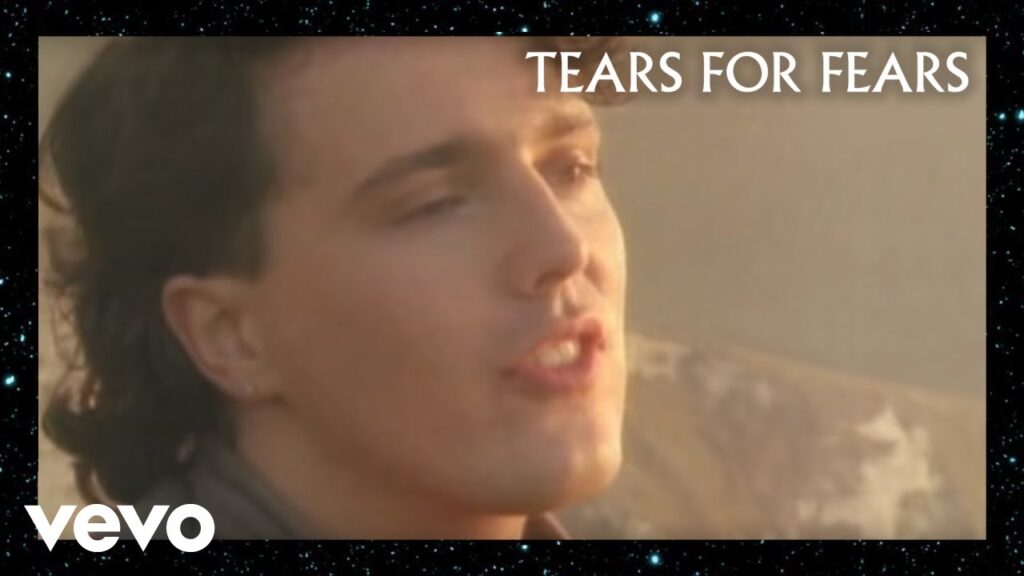
The Anthem That Took Tears for Fears to the Top of the World
Released in November 1984, “Shout” transformed Tears for Fears from a successful British new wave duo into international superstars. As the second single from the landmark album Songs from the Big Chair, the song became a global phenomenon, reaching No. 1 in the United States, Canada, Australia, Germany, the Netherlands, Switzerland, and several other countries. Its massive sound, emotionally charged lyrics, and unforgettable chorus helped define the sound of mid-1980s pop and rock.
Unlike many chart-toppers of its era, “Shout” wasn’t simply a catchy radio hit. Roland Orzabal and Curt Smith created a song with genuine emotional depth, encouraging listeners to release frustration and confront their feelings instead of suppressing them. Combined with a huge production and one of the most memorable hooks of the decade, it became one of the signature songs of the 1980s.
More than forty years later, “Shout” remains a staple of classic hits radio, sporting events, films, television, and concert setlists. Few songs from the decade have maintained their popularity as successfully.
Building on an Already Promising Career
Tears for Fears formed in Bath, England, in 1981, with Roland Orzabal and Curt Smith blending elements of synth-pop, rock, and thoughtful songwriting. Their debut album, The Hurting, established them as one of Britain’s most promising new acts, producing hits such as “Mad World,” “Change,” and “Pale Shelter.”
Those songs explored themes of childhood trauma, emotional repression, and psychology, influenced in part by the theories of psychologist Arthur Janov and his concept of primal therapy.
When work began on Songs from the Big Chair, however, Orzabal and Smith expanded both their musical ambitions and their sound. Rather than relying primarily on synthesizers, they embraced bigger arrangements, live instrumentation, and arena-sized production.
“Shout” became the perfect showcase for that evolution.
Songwriting
At first glance, “Shout” appears to be a straightforward anthem built around a repeated title.
A closer listen reveals something far more sophisticated.
Roland Orzabal wrote the song as an encouragement to express emotions rather than bury them. The title isn’t about yelling in anger for its own sake; it’s about releasing feelings that have been bottled up for too long.
That message connected with listeners because it’s remarkably universal. Everyone experiences frustration, disappointment, fear, or sadness, and “Shout” suggests that emotional honesty is healthier than silent acceptance.
The lyrics remain intentionally open-ended.
Instead of telling one specific story, they allow each listener to apply the message to their own experiences. That flexibility has helped the song remain relevant across multiple generations.
The chorus is among the greatest of the decade—simple enough to remember instantly yet powerful enough to fill an arena.
Roland Orzabal’s Performance
Roland Orzabal delivers one of the defining vocal performances of the 1980s.
His voice carries both urgency and restraint, building gradually throughout the song before exploding during the chorus. Rather than relying on vocal gymnastics, he lets emotion drive the performance.
Curt Smith’s backing vocals provide essential balance, adding warmth and richness that make the harmonies even more effective.
Together, the pair create a sound that feels both polished and deeply human.
The vocal chemistry between Orzabal and Smith became one of Tears for Fears’ greatest strengths, and “Shout” may be its finest example.
Production
Produced by Chris Hughes, “Shout” features one of the biggest and most polished productions of the decade.
Key elements include:
- Massive synthesizer layers
- Driving bass lines
- Powerful live drums
- Atmospheric keyboards
- Soaring guitar textures
- Rich vocal harmonies
The arrangement builds patiently.
Instead of revealing everything immediately, new instruments and textures gradually enter, creating increasing tension until the chorus arrives with enormous impact.
The production manages to sound epic without becoming cluttered, giving every instrument room to breathe.
Even today, “Shout” remains a benchmark for arena-sized pop production.
The Music Video
Filmed in California around the scenic Salton Sea, the music video complemented the song’s expansive sound with equally striking visuals.
Rather than relying on elaborate storytelling, it featured Roland Orzabal and Curt Smith performing against dramatic natural landscapes, creating an atmosphere that matched the song’s emotional intensity.
The understated visuals allowed the music to remain the focal point while helping establish the duo’s image during MTV’s golden age.
Heavy rotation on MTV introduced Tears for Fears to millions of American viewers and played a major role in the song’s international success.
Chart Success
“Shout” became the biggest hit of Tears for Fears’ career.
Its accomplishments included:
- No. 1 on the Billboard Hot 100
- No. 1 in Canada
- No. 1 in Australia
- No. 1 in Germany
- No. 1 in several European countries
- Top 5 in the United Kingdom
The success of “Shout” helped Songs from the Big Chair become one of the defining albums of the 1980s, paving the way for additional classics such as “Everybody Wants to Rule the World” and “Head over Heels.”
Why It Became an ’80s Classic
An Unforgettable Chorus
Very few songs from the decade possess a chorus as immediately recognizable as “Shout.”
Within seconds, audiences know exactly what’s coming.
Emotional Honesty
The lyrics avoid clichés by addressing genuine emotional struggles in a way that’s relatable without being overly specific.
Huge Production
Chris Hughes crafted a recording that still sounds powerful on modern sound systems.
Every instrument contributes to the song’s enormous sense of scale.
Perfect Blend of Rock and Synth-Pop
“Shout” successfully combines electronic textures with traditional rock instrumentation, allowing it to appeal to fans of multiple genres.
Cultural Impact
Over the years, “Shout” has become much more than a hit single.
Its chorus has been chanted at sporting events, featured in countless films and television shows, and covered by artists from a wide variety of musical backgrounds.
The song has also become synonymous with emotional release, often appearing during dramatic moments in popular culture where characters finally express feelings they’ve kept hidden.
Its influence extends beyond pop music into advertising, entertainment, and even motivational settings.
Very few songs from the 1980s have remained this culturally visible.
Legacy
Within Tears for Fears’ remarkable catalog, “Shout” stands alongside “Everybody Wants to Rule the World” as one of the duo’s defining achievements.
It demonstrated that thoughtful songwriting could coexist with mainstream commercial success and proved that emotionally intelligent lyrics could still dominate international pop charts.
More than forty years later, the recording continues to sound remarkably fresh. Its themes remain relevant, its production still feels powerful, and its chorus remains one of the most satisfying audience singalongs in rock history.
It’s not simply one of the best songs Tears for Fears ever recorded—it’s one of the greatest pop-rock singles of the entire decade.
Final Thoughts
“Shout” represents everything that made Tears for Fears extraordinary. Intelligent songwriting, emotional depth, outstanding musicianship, and world-class production combine to create a recording that has never lost its impact.
Roland Orzabal and Curt Smith succeeded in making a song that works equally well as an arena anthem, a thoughtful meditation on emotional honesty, and an unforgettable pop hit.
Few songs balance accessibility and substance so effortlessly.
This post has already been read 72 times!