The Arena Rock Anthem That Proved New Jersey Was No Fluke
Released in November 1988 as the second single from New Jersey, “Born to Be My Baby” demonstrated that Bon Jovi had no intention of slowing down after the phenomenal success of Slippery When Wet. Rather than trying to reinvent themselves, the band doubled down on everything that had made them one of the biggest rock acts in the world—massive hooks, heartfelt lyrics, soaring vocals, and an unmistakable sense of optimism.
The song reached No. 3 on the Billboard Hot 100, becoming another major hit during one of the most successful periods in the band’s career. While it often receives less attention than “Livin’ on a Prayer” or “Wanted Dead or Alive,” many fans consider it one of Bon Jovi’s strongest songs because of its emotional sincerity and infectious energy.
More than thirty-five years later, “Born to Be My Baby” remains one of the defining arena rock anthems of the late 1980s.
Following an Impossible Success
After Slippery When Wet became one of the biggest-selling rock albums in history, expectations for Bon Jovi’s next release were enormous.
Rather than retreating from the spotlight, Jon Bon Jovi, Richie Sambora, David Bryan, Alec John Such, and Tico Torres returned with New Jersey, an album packed with radio-ready rock songs that expanded on their winning formula.
“Born to Be My Baby” arrived immediately after the chart-topping “Bad Medicine” and confirmed that the band had another blockbuster on their hands.
The song perfectly balanced stadium-sized production with lyrics that focused on everyday relationships rather than larger-than-life fantasies.
Songwriting
Written by Jon Bon Jovi, Richie Sambora, and Desmond Child, “Born to Be My Baby” celebrates commitment during difficult times.
Instead of presenting love as effortless, the lyrics acknowledge financial struggles, uncertainty, and life’s daily challenges.
The narrator doesn’t promise luxury or perfection.
He promises loyalty.
That grounded perspective gives the song emotional authenticity.
The chorus delivers one of the band’s biggest singalong moments, transforming an intimate love story into an arena-sized celebration.
It’s classic Bon Jovi—personal enough to feel real, yet universal enough for thousands of fans to sing together.
Jon Bon Jovi’s Performance
Jon Bon Jovi delivers one of his strongest vocal performances of the decade.
His voice combines power with warmth, allowing him to move effortlessly between the quieter verses and the explosive chorus.
Rather than relying solely on vocal intensity, he communicates genuine affection and determination.
His enthusiastic delivery makes every lyric believable.
It’s a reminder that Bon Jovi’s greatest strength was never just volume—it was emotion.
Richie Sambora’s Guitar Work
Richie Sambora once again proves why he was one of the defining guitarists of 1980s rock.
His crunchy rhythm guitar drives the song forward, while his melodic fills and expressive solo provide excitement without overshadowing the vocals.
Sambora always understood that the best guitar parts served the song.
His playing here is both technically impressive and emotionally satisfying.
His backing vocals also add another signature layer to Bon Jovi’s unmistakable sound.
Production
Produced by Bruce Fairbairn, the recording captures arena rock at its peak.
The arrangement includes:
- Crunching electric guitars
- Bright keyboards
- Driving bass
- Powerful live drums
- Layered vocal harmonies
- Huge arena-ready chorus
Fairbairn’s production is polished without losing the energy of a live band.
Every instrument has room to breathe, while the massive chorus delivers exactly the kind of excitement Bon Jovi fans expected.
The recording remains one of the finest examples of late-1980s rock production.
The Music Video
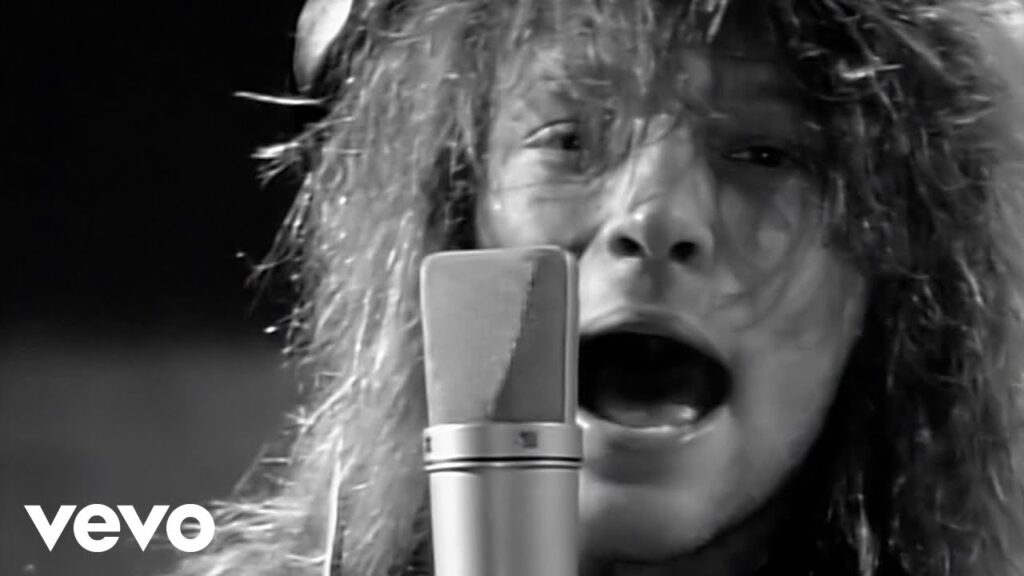
Rather than producing an elaborate concept video, Bon Jovi released a behind-the-scenes style performance clip showing the band recording and rehearsing the song in the studio.
The relaxed, documentary-like approach gave fans a glimpse into the creative process and emphasized the group’s chemistry.
It stood out among the era’s highly theatrical MTV productions by feeling authentic and unpretentious.
Chart Success
“Born to Be My Baby” became another major hit for Bon Jovi.
The song reached:
- No. 3 on the Billboard Hot 100
- Top 10 in Canada
- Top 10 in several European countries
- Heavy MTV and rock radio airplay
Its success helped New Jersey produce an incredible string of hit singles and confirmed Bon Jovi’s position as one of the world’s biggest rock bands.
Why It Still Rocks
Relatable Lyrics
The song celebrates commitment through life’s everyday struggles.
Its message remains just as meaningful today.
Incredible Chorus
Few bands wrote arena-sized choruses better than Bon Jovi.
This is one of their finest.
Outstanding Band Chemistry
Every member contributes to the song’s enormous sound.
The performance feels effortless.
Timeless Production
Bruce Fairbairn’s polished but powerful production continues to sound vibrant decades later.
Cultural Impact
“Born to Be My Baby” reinforced Bon Jovi’s reputation for writing rock songs that appealed to both mainstream pop audiences and dedicated rock fans.
It became a concert favorite and remains one of the highlights of the band’s live performances.
Although it often lives in the shadow of some of their biggest chart-toppers, its enduring popularity among fans has helped elevate its reputation over the years.
Many now consider it one of the hidden masterpieces of the New Jersey album.
Legacy
Among Bon Jovi’s extensive catalog of hits, “Born to Be My Baby” stands comfortably alongside “You Give Love a Bad Name,” “Livin’ on a Prayer,” “Bad Medicine,” and “I’ll Be There for You.”
It captures the band at the height of their creative and commercial powers while showcasing the songwriting partnership of Jon Bon Jovi, Richie Sambora, and Desmond Child at its absolute best.
The song remains one of the definitive examples of late-1980s arena rock done right.
Final Thoughts
“Born to Be My Baby” is everything that made Bon Jovi one of the biggest bands in the world.
Its combination of heartfelt lyrics, unforgettable melodies, outstanding musicianship, and stadium-sized production creates a song that continues to inspire singalongs nearly four decades after its release.
Whether blasting through concert speakers or playing on classic rock radio, it remains one of Bon Jovi’s most satisfying and enduring recordings.
This post has already been read 89 times!