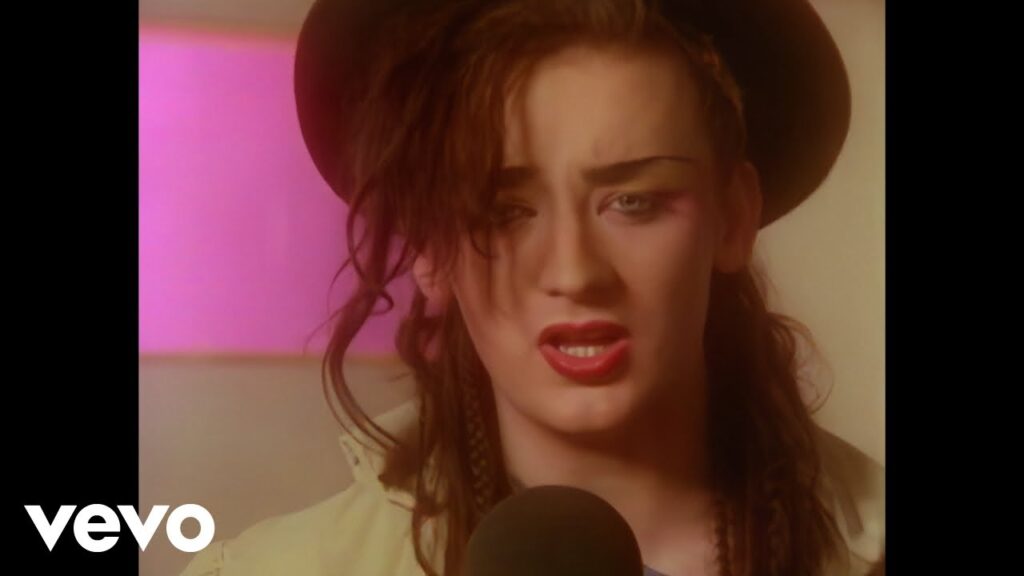
Released in November 1982 in the United Kingdom and in the spring of 1983 in the United States, “Time (Clock of the Heart)” became one of the songs that transformed Culture Club from a promising new wave act into one of the biggest bands in the world. Arriving during the explosion of MTV and the Second British Invasion, the single showcased everything that made the group unique: soulful vocals, infectious pop melodies, colorful personalities, and a sophisticated blend of pop, R&B, reggae, and blue-eyed soul. More than forty years later, it remains one of Culture Club’s defining recordings and one of the standout pop singles of the 1980s.
Culture Club had formed in London in 1981, bringing together singer Boy George, bassist Mikey Craig, guitarist Roy Hay, and drummer Jon Moss. The band’s sound stood apart from many of their new wave contemporaries. While synthesizers were becoming increasingly dominant, Culture Club mixed pop with Motown influences, reggae rhythms, soul, and jazz, creating a style that appealed to audiences across multiple musical genres. Just as important was Boy George himself, whose distinctive fashion sense and charismatic personality made him one of the most recognizable figures of the decade.
Interestingly, “Time (Clock of the Heart)” wasn’t originally included on the British version of the band’s debut album Kissing to Be Clever. After becoming an early success in the UK, the song was added to later international editions of the album, giving American audiences one of the strongest introductions possible to the band’s songwriting.
From its opening moments, “Time (Clock of the Heart)” establishes a smooth, sophisticated groove. Gentle percussion, tasteful keyboards, melodic bass lines, and subtle guitar work create an arrangement that feels polished without becoming overproduced. Unlike many early-1980s pop songs that leaned heavily on electronic textures, Culture Club emphasized live musicianship, giving the recording a warmth that still sounds fresh today.
Boy George delivers one of the finest vocal performances of his career. His voice blends soul, pop, and a touch of vulnerability, allowing every lyric to feel deeply personal. Rather than relying on vocal acrobatics, he communicates emotion through phrasing and tone. His ability to shift effortlessly between tenderness and quiet strength gives the song much of its enduring appeal.
Lyrically, “Time (Clock of the Heart)” explores the lingering emotions that follow the end of a relationship. Rather than focusing on anger or heartbreak alone, the song reflects on how time affects memory, love, and healing. Its thoughtful approach allows listeners to interpret the lyrics through their own experiences, making it one of those rare breakup songs that remains relatable regardless of age or circumstance.
The rhythm section deserves enormous praise. Mikey Craig’s bass playing provides a smooth, melodic foundation that drives the song without overpowering it, while Jon Moss delivers understated drumming that perfectly complements the arrangement. Roy Hay’s guitar work is equally tasteful, adding subtle rhythmic accents and melodic textures that enrich the overall sound.
Producer Steve Levine crafted an elegant recording that balanced commercial accessibility with genuine musical sophistication. Every instrument occupies its own space in the mix, allowing the song to breathe naturally. Even decades later, the production avoids sounding trapped in the early 1980s because it relies on timeless musical elements rather than studio gimmicks.
Commercially, “Time (Clock of the Heart)” became another massive success for Culture Club. It reached No. 3 on the Billboard Hot 100 in the United States, helping establish the group as one of the biggest British exports of the MTV era. It also charted strongly around the world, confirming that the success of “Do You Really Want to Hurt Me” was no accident.
The music video helped reinforce the band’s growing popularity. While it wasn’t as theatrical as some of Culture Club’s later visual productions, it emphasized Boy George’s magnetic screen presence and the group’s unique sense of style. During the early years of MTV, memorable videos could dramatically boost a song’s popularity, and Culture Club quickly became one of the channel’s biggest attractions.
One reason “Time (Clock of the Heart)” continues to resonate is its remarkable versatility. It works equally well as a pop song, a soul ballad, and an adult contemporary favorite. That broad appeal helped Culture Club attract listeners who might never have otherwise embraced new wave music.
The song also demonstrated Boy George’s remarkable songwriting abilities. While his image often dominated media coverage, songs like “Time (Clock of the Heart)” reminded audiences that Culture Club’s success rested on exceptional songwriting and musicianship rather than appearance alone. The combination of memorable melodies and emotionally honest lyrics gave the band staying power beyond the visual excitement of the MTV era.
Looking back, the early 1980s were filled with unforgettable pop singles, yet “Time (Clock of the Heart)” continues to stand out because of its emotional maturity. It avoids excessive drama, instead allowing subtle performances and elegant arrangements to carry the message. That restraint gives the recording a timeless quality that many contemporary hits lack.
Today, the song remains a fixture on classic hits, 1980s, and adult contemporary radio stations. It is also a highlight of Culture Club’s live performances, with audiences still enthusiastically singing along to every chorus. New generations continue to discover the track through streaming services, movie soundtracks, and nostalgic playlists celebrating the golden age of MTV.
More than forty years after its release, “Time (Clock of the Heart)” remains one of Culture Club’s greatest achievements. Its graceful production, heartfelt lyrics, soulful vocal performance, and impeccable musicianship capture everything that made the band special during its peak years. Rather than simply serving as a nostalgic reminder of the 1980s, the song continues to prove that great pop music built on honest emotion and exceptional craftsmanship never loses its power.
This post has already been read 83 times!