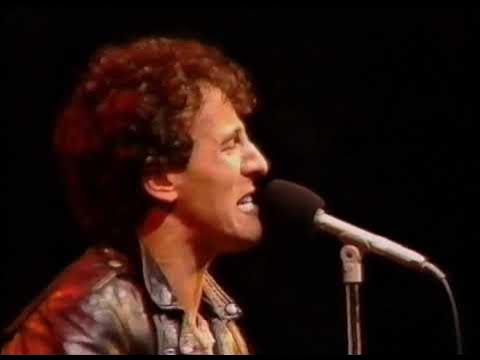
Released in September 1984 as the second single from Born in the U.S.A., “Cover Me” demonstrated Bruce Springsteen’s remarkable ability to blend heartland rock with the sleek production styles that were dominating mid-1980s pop music. While the album is remembered for massive anthems like “Dancing in the Dark,” “Born in the U.S.A.,” and “Glory Days,” “Cover Me” carved out its own identity with a driving beat, shimmering synthesizers, and one of Springsteen’s most infectious choruses. It became another Top 10 hit during one of the most successful commercial runs in rock history.
By the early 1980s, Springsteen had already earned a reputation as one of America’s greatest songwriters. Albums such as Born to Run, Darkness on the Edge of Town, and The River had established him as a storyteller capable of capturing the hopes and struggles of everyday people. Yet despite critical acclaim and a loyal fan base, he had not fully crossed over into mainstream pop superstardom. That changed dramatically with Born in the U.S.A., an album that sold more than 30 million copies worldwide and produced an astonishing seven Top 10 singles.
“Cover Me” almost had a very different history. Springsteen originally wrote the song with another artist in mind. Donna Summer, already known as the Queen of Disco, was looking for new material, and Springsteen composed “Cover Me” intending for her to record it. After developing the song, however, he liked it so much that he decided to keep it for himself. It proved to be a wise decision, as it became one of the standout tracks on Born in the U.S.A.
The song begins with Roy Bittan’s atmospheric synthesizer, immediately creating a sense of anticipation before Max Weinberg’s powerful drums launch the full band into action. The opening perfectly captures the sonic identity of the album, combining arena rock energy with contemporary production techniques that sounded perfectly suited for 1984.
Musically, “Cover Me” is built around a relentless rhythm. Garry Tallent’s steady bass line and Weinberg’s muscular drumming create a driving foundation, while Steven Van Zandt and Nils Lofgren add sharp guitar accents that keep the arrangement moving forward. Clarence Clemons’ saxophone is used more sparingly than on many classic E Street Band recordings, but its presence adds warmth and texture when it appears.
Bruce Springsteen delivers the vocal with urgency and passion. Unlike some of his more narrative-driven songs, “Cover Me” is emotionally direct. His raspy voice conveys both vulnerability and determination, perfectly matching the song’s themes of seeking protection, comfort, and unwavering loyalty during uncertain times.
Although the lyrics are straightforward compared to some of Springsteen’s more elaborate storytelling, they are remarkably effective. At its heart, “Cover Me” is a love song. The narrator isn’t asking for wealth or fame; he’s asking for someone to stand beside him when life becomes difficult. That simple message gives the song universal appeal, allowing listeners from all backgrounds to connect with its emotional core.
Producer Jon Landau, working alongside Springsteen, Chuck Plotkin, and Steve Van Zandt, crafted a recording that balanced commercial polish with the raw power of the E Street Band. The synthesizers help modernize the sound without overwhelming the guitars, creating an ideal blend of rock and pop that helped make the album accessible to an enormous audience.
Commercially, “Cover Me” became another major success. The single climbed to No. 7 on the Billboard Hot 100, giving Springsteen his second consecutive Top 10 hit from Born in the U.S.A. It also performed well internationally, further expanding his growing global audience. Remarkably, it was only the second of seven Top 10 singles released from the album—an achievement that tied the record for the most Top 10 hits from a single album at the time.
The music video reflected Springsteen’s working-class image rather than relying on elaborate concepts or special effects. While MTV was filled with increasingly theatrical productions, Springsteen remained committed to authenticity, emphasizing performance and personality over flashy visuals. That approach only strengthened his reputation as an artist whose focus remained squarely on the music.
An interesting chapter in the song’s history came through its remixes. Producer Arthur Baker created extended dance versions of “Cover Me” that became popular in clubs and on dance radio. These remixes highlighted the song’s strong rhythmic foundation and demonstrated how adaptable Springsteen’s music could be. At a time when rock and dance music often occupied separate worlds, “Cover Me” successfully bridged the gap.
Live performances have always brought an additional level of excitement to the song. The E Street Band transforms the already energetic studio recording into an arena-rock powerhouse, with extended instrumental passages and enthusiastic audience participation. It has remained a welcome addition to Springsteen’s concert setlists throughout much of his career.
Looking back, “Cover Me” also illustrates how willing Springsteen was to evolve during the 1980s. While some longtime fans initially questioned the heavier use of synthesizers on Born in the U.S.A., time has shown that these production choices enhanced rather than diminished the songs. “Cover Me” retains all of the emotional honesty that defines Springsteen’s best work while embracing the sonic possibilities of its era.
Today, the song continues to receive regular airplay on classic rock stations and remains one of the standout tracks from one of the most successful rock albums ever recorded. Although it sometimes lives in the shadow of larger hits from the same album, many fans consider it one of the record’s most underrated gems.
More than forty years after its release, “Cover Me” remains a thrilling example of Bruce Springsteen at the height of his commercial and creative powers. Its driving rhythm, unforgettable chorus, heartfelt lyrics, and exceptional performances from the E Street Band combine to create a song that still feels vibrant and immediate. It stands as proof that even on an album overflowing with legendary singles, there was room for another classic.
This post has already been read 93 times!