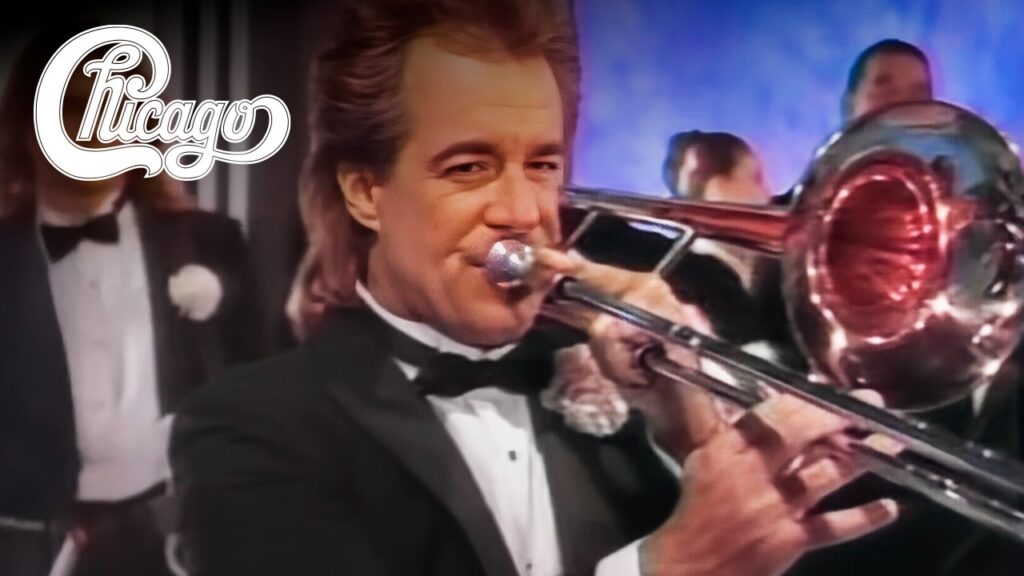
Released in May 1988, “I Don’t Wanna Live Without Your Love” became one of Chicago’s biggest late-career hits and demonstrated that the legendary band still had a place on contemporary pop radio nearly two decades after their debut. Built around soaring melodies, polished production, and the unmistakable voice of bassist Jason Scheff, the song blended power ballad emotion with the sophisticated adult contemporary sound that defined much of Chicago’s music during the 1980s. While longtime fans often associate the group with their horn-driven jazz-rock classics of the early 1970s, this hit showcased another successful chapter in the band’s remarkable evolution.
By the late 1980s, Chicago had already enjoyed one of the longest and most successful careers in rock history. Formed in 1967, the band initially stood apart by combining rock music with a powerful brass section, creating ambitious albums filled with extended compositions and socially conscious lyrics. Hits such as “25 or 6 to 4,” “Saturday in the Park,” “Does Anybody Really Know What Time It Is?” and “Beginnings” established them as one of America’s premier rock bands.
The group’s direction changed significantly during the 1980s. Producer David Foster helped guide Chicago toward a smoother, radio-friendly sound centered on powerful ballads and polished pop production. While some longtime fans missed the heavier emphasis on horns, the new approach proved enormously successful, producing major hits including “Hard to Say I’m Sorry,” “You’re the Inspiration,” and “Will You Still Love Me?”
“I Don’t Wanna Live Without Your Love” continued that remarkable streak.
The song appeared on the album Chicago 19, one of the band’s most commercially successful releases of the decade. Written by Diane Warren and Albert Hammond, two of pop music’s most accomplished songwriters, the composition perfectly matched Chicago’s polished style. Warren would go on to become one of the most successful songwriters of all time, and this early collaboration demonstrated her gift for emotionally direct, memorable melodies.
Lyrically, the song explores the fear of losing someone whose presence has become essential. Rather than focusing on dramatic conflict, it centers on vulnerability and the realization that life would feel incomplete without a loved one. Its universal theme helped connect with listeners across multiple generations and made it a natural fit for adult contemporary radio.
Jason Scheff delivers one of the finest vocal performances of his tenure with Chicago. After replacing founding bassist and singer Peter Cetera in 1985, Scheff faced the difficult task of stepping into one of the most recognizable voices in pop music. Instead of attempting to imitate Cetera, Scheff developed his own style while maintaining the emotional sincerity that fans expected. On “I Don’t Wanna Live Without Your Love,” his clear tenor voice conveys both strength and tenderness, giving the song its emotional center.
Producer Ron Nevison crafted a recording that reflected the polished production values of the late 1980s while preserving Chicago’s signature elegance. The arrangement features bright synthesizers, tasteful electric guitars, rich backing vocals, and a solid rhythm section that supports the melody without overwhelming it. Although the band’s famous horn section takes a less prominent role than in earlier decades, subtle brass accents remain part of the overall texture, reminding listeners of Chicago’s musical roots.
The song’s greatest strength is its melody. The verses build patiently toward a soaring chorus that immediately stays with the listener. It’s the kind of hook that seems familiar after only one listen, a hallmark of great pop songwriting. Combined with Scheff’s heartfelt vocal delivery, the chorus gives the song lasting emotional impact.
Commercially, “I Don’t Wanna Live Without Your Love” became another major success for Chicago. It climbed to No. 3 on the Billboard Hot 100 and reached No. 1 on the Adult Contemporary chart, further proving the band’s remarkable ability to remain relevant in an ever-changing musical landscape. At a time when many classic rock groups struggled to find radio success, Chicago continued producing genuine chart hits.
The music video reflected the understated elegance of the song, focusing primarily on the band performing rather than relying on elaborate storylines or special effects. During MTV’s peak years, Chicago never depended heavily on visual gimmicks. Instead, the strength of their music remained the primary attraction.
Looking back, “I Don’t Wanna Live Without Your Love” represents one of the high points of Chicago’s late-1980s output. While some fans still debate the stylistic differences between the band’s early jazz-rock years and their later adult contemporary era, there is little question that the songwriting, musicianship, and vocal performances remained exceptionally strong.
The song also illustrates Chicago’s extraordinary resilience. Over the decades, the group experienced lineup changes, shifting musical trends, and evolving audience expectations, yet they consistently adapted without completely abandoning their identity. Few bands have enjoyed successful chart careers spanning as many decades.
Today, “I Don’t Wanna Live Without Your Love” remains a favorite on adult contemporary and classic hits radio. It continues to appear on compilations celebrating Chicago’s long career and is often remembered alongside the band’s other memorable love songs from the 1980s. Although it may not receive the same attention as classics like “If You Leave Me Now” or “You’re the Inspiration,” it has earned a loyal following among fans who appreciate the group’s polished later work.
More than thirty-five years after its release, “I Don’t Wanna Live Without Your Love” stands as one of Chicago’s finest late-career recordings. Its heartfelt lyrics, memorable melody, polished production, and Jason Scheff’s outstanding vocal performance combine to create a timeless power ballad that continues to resonate with listeners. It serves as a reminder that great bands are capable of evolving while still delivering the emotional honesty and musical craftsmanship that first earned them their devoted audiences.
This post has already been read 76 times!