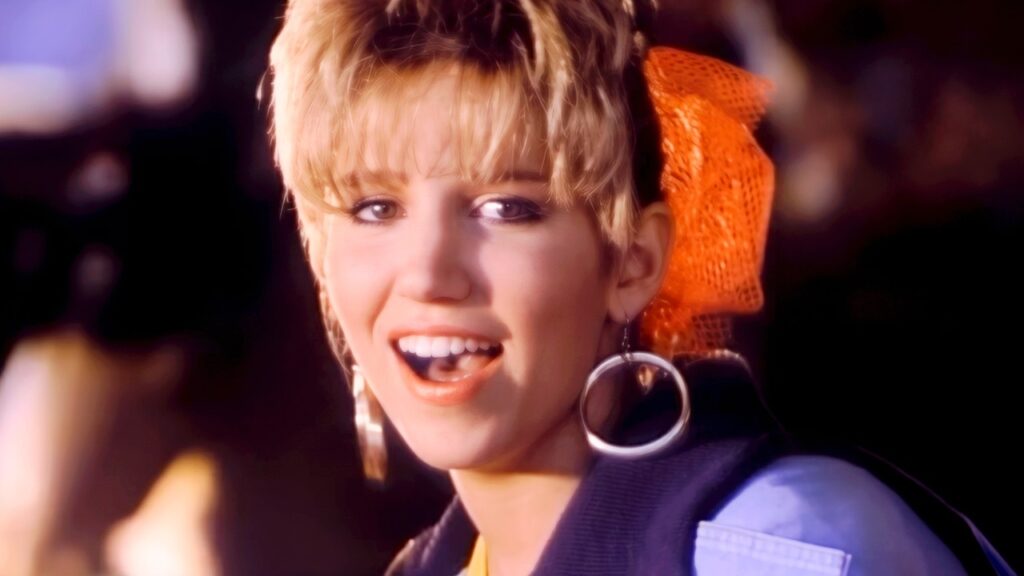
When “Only in My Dreams” arrived in 1987, it introduced listeners to a remarkable new talent who was unlike many of her teen pop contemporaries. Debbie Gibson wasn’t simply the face of a catchy dance-pop single—she had written the song herself while still in her mid-teens. At a time when record labels often relied on teams of professional songwriters, Gibson stood out as a genuine singer-songwriter with an impressive gift for crafting memorable pop hooks.
The single became Gibson’s breakthrough, climbing to No. 4 on the Billboard Hot 100 and launching a career that would produce multiple platinum albums and a string of Top 10 hits. More than just a commercial success, “Only in My Dreams” announced the arrival of one of the youngest artists ever to write, produce, and perform her own chart-topping music. Nearly forty years later, the song remains one of the defining sounds of late-’80s pop.
The Story Behind the Song
Debbie Gibson had been writing songs almost since childhood. Growing up on Long Island, New York, she spent countless hours at the piano, developing both her songwriting and performance skills. By the time most teenagers were worrying about high school dances, Gibson had already written dozens of original songs.
“Only in My Dreams” was among the songs that helped secure her recording contract with Atlantic Records. Label executives recognized not only her strong voice but also her ability to create commercial pop songs with polished melodies and relatable themes.
Released as the lead single from her debut album, Out of the Blue, the song steadily gained momentum on radio. It wasn’t an overnight sensation, but as more stations added it to their playlists, listeners quickly embraced Gibson’s youthful energy and infectious songwriting.
Its success paved the way for the album to become one of the biggest debut releases of the late 1980s, eventually producing several additional hit singles and establishing Gibson as one of the decade’s brightest young stars.
The Sound
“Only in My Dreams” perfectly captures the vibrant spirit of late-’80s dance-pop. Bright synthesizers, sparkling keyboard lines, crisp electronic drums, and punchy bass combine to create an upbeat, energetic production that still sounds unmistakably tied to its era.
The arrangement wastes no time grabbing the listener’s attention. From the opening keyboard riff, the song radiates optimism and excitement. Every musical element supports the melody without becoming overly complicated, allowing the chorus to shine.
One of the song’s greatest strengths is its pacing. The verses build anticipation before exploding into an irresistibly catchy chorus that practically demands to be sung along with. The production layers instruments carefully, adding texture while maintaining clarity throughout.
Although modern technology has changed how pop records are made, “Only in My Dreams” remains a wonderful example of polished 1980s studio craftsmanship. Its combination of electronic and traditional pop elements gives it a timeless charm that continues to resonate with fans of the decade.
Performance and Musicianship
Debbie Gibson delivers a performance full of enthusiasm and confidence. Her youthful voice fits the material perfectly, conveying excitement without sacrificing control or musicality.
Perhaps most impressive is the knowledge that Gibson wasn’t simply interpreting someone else’s work. Every phrase reflects her own songwriting instincts, giving the performance an authenticity that helped separate her from many manufactured teen acts of the era.
The musicians and producers surrounding Gibson also deserve credit for creating a polished backdrop that complements rather than overshadows her vocals. The rhythm section maintains a lively groove, while synthesizers and background harmonies add richness to every section of the song.
The overall performance strikes an excellent balance between youthful exuberance and professional execution, making it easy to understand why listeners immediately connected with the record.
Why It Worked
Several ingredients combined to make “Only in My Dreams” such a memorable debut.
First, the melody is exceptionally strong. From the opening verse to the soaring chorus, the song is packed with hooks that stay with listeners after just one play.
Second, Gibson’s credibility as a songwriter gave her an advantage over many of her peers. Audiences appreciated that she wasn’t simply performing material handed to her by others. Her talent as a composer became a major part of her appeal.
The production also arrived at exactly the right moment. Dance-pop was flourishing, and radio welcomed songs that balanced upbeat rhythms with memorable melodies. “Only in My Dreams” fit perfectly alongside artists like Tiffany, Whitney Houston, Belinda Carlisle, and Exposé while still maintaining its own identity.
Finally, the song’s youthful optimism made it universally appealing. Its excitement and emotional sincerity captured the feeling of young romance without becoming overly dramatic.
The Legacy
“Only in My Dreams” marked the beginning of one of pop music’s most impressive early careers. Within a year, Debbie Gibson would become the youngest artist to write, produce, and perform a No. 1 Billboard single with “Foolish Beat,” a milestone that remains one of the most remarkable achievements in pop history.
The song also helped establish Gibson as a role model for aspiring young musicians, proving that teenage artists could succeed through genuine songwriting talent as well as strong performances.
Today, “Only in My Dreams” remains a favorite on ’80s radio stations and streaming playlists celebrating the decade’s biggest pop hits. It frequently appears in television programs, films, and nostalgic retrospectives, introducing new generations to Gibson’s debut.
For longtime fans, the song represents the beginning of an extraordinary career. For newer listeners, it serves as an introduction to an artist whose musical abilities often exceeded the expectations placed on teen pop stars.
Final Thoughts
“Only in My Dreams” remains one of the finest debut singles of the 1980s. It introduced Debbie Gibson as more than another young singer—it revealed a gifted songwriter capable of creating polished, memorable pop music at an age when most artists were still finding their voice.
Its sparkling production, unforgettable melody, and energetic performance have allowed it to age remarkably well. While firmly rooted in the sound of its era, the song’s craftsmanship continues to shine through, making it just as enjoyable today as it was during its climb up the charts.
Few debut singles announce an artist’s potential as clearly as “Only in My Dreams.” It launched a career filled with accomplishments, inspired countless young musicians, and secured its place as one of the enduring classics of 1980s pop music.
This post has already been read 74 times!