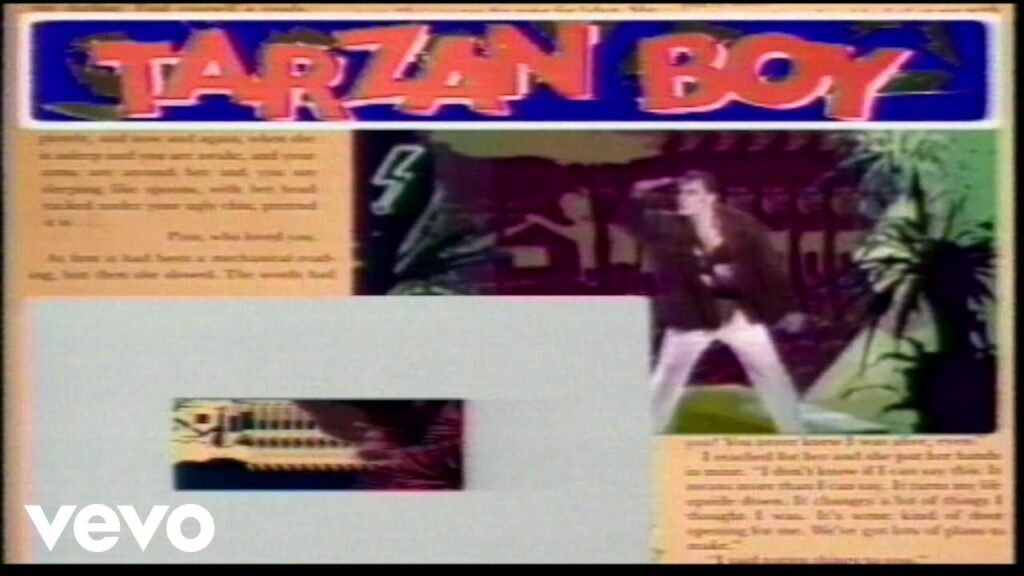
Every decade has a handful of songs that instantly transport listeners back to a specific moment in time, and “Tarzan Boy” by Baltimora is undoubtedly one of the defining pop records of the 1980s. Released in 1985, the song exploded onto dance floors around the world with its infectious melody, energetic rhythm, and unforgettable jungle-inspired vocal hook. It was impossible to mistake for anything else, and that uniqueness helped it become one of the decade’s most recognizable one-hit wonders.
Although Baltimora never enjoyed another hit on the same scale, “Tarzan Boy” has proven remarkably durable. Its appearances in movies, television shows, commercials, sporting events, and professional wrestling have introduced it to generation after generation of listeners. More than forty years after its release, the song remains a celebration of carefree fun and one of the most memorable dance-pop singles of its era.
The Story Behind the Song
Despite many listeners assuming Baltimora was a full band, the project was centered around Northern Irish singer Jimmy McShane. Working with Italian producers Maurizio Bassi and Naimy Hackett, McShane helped create a polished blend of European dance music and mainstream pop that appealed to audiences across the globe.
Released as the lead single from the album Living in the Background, “Tarzan Boy” quickly became an international success. It reached the Top 10 in numerous countries and climbed to No. 13 on the Billboard Hot 100 in the United States during its original release. A reissue several years later brought the song back to the charts after it was featured in a popular advertising campaign, proving its appeal had never really disappeared.
Unlike many novelty records, “Tarzan Boy” wasn’t built around a joke. Instead, it embraced the adventurous spirit associated with Edgar Rice Burroughs’ famous jungle hero while creating a completely original pop anthem that stood comfortably on its own.
The Sound
From its opening seconds, “Tarzan Boy” announces itself with bright synthesizers, a driving electronic beat, and one of the most recognizable vocal introductions in pop music.
The production perfectly captures the sound of mid-1980s Euro-pop. Pulsing bass synthesizers, crisp drum programming, shimmering keyboards, and layered vocal harmonies combine to create a track that feels energetic without becoming cluttered.
The song’s biggest strength lies in its simplicity. Rather than overcomplicating the arrangement, producer Maurizio Bassi allows each musical element to reinforce the irresistible groove. Every instrument contributes to the momentum, making the record nearly impossible to sit still through.
Its famous jungle-inspired vocal chant gives the recording an identity unlike any other hit of the decade. While many songs chase familiar formulas, “Tarzan Boy” immediately established a personality all its own.
Even today, the production sounds vibrant because it emphasizes melody and rhythm rather than excessive studio effects.
Performance and Musicianship
Jimmy McShane delivers a charismatic vocal performance filled with enthusiasm and confidence. His energetic delivery perfectly matches the song’s adventurous atmosphere, making every section feel joyful and inviting.
Although the production relies heavily on synthesizers, the performance never feels mechanical. McShane’s expressive voice gives the recording warmth and personality, balancing the polished electronic instrumentation.
The musicians and programmers behind the scenes deserve considerable credit as well. The rhythm programming maintains relentless forward momentum, while carefully layered keyboards provide texture without overwhelming the melody.
Background vocals add richness during the chorus, helping transform an already catchy hook into one of the most memorable sing-alongs of the decade.
Every aspect of the performance is designed to encourage movement, making it easy to understand why the song became such a dance floor favorite.
Why It Worked
Several factors helped “Tarzan Boy” become an international hit.
First, it featured one of the most distinctive openings in pop music history. Within just a few seconds, listeners knew exactly which song was playing.
Second, the melody was instantly accessible. Even listeners hearing it for the first time could quickly find themselves singing along, making it ideal for radio and clubs alike.
Timing also worked in Baltimora’s favor. By 1985, synth-pop and Euro-dance music were thriving around the world, and “Tarzan Boy” fit perfectly into that musical landscape while offering something noticeably different from its competitors.
The music video further expanded the song’s popularity through MTV, introducing audiences to Jimmy McShane’s energetic stage presence and colorful visual style.
Perhaps most importantly, the song never took itself too seriously. Its playful spirit and infectious optimism gave it universal appeal that crossed age and cultural boundaries.
The Legacy
Although Baltimora is often remembered as a one-hit wonder, “Tarzan Boy” has enjoyed one of the longest afterlives of any pop single from the 1980s.
The song has appeared in countless films, television series, sporting events, and commercials, continually finding new audiences. Wrestling fans know it as the entrance music for WWE Hall of Famer The Sandman during his appearances in ECW, where crowds enthusiastically sang along with the opening chant. It has also become a favorite at sporting events, where its instantly recognizable hook energizes fans.
Its enduring popularity demonstrates that memorable songwriting often matters more than an artist’s chart longevity. While Baltimora never repeated this level of commercial success, few performers can claim to have recorded a song that remains so instantly recognizable decades later.
Following Jimmy McShane’s passing in 1995, appreciation for his work has only grown, with “Tarzan Boy” standing as a lasting reminder of his charisma and the joyful energy he brought to pop music.
Final Thoughts
“Tarzan Boy” is far more than a nostalgic curiosity. It is an expertly crafted dance-pop record built around infectious melodies, polished production, and a performance overflowing with enthusiasm.
Its unique concept, unforgettable vocal hook, and irresistible rhythm have allowed it to outlive countless trends that came and went during the 1980s. Whether heard at a sporting event, on classic hits radio, or in a movie soundtrack, the song still delivers the same sense of excitement and carefree fun that made it a worldwide sensation.
Among the many one-hit wonders of the decade, “Tarzan Boy” occupies a special place because it never feels dated or disposable. Instead, it remains one of the most joyful and instantly recognizable pop songs of the 1980s—a record that continues to make listeners smile and sing along more than forty years after it first swung onto the charts.
This post has already been read 1241 times!