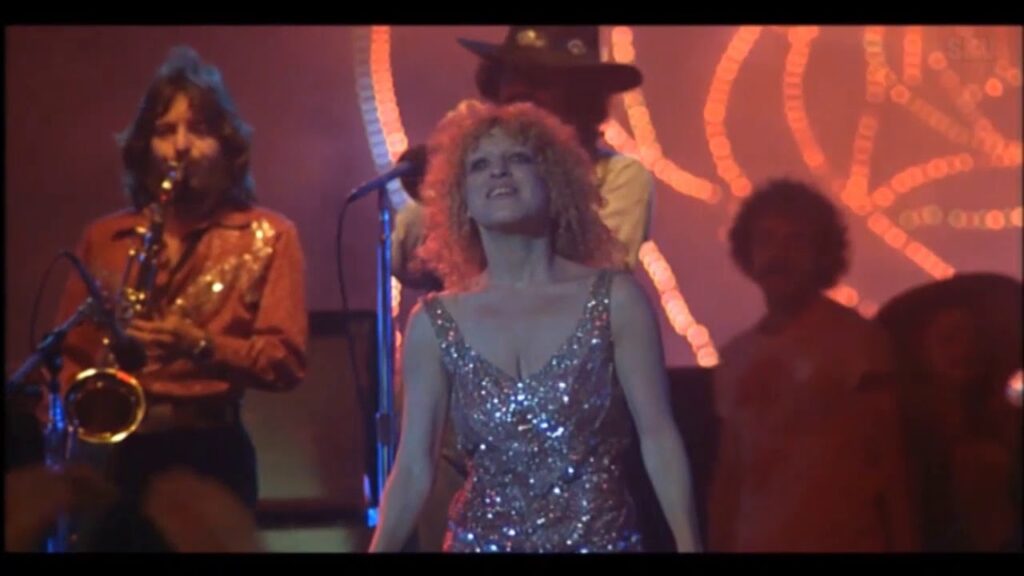
Some songs achieve success because of a catchy melody or a memorable chorus. Others become timeless because they speak to something deeply human. “The Rose,” performed by Bette Midler and released in 1980, belongs firmly in the latter category. With its graceful melody, heartfelt vocal performance, and universal message about love, hope, and perseverance, the song has become one of the most beloved ballads ever recorded.
Written for the film The Rose, the song earned Bette Midler one of the defining hits of her career. It climbed to No. 3 on the Billboard Hot 100, won the Grammy Award for Best Female Pop Vocal Performance, and has since become a favorite at weddings, memorial services, graduations, and countless other meaningful occasions. More than four decades later, “The Rose” continues to touch listeners with its quiet beauty and emotional honesty.
The Story Behind the Song
“The Rose” was written by songwriter Amanda McBroom specifically for the 1979 film The Rose, in which Bette Midler starred as Mary Rose Foster, a fictional rock singer loosely inspired by Janis Joplin.
Although the movie explored the destructive side of fame and the emotional toll it could take on an artist, the closing song offered a message of hope rather than despair. McBroom crafted a composition that spoke about love in poetic, universal terms, avoiding clichés while creating something deeply relatable.
Initially, there were doubts about whether such a simple piano ballad would resonate with audiences. Those concerns quickly disappeared after Midler recorded the song. Her heartfelt interpretation elevated the composition into something extraordinary, helping it become the emotional centerpiece of the film.
Released as a single in 1980, “The Rose” quickly found an audience well beyond moviegoers, becoming one of the year’s biggest adult contemporary hits and cementing its place among the greatest movie songs ever recorded.
The Sound
Unlike many hit songs of its era, “The Rose” relies on restraint rather than spectacle.
The recording begins with little more than piano accompaniment, allowing listeners to focus entirely on the melody and Midler’s voice. As the song progresses, subtle strings and additional instrumentation gradually enter, expanding the emotional landscape without ever overwhelming the performance.
Producer Arif Mardin understood that the song’s strength lay in its simplicity. Every musical choice serves the composition, creating an atmosphere of intimacy and reflection.
The arrangement builds naturally toward its emotional climax, proving that a song doesn’t need elaborate production to leave a lasting impression. Instead, the careful pacing allows every note to carry emotional weight.
Even decades after its release, the recording sounds timeless because it avoids trends in favor of classic musicianship and elegant orchestration.
Performance and Musicianship
Bette Midler delivers one of the finest vocal performances of her remarkable career.
Known for her theatrical stage presence and dynamic personality, Midler takes a remarkably restrained approach here. She begins softly, allowing the emotion to develop gradually before reaching a powerful yet controlled conclusion.
What makes the performance so compelling is its sincerity. Every phrase feels genuine, as though Midler is sharing a deeply personal conversation rather than simply performing a song.
The supporting musicians deserve equal praise. The piano provides a gentle foundation throughout, while the orchestra enters with remarkable subtlety. Instead of dominating the arrangement, each instrument enhances the emotional impact of Midler’s vocal.
The result is a recording that feels intimate despite its grand orchestral setting.
Why It Worked
Several factors helped “The Rose” become one of the most enduring ballads in popular music.
First, Amanda McBroom’s songwriting is exceptional. The imagery is poetic yet accessible, allowing listeners to find their own meaning in the song regardless of their personal experiences.
Second, Bette Midler’s performance transforms an already beautiful composition into something unforgettable. Her emotional control and vocal warmth make every word believable.
The timing also contributed to its success. During an era filled with disco, arena rock, and upbeat pop music, “The Rose” offered a quiet moment of reflection that stood apart from nearly everything else on the charts.
Its connection to the film further expanded its reach, while its universal themes allowed it to take on a life of its own beyond the movie.
The Legacy
“The Rose” has become far more than a hit single or a successful movie theme. It has evolved into one of the most frequently performed contemporary ballads in the world.
Artists from numerous genres have recorded their own versions, each bringing a unique interpretation while preserving the song’s emotional core. It remains a popular choice for talent competitions, tribute concerts, and special events because its message resonates across generations.
For Bette Midler, the song represents one of the defining moments of her career. Although she has enjoyed success in film, theater, television, and music, “The Rose” remains one of the recordings most closely associated with her extraordinary artistry.
Its continued presence on radio, streaming services, and countless playlists dedicated to inspirational music demonstrates its lasting appeal. Few songs have maintained such widespread emotional significance for so many years.
Final Thoughts
“The Rose” is a masterpiece of simplicity. Rather than relying on elaborate production or vocal fireworks, it succeeds through exceptional songwriting, tasteful arrangement, and one of the most heartfelt performances ever captured on record.
Bette Midler’s interpretation remains the definitive version because she understands that the song’s greatest strength lies in its honesty. She allows the melody and emotion to speak naturally, creating a recording that continues to comfort, inspire, and move listeners decades after its release.
Among the countless ballads recorded throughout popular music history, “The Rose” occupies a truly special place. It reminds us that the most powerful songs are often the quietest ones—those that offer hope when it’s needed most and continue to bloom with every new generation of listeners.
This post has already been read 76 times!