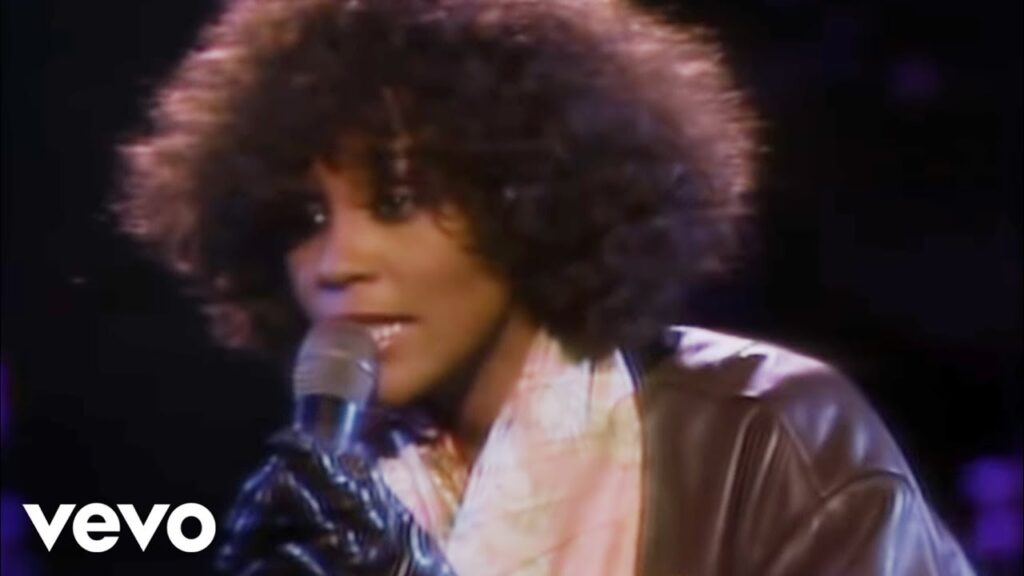
By 1987, Whitney Houston had become the biggest female pop star in the world. Her self-titled debut album had transformed her into an international sensation, and her follow-up, Whitney, would make history as the first album by a female artist to debut at No. 1 on the Billboard 200. Among its many successful singles was “Didn’t We Almost Have It All,” a soaring power ballad that perfectly showcased Houston’s unmatched ability to blend technical brilliance with heartfelt emotion.
Released as the second single from Whitney, the song reached No. 1 on the Billboard Hot 100, becoming her fifth consecutive chart-topping single. Although often overshadowed by later classics such as “I Will Always Love You” or upbeat favorites like “I Wanna Dance with Somebody,” “Didn’t We Almost Have It All” remains one of Houston’s finest vocal performances. It is a masterclass in emotional storytelling and one of the defining ballads of the late 1980s.
The Story Behind the Song
“Didn’t We Almost Have It All” was written by Michael Masser and Will Jennings, two of the most respected songwriters of their era. Masser had already collaborated successfully with Houston on “Greatest Love of All,” while Jennings was known for crafting emotionally rich lyrics that resonated with listeners across genres.
Originally, the song was considered for the soundtrack of the film The Greatest American Hero, but it ultimately found its perfect home on Whitney. Producer Michael Masser recognized that the composition’s sweeping melody and emotional depth were ideally suited to Houston’s extraordinary vocal abilities.
At the time of its release, Whitney Houston seemed unstoppable. Every single she released became a major event, and audiences had come to expect vocal performances that combined effortless power with remarkable elegance.
“Didn’t We Almost Have It All” exceeded even those lofty expectations, becoming another No. 1 hit and further cementing Houston’s status as the premier vocalist of her generation.
The Sound
The arrangement of “Didn’t We Almost Have It All” is built around patience and gradual emotional development.
The song begins quietly with piano and gentle keyboards, allowing Houston’s voice to establish an intimate connection with the listener. As the verses unfold, strings, bass, drums, and orchestral textures slowly enter, expanding the emotional landscape without overwhelming the performance.
Producer Michael Masser demonstrates remarkable restraint throughout the recording. Every musical addition feels earned, building naturally toward the song’s breathtaking climax.
Unlike many power ballads that rely on sheer volume, this recording emphasizes dynamics. The quieter moments make the dramatic peaks even more powerful, creating a sense of emotional progression that keeps listeners completely engaged.
The orchestral production remains elegant rather than excessive, helping the song age gracefully despite its unmistakably 1980s origins.
Performance and Musicianship
Whitney Houston delivers one of the greatest vocal performances of her career.
She begins with remarkable control, singing softly while allowing every phrase to breathe. Her ability to communicate vulnerability without sacrificing technical precision is extraordinary.
As the song progresses, Houston gradually unleashes the full power of her voice. The climactic final chorus demonstrates astonishing range, control, and emotional intensity, yet never feels like vocal showmanship for its own sake. Every note serves the story.
Her phrasing is equally impressive. Houston instinctively knows when to hold back and when to let the emotion soar, creating a performance that feels spontaneous despite its flawless execution.
The accompanying musicians perform with exceptional sensitivity. Piano, strings, rhythm section, and subtle background vocals create a rich foundation while never competing with the lead vocal.
The result is a recording where every musical element exists to support one of the finest singers popular music has ever known.
Why It Worked
Several factors helped “Didn’t We Almost Have It All” become another No. 1 hit.
First, the melody is beautifully constructed. It builds naturally from quiet reflection into an unforgettable emotional release that remains satisfying on every listen.
Second, Whitney Houston was uniquely capable of delivering the song’s emotional complexity. Few vocalists possessed her combination of technical mastery and genuine feeling.
Timing also played a significant role. During the late 1980s, sophisticated adult contemporary ballads dominated radio, and this recording fit perfectly alongside hits by artists like Chicago, Richard Marx, Gloria Estefan, and Phil Collins.
The song also benefited from Houston’s incredible momentum. By this point, audiences expected excellence every time she released a new single, and “Didn’t We Almost Have It All” rewarded that confidence with another unforgettable performance.
A memorable live performance at the 1987 Emmy Awards further demonstrated Houston’s extraordinary vocal ability, reinforcing the song’s reputation as one of the standout ballads of the year.
The Legacy
Although Whitney Houston recorded numerous iconic ballads throughout her career, “Didn’t We Almost Have It All” remains one of her most admired performances among longtime fans.
Its success extended Houston’s remarkable streak of No. 1 singles and reinforced her reputation as the era’s premier interpreter of emotionally driven pop music.
The song continues to receive regular airplay on adult contemporary and classic hits stations while appearing on virtually every major Whitney Houston compilation. Vocalists frequently choose it for competitions and tribute concerts because of its demanding range and emotional depth.
Following Houston’s passing in 2012, renewed appreciation for the recording highlighted what made her artistry so extraordinary. Songs like this remind listeners that her greatest gift wasn’t simply vocal power—it was her ability to make every performance feel deeply personal.
Final Thoughts
“Didn’t We Almost Have It All” stands among the greatest power ballads of the 1980s and one of the defining moments of Whitney Houston’s legendary career. Its elegant arrangement, timeless melody, and extraordinary vocal performance combine to create a recording that continues to move listeners nearly four decades after its release.
Whitney Houston transforms an already exceptional composition into something unforgettable through her remarkable phrasing, emotional honesty, and seemingly limitless vocal ability. Every moment reflects the confidence and artistry of a singer operating at the absolute height of her powers.
While her catalog contains countless classics, “Didn’t We Almost Have It All” deserves recognition as one of her finest achievements. It captures everything that made Whitney Houston a once-in-a-generation artist: impeccable technique, heartfelt emotion, and an ability to connect with listeners in a way that few performers ever have. It remains a timeless reminder of one of the greatest voices popular music has ever known.
This post has already been read 82 times!