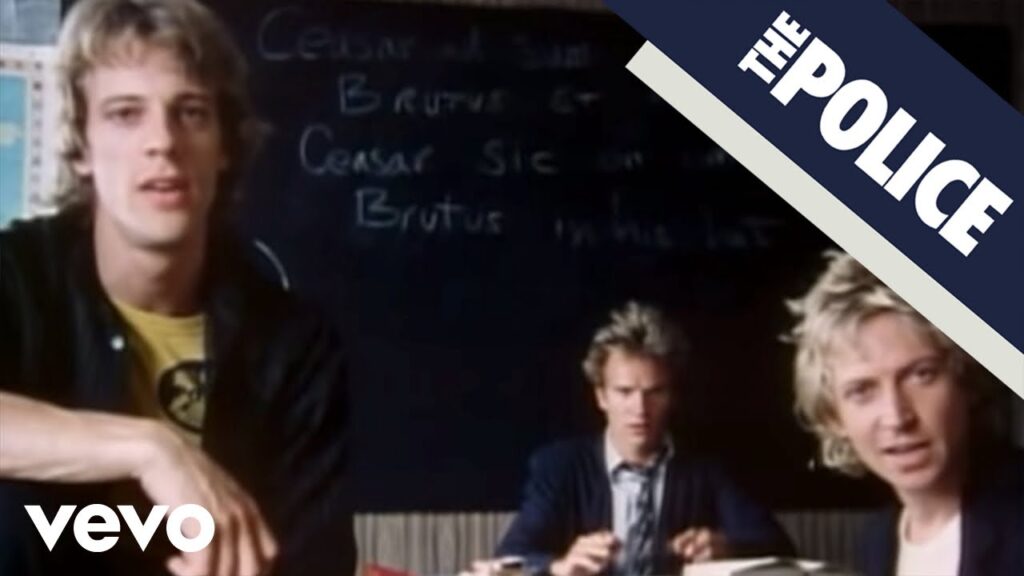
By 1980, The Police had become one of the most exciting bands in the world. Blending rock, reggae, punk, and new wave into a sound that was entirely their own, Sting, Andy Summers, and Stewart Copeland had quickly risen from London’s club scene to international stardom. Their third studio album, Zenyatta Mondatta, would continue that remarkable ascent, and leading the way was “Don’t Stand So Close to Me,” a song that combined an unforgettable melody with one of the most controversial narratives ever to become a mainstream pop hit.
Released in September 1980, “Don’t Stand So Close to Me” reached No. 1 on the UK Singles Chart and climbed to No. 10 on the Billboard Hot 100. It also earned the Grammy Award for Best Rock Performance by a Duo or Group with Vocal. With Sting’s compelling lyrics, Andy Summers’ shimmering guitar work, and Stewart Copeland’s dynamic drumming, the song remains one of The Police’s defining recordings and one of the greatest rock singles of the 1980s.
The Story Behind the Song
Unlike many rock songs inspired by personal relationships or fictional stories, “Don’t Stand So Close to Me” grew out of Sting’s own experiences before becoming a full-time musician.
Before finding success with The Police, Sting worked as an English teacher in Newcastle, England. During that time, he observed the complicated emotions and awkward dynamics that could sometimes develop between teachers and students. Although the song is not autobiographical, those experiences gave him insight into the emotional tension explored in the lyrics.
Rather than glorifying the situation, Sting portrays it as uncomfortable, dangerous, and ultimately destructive. The narrator recognizes the consequences of crossing professional boundaries, creating a song filled with conflict rather than romance.
One of the song’s most memorable lyrical references mentions Vladimir Nabokov’s novel Lolita, reinforcing the theme of forbidden attraction while emphasizing its troubling nature.
The result was a thought-provoking song that challenged listeners while remaining one of the catchiest records on the radio.
The Sound
“Don’t Stand So Close to Me” perfectly showcases The Police’s remarkable ability to create a massive sound with only three musicians.
Andy Summers opens the song with bright, chorus-drenched guitar chords that instantly establish the recording’s distinctive atmosphere. His clean tone and economical playing leave plenty of space for Sting’s bass and Stewart Copeland’s energetic drumming.
Producer Nigel Gray keeps the arrangement crisp and uncluttered. Every instrument occupies its own sonic space, allowing listeners to appreciate the intricate interplay between the trio.
Stewart Copeland’s drumming is especially outstanding. His combination of reggae-inspired rhythms, rock power, and subtle accents drives the song forward with incredible energy.
Sting’s melodic bass lines anchor the arrangement while adding movement beneath the guitar, creating a groove that remains instantly recognizable more than forty years later.
The production is polished without sacrificing the band’s raw chemistry, helping the recording remain timeless.
Performance and Musicianship
Sting delivers one of the finest vocal performances of his early career.
His restrained delivery perfectly matches the tension of the lyrics. Rather than dramatizing the story, he sings with cool detachment, allowing listeners to interpret the emotional complexity for themselves.
Andy Summers contributes one of the most iconic guitar performances of the new wave era. His shimmering chords and subtle melodic fills demonstrate remarkable discipline, proving that memorable guitar parts don’t require constant solos or distortion.
Stewart Copeland’s drumming is nothing short of spectacular. His inventive rhythms provide constant momentum while remaining remarkably precise and musical.
Together, the three musicians create a recording that feels far larger than the sum of its parts. Their chemistry remains one of the defining strengths of The Police throughout their career.
Why It Worked
Several factors helped “Don’t Stand So Close to Me” become one of The Police’s biggest hits.
First, the melody is immediately memorable. The chorus is simple yet incredibly effective, making the song instantly recognizable after only one listen.
Second, Sting’s lyrics invited discussion. Rather than offering easy answers, the song explored uncomfortable emotions with intelligence and nuance, setting it apart from conventional love songs.
The band’s musicianship also distinguished the recording. Every member contributed essential elements while avoiding unnecessary excess, creating one of the tightest performances in rock music.
The song also benefited from MTV’s emergence shortly afterward, where its memorable performance video helped introduce The Police to an even broader audience.
The Legacy
“Don’t Stand So Close to Me” remains one of The Police’s signature songs and one of the defining rock recordings of the early 1980s.
Its success helped establish Zenyatta Mondatta as another landmark album while reinforcing Sting’s reputation as one of rock’s most intelligent lyricists.
In 1986, the band revisited the song with “Don’t Stand So Close to Me ’86,” a slower, more atmospheric version that introduced the classic to a new generation. While that remake found success, many fans continue to regard the original as definitive.
Today, the song remains a staple of classic rock and new wave radio. It has also taken on renewed relevance in discussions about ethics, boundaries, and professional conduct, demonstrating how its themes continue to resonate decades after its release.
Final Thoughts
“Don’t Stand So Close to Me” is one of The Police’s greatest achievements—a brilliantly constructed song that combines sophisticated songwriting, exceptional musicianship, and thought-provoking storytelling into a timeless rock classic.
Sting’s intelligent lyrics, Andy Summers’ instantly recognizable guitar work, and Stewart Copeland’s explosive drumming create a recording that remains fresh and compelling more than forty years after its release. Every element serves the song perfectly, proving that great bands often achieve their greatest impact through precision rather than excess.
As one of the standout tracks from Zenyatta Mondatta, “Don’t Stand So Close to Me” captures The Police at the height of their creative powers. It remains a masterclass in songwriting and arrangement, reminding listeners why the trio continues to be regarded as one of the most influential and innovative bands in rock history.
This post has already been read 69 times!