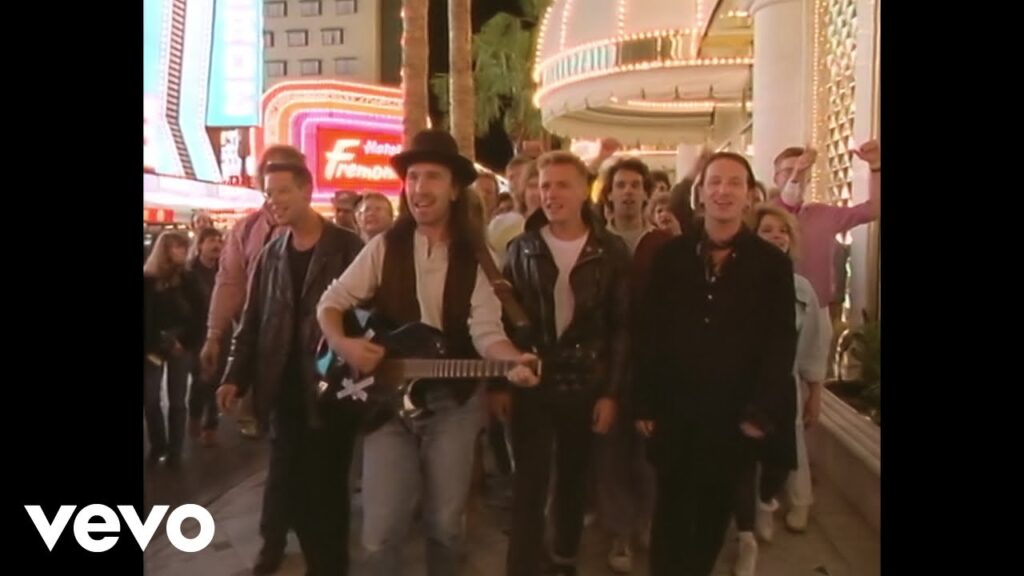
By the mid-1980s, U2 had already established itself as one of rock music’s most exciting bands, but “I Still Haven’t Found What I’m Looking For” elevated the Irish quartet to an entirely different level. Released in 1987 as the second single from the landmark album The Joshua Tree, the song combined gospel influences, soaring melodies, and introspective songwriting into a powerful meditation on faith, hope, and the lifelong search for meaning. It became one of U2’s signature songs while helping define one of the greatest albums ever recorded.
Unlike many songs that offer easy answers, “I Still Haven’t Found What I’m Looking For” embraces uncertainty. It acknowledges that life’s most important questions often remain unresolved, and that the search itself can be just as meaningful as the destination. That emotional honesty, combined with U2’s remarkable musicianship, has made the song resonate with listeners for nearly four decades.
It remains one of the most inspiring and thought-provoking recordings in modern rock.
A New Direction for U2
When U2 began recording The Joshua Tree, the band wanted to expand its sound without losing the passion that had defined its earlier work.
Producer Brian Eno and Daniel Lanois encouraged experimentation, helping the group blend atmospheric textures with American musical influences such as blues, folk, country, and gospel.
“I Still Haven’t Found What I’m Looking For” became one of the album’s most distinctive creations.
Rather than relying on heavy guitars, the band built the song around openness, space, and emotional restraint.
The result was unlike anything they had recorded before.
A Gospel Heart
One of the song’s most striking qualities is its unmistakable gospel influence.
The backing vocals create the feeling of a church choir, while the gradual build gives the recording a sense of spiritual uplift without becoming overwhelming.
The arrangement never rushes.
Instead, it grows patiently, allowing each instrument to add another layer of emotion.
The music feels hopeful.
Reflective.
Comforting.
That gospel-inspired atmosphere gives the song a timeless quality that continues to resonate with audiences from many different backgrounds.
Bono’s Most Vulnerable Vocal
Bono delivers one of the finest performances of his career.
Rather than projecting certainty or confidence, he sings with humility and openness, perfectly capturing the emotional tension between belief and doubt.
His voice carries both strength and longing.
Every phrase feels deeply personal.
Every note sounds sincere.
Instead of presenting himself as someone who has all the answers, Bono invites listeners to share in the universal experience of searching for purpose.
That vulnerability gives the performance extraordinary emotional power.
The Edge Creates Atmosphere
Although “I Still Haven’t Found What I’m Looking For” is often remembered for its lyrics and vocal performance, The Edge’s guitar work is equally essential.
His signature delay effects create shimmering textures that float around the melody rather than dominating it.
The guitar never competes for attention.
It creates atmosphere.
It adds emotion.
It quietly supports every moment of the song.
That understated approach became one of the defining characteristics of U2’s sound.
More Than a Song About Faith
Many listeners interpret “I Still Haven’t Found What I’m Looking For” as a religious song.
While spiritual themes are certainly present, its message extends far beyond any single belief system.
The song speaks about the ongoing search for fulfillment, identity, truth, and inner peace.
It acknowledges accomplishments without suggesting they complete the journey.
That openness allows listeners to bring their own experiences and interpretations to the music.
Few songs invite such personal reflection.
That’s one reason it continues to endure.
A Landmark Success
Released in 1987, the song became one of U2’s biggest international hits.
It reached No. 1 on the Billboard Hot 100 and climbed the charts around the world, helping The Joshua Tree become one of the most celebrated albums in rock history.
The album itself earned widespread critical acclaim and numerous awards while firmly establishing U2 as one of the biggest bands on the planet.
“I Still Haven’t Found What I’m Looking For” played a central role in that remarkable achievement.
A Concert Centerpiece
The song has remained one of the emotional highlights of U2’s live performances.
Its uplifting chorus naturally invites audience participation, often transforming arenas and stadiums into enormous sing-alongs.
Yet despite the massive crowds, the song somehow retains its intimate emotional core.
Each performance feels personal.
Each audience connects with it differently.
Very few rock songs create that balance between grandeur and vulnerability.
A Legacy That Continues to Grow
Nearly forty years after its release, “I Still Haven’t Found What I’m Looking For” remains one of the defining songs of U2’s remarkable career.
It continues to appear in films, television programs, documentaries, and playlists celebrating the greatest rock music ever recorded.
Its themes remain just as relevant today as they were in 1987.
The search for meaning.
The pursuit of hope.
The willingness to keep moving forward.
Those ideas never become outdated.
Final Thoughts
“I Still Haven’t Found What I’m Looking For” stands among the greatest songs U2 has ever recorded because it combines profound songwriting, breathtaking musicianship, and genuine emotional honesty into one unforgettable experience. Bono’s heartfelt vocal, The Edge’s atmospheric guitar, the gospel-inspired arrangement, and the band’s remarkable chemistry created a recording that speaks to listeners on both an intellectual and emotional level.
Its commercial success helped make The Joshua Tree one of the defining albums of the 1980s, but its lasting legacy comes from something much deeper. It reminds us that life’s greatest questions rarely have simple answers—and that continuing to search is not a sign of failure but of hope.
Many songs celebrate arriving.
This one celebrates the journey.
That timeless message has made “I Still Haven’t Found What I’m Looking For” one of the most meaningful and enduring rock anthems ever recorded.
This post has already been read 80 times!