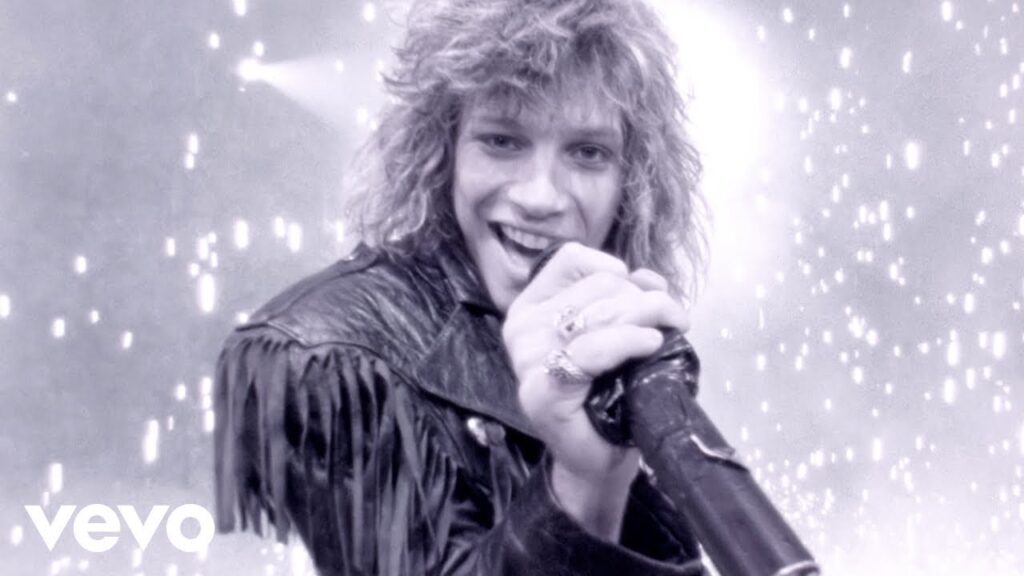
Few songs capture the spirit of perseverance, hope, and determination quite like “Livin’ on a Prayer.” Released in 1986 as the second single from Bon Jovi’s breakthrough album Slippery When Wet, the song transformed the New Jersey band from rising rock stars into global superstars. With its unforgettable chorus, innovative production, and relatable story of ordinary people fighting to build a better life, “Livin’ on a Prayer” became more than a hit—it became one of the greatest arena rock anthems ever recorded.
Decades after its release, the song remains a centerpiece of sporting events, concerts, weddings, karaoke nights, and classic rock radio. Its message of resilience continues to inspire listeners, while its explosive energy ensures that every crowd still sings along as loudly as ever.
Very few rock songs have enjoyed such universal and lasting appeal.
The Story of Tommy and Gina
Unlike many arena rock songs of the era, “Livin’ on a Prayer” tells the story of fictional characters.
Tommy and Gina represent hardworking people trying to overcome financial struggles while holding onto hope for a better future. Their story reflects the economic challenges many families faced during the 1980s, making the song instantly relatable to millions of listeners.
Although the characters are fictional, their experiences feel authentic.
They symbolize determination.
Sacrifice.
Optimism.
That emotional foundation gives the song far more depth than its stadium-sized chorus might initially suggest.
An Instantly Recognizable Sound
The opening moments of “Livin’ on a Prayer” have become legendary.
Richie Sambora’s use of the talk box creates one of rock music’s most recognizable guitar sounds, immediately grabbing the listener’s attention before the full band enters.
From there, the song steadily builds in intensity.
Powerful drums.
Driving bass.
Layered keyboards.
Massive guitars.
Every musical element works together to create one of the biggest-sounding recordings of the decade.
The production perfectly captures the larger-than-life spirit of 1980s arena rock.
Jon Bon Jovi’s Defining Vocal Performance
Jon Bon Jovi delivers one of the finest performances of his career.
He balances emotional storytelling during the verses with explosive power during the choruses, allowing the song to grow naturally rather than peaking too early.
His voice conveys both vulnerability and confidence.
He sounds believable as he tells Tommy and Gina’s story.
When the chorus finally arrives, the emotional payoff feels completely earned.
It’s a vocal performance built as much on conviction as technical ability.
Richie Sambora’s Essential Contribution
Although Jon Bon Jovi became the band’s public face, Richie Sambora’s influence on “Livin’ on a Prayer” cannot be overstated.
His songwriting contributions, distinctive guitar tone, memorable talk box effects, and tasteful solo all helped define the song’s identity.
The chemistry between Bon Jovi and Sambora became one of rock’s great creative partnerships.
Their musical instincts complemented each other perfectly.
The result was a song that sounded unlike anything else dominating rock radio at the time.
A Chorus Built for Stadiums
Some choruses invite listeners to sing along.
“Livin’ on a Prayer” practically demands it.
Its soaring melody and uplifting message have turned the song into one of the greatest audience participation moments in rock history.
Whether heard in a packed arena, a neighborhood bar, or a sporting event, the chorus instantly unites people.
Everyone knows the words.
Everyone joins in.
Very few songs create such an immediate sense of shared excitement.
That communal experience has become one of the recording’s greatest strengths.
A Career-Changing Success
Released in late 1986, “Livin’ on a Prayer” quickly climbed to No. 1 on the Billboard Hot 100 and became Bon Jovi’s signature hit.
Its success helped Slippery When Wet become one of the best-selling rock albums of all time while establishing Bon Jovi as one of the biggest bands in the world.
The song also opened the door for years of international touring and countless future hits.
It remains the defining recording of the band’s remarkable career.
A Song That Never Left
Unlike many songs associated with the 1980s, “Livin’ on a Prayer” never disappeared from popular culture.
It continues to appear in films, television shows, commercials, sporting events, and streaming playlists while remaining a staple of classic rock radio.
New generations discover it every year.
Longtime fans continue to embrace it.
Its popularity has remained remarkably consistent for nearly four decades.
That’s an extraordinary achievement.
Why It Still Resonates
The enduring appeal of “Livin’ on a Prayer” goes beyond nostalgia.
Its message remains universal.
Life is challenging.
Dreams require sacrifice.
Hope matters.
Those themes continue to connect with listeners regardless of age or background.
Combined with exceptional songwriting, unforgettable production, and one of the biggest choruses in rock history, the result is a song that feels timeless rather than tied to a specific decade.
Final Thoughts
“Livin’ on a Prayer” stands among the greatest rock songs ever recorded because it combines memorable storytelling, powerful musicianship, and an uplifting message into one unforgettable anthem. Jon Bon Jovi’s passionate vocal, Richie Sambora’s iconic guitar work, and the band’s remarkable chemistry created a recording that continues to inspire audiences around the world.
Its commercial success transformed Bon Jovi into global superstars, but its lasting legacy comes from something much deeper. The song reminds listeners that perseverance, love, and hope can carry people through life’s most difficult moments.
Many arena rock songs were built for loud crowds.
“Livin’ on a Prayer” was built for people.
That timeless human connection is why it continues to stand as one of the defining songs of the 1980s and one of the greatest rock anthems ever written.
This post has already been read 90 times!