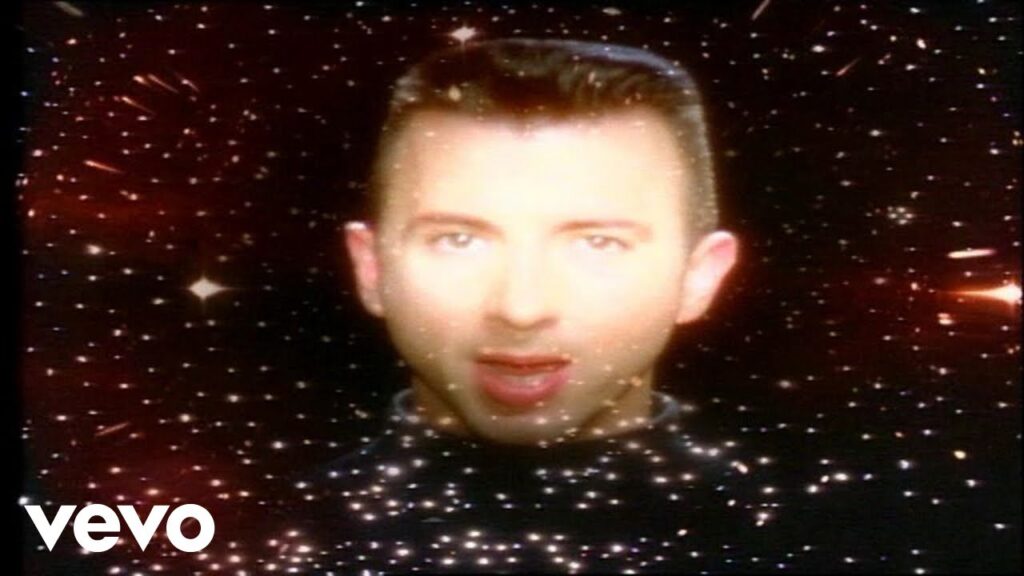
Every so often, an artist takes an overlooked song and completely transforms it, creating a version so distinctive that it overshadows the original. That’s exactly what happened with “Tainted Love.” Released by Soft Cell in 1981, the song reinvented a little-known Northern soul recording into one of the defining hits of the synth-pop era. With its minimalist electronic production, haunting melody, and unforgettable vocal performance from Marc Almond, “Tainted Love” became an international sensation and helped usher electronic pop into the mainstream.
The song sounded unlike almost anything else on the radio at the time. Instead of relying on traditional rock instrumentation, Soft Cell built the track around synthesizers, drum machines, and stark production, creating an atmosphere that felt both intimate and futuristic. More than four decades later, it remains one of the most recognizable songs of the 1980s and a landmark recording in electronic music.
Its influence continues to echo through pop music today.
From Obscurity to Worldwide Fame
Long before Soft Cell recorded it, “Tainted Love” had another life.
The song was originally written by Ed Cobb and first recorded by Gloria Jones in 1964. Although her version failed to become a major commercial success, it later found a passionate following within England’s Northern soul scene during the 1970s.
Marc Almond and Dave Ball recognized its potential.
Rather than simply covering the original, they completely reinvented it.
Gone were the soulful horns and driving rhythm section.
In their place came icy synthesizers, electronic beats, and an entirely different emotional atmosphere.
It was a bold gamble.
One that changed both their careers forever.
Simplicity Becomes a Strength
One of the most remarkable aspects of “Tainted Love” is how much it accomplishes with relatively few musical elements.
Dave Ball’s synthesizer arrangement is deceptively simple.
The electronic bass line is hypnotic.
The drum machine provides relentless momentum.
Small keyboard flourishes create tension without overwhelming the melody.
Instead of filling every available space, Soft Cell embraced restraint.
That minimalism gives the song its distinctive character.
Every sound matters.
Every note serves a purpose.
Marc Almond’s Unforgettable Vocal
Marc Almond delivers one of the most recognizable vocal performances of the decade.
His expressive voice balances vulnerability with frustration, perfectly matching the emotional tone of the song.
Rather than relying on vocal acrobatics, Almond lets subtle phrasing and emotional nuance carry the performance.
He sounds weary.
Determined.
Emotionally exhausted.
That authenticity gives the recording a depth that elevates it far beyond a typical dance track.
His performance remains one of synth-pop’s finest vocal achievements.
A Defining Song of the Synth-Pop Explosion
The early 1980s saw synthesizers rapidly reshape popular music.
Bands like Depeche Mode, The Human League, Eurythmics, and New Order would soon become household names, but “Tainted Love” arrived near the beginning of that movement and demonstrated just how commercially successful electronic pop could become.
The song appealed to multiple audiences at once.
Dance clubs embraced it.
Pop radio embraced it.
Alternative listeners embraced it.
Its broad appeal helped normalize synthesizer-driven music for mainstream audiences around the world.
A Record-Breaking Hit
Released in 1981 in the United Kingdom and reaching American audiences the following year, “Tainted Love” became one of the biggest international hits of the decade.
In the United States, it spent a then-record-setting 43 consecutive weeks on the Billboard Hot 100, an extraordinary achievement that reflected its remarkable staying power.
Instead of disappearing after a few months, the song continued attracting new listeners week after week.
Its success transformed Soft Cell from underground electronic artists into international stars.
It remains their signature recording.
More Than Just a Cover
Many cover songs closely follow the originals.
“Tainted Love” took the opposite approach.
Soft Cell kept the core melody while reinventing nearly everything else.
The darker production gave the song an entirely different emotional impact, making it feel simultaneously danceable and melancholic.
That’s one reason many listeners don’t even realize it’s a cover.
The band’s interpretation feels completely original.
It became the definitive version.
A Song That Never Left
Unlike many early synth-pop hits, “Tainted Love” has remained remarkably visible in popular culture.
It has appeared in films, television series, commercials, sporting events, and countless streaming playlists celebrating the music of the 1980s.
Artists from multiple genres have covered or sampled it, while DJs continue to include it in dance sets around the world.
Each new generation seems to discover it naturally.
Its appeal has proven remarkably timeless.
Why It Still Resonates
Part of the song’s enduring popularity comes from its fascinating emotional contrast.
The music is energetic enough to fill dance floors.
The vocal performance carries genuine emotional weight.
The production feels cool and detached while the melody remains deeply memorable.
That balance gives the song an unusual emotional complexity.
Listeners can dance to it.
Reflect on it.
Or simply admire its remarkable craftsmanship.
Very few pop songs accomplish all three.
Final Thoughts
“Tainted Love” stands among the greatest synth-pop recordings ever made because it demonstrates how imagination and creativity can completely transform an overlooked song into a cultural landmark. Marc Almond’s expressive vocal, Dave Ball’s groundbreaking electronic production, and the duo’s fearless reinterpretation created a recording that remains just as compelling today as it was in 1981.
Its influence helped shape the future of electronic pop music while proving that synthesizers could deliver just as much emotion as traditional rock instruments. More importantly, it showed that a brilliant cover version doesn’t simply recreate the past—it creates something entirely new.
Many artists record cover songs.
Soft Cell reinvented one.
“Tainted Love” remains a shining example of how bold artistic vision can turn a forgotten recording into one of the most enduring classics of the modern pop era.
This post has already been read 78 times!