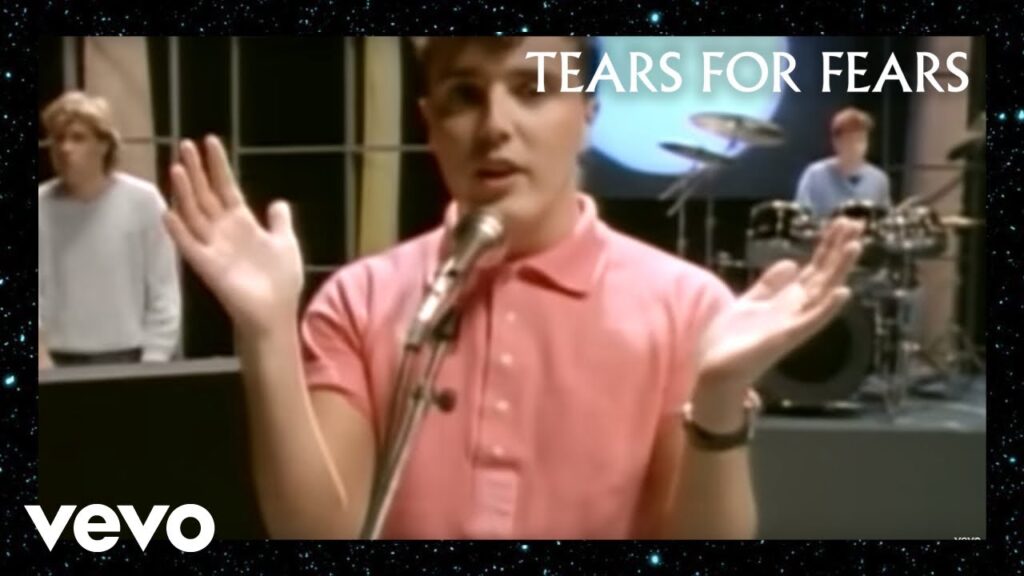
Some songs become so deeply woven into popular culture that they come to represent an entire decade. “Everybody Wants to Rule the World” by Tears for Fears is one of those rare recordings. Released in 1985 as the third single from the landmark album Songs from the Big Chair, the song combined shimmering guitars, sophisticated songwriting, and subtle political commentary into one of the most enduring pop classics of the 1980s.
At first listen, its warm melody and laid-back groove create an atmosphere of effortless optimism. Listen more closely, however, and another layer emerges. Beneath the polished production lies a thoughtful meditation on ambition, power, and the human desire for control. That balance between irresistible pop and meaningful songwriting helped the song become Tears for Fears’ only No. 1 hit in the United States and one of the defining tracks of their remarkable career.
More than forty years later, it remains as captivating and relevant as ever.
An Unexpected Addition
Interestingly, “Everybody Wants to Rule the World” almost never existed.
Roland Orzabal initially wasn’t enthusiastic about writing a lighter, more accessible song for Songs from the Big Chair. Producer Chris Hughes encouraged the band to explore a more upbeat direction, and the collaboration ultimately produced one of the greatest pop songs of the decade.
Sometimes the songs artists hesitate to write become their biggest successes.
That certainly proved true here.
The finished recording perfectly complemented the album’s more emotionally intense material while expanding the band’s audience around the world.
Sophisticated Pop at Its Finest
One of the song’s greatest achievements is the way it blends musical sophistication with effortless accessibility.
Built around clean guitar lines, bright synthesizers, tasteful keyboards, and an understated rhythm section, the arrangement feels relaxed without ever becoming sleepy.
Every musical choice serves the song.
Nothing feels excessive.
Nothing sounds dated.
The production creates space for the melody to breathe, allowing listeners to appreciate both its emotional warmth and its remarkable craftsmanship.
It’s pop music at its most elegant.
Roland Orzabal and Curt Smith in Perfect Harmony
Although Roland Orzabal wrote much of the song, Curt Smith’s lead vocal became one of its defining strengths.
His calm, reassuring delivery provides the perfect contrast to the song’s underlying themes of competition and power.
Rather than sounding dramatic or confrontational, Smith sings with quiet confidence.
His performance invites listeners into the song instead of demanding their attention.
Meanwhile, Orzabal’s harmonies enrich the recording, creating one of the most recognizable vocal blends of the era.
Together, they formed one of the finest partnerships in 1980s pop.
More Than a Catchy Chorus
Part of what makes “Everybody Wants to Rule the World” so enduring is its willingness to explore complex ideas without becoming heavy-handed.
The song reflects on ambition, leadership, conflict, and the pursuit of power while leaving room for listeners to form their own interpretations.
Its message feels remarkably timeless.
Every generation experiences struggles over influence, authority, and responsibility.
Because the lyrics avoid tying themselves to one specific event, the song remains relevant decades after its release.
Great songwriting often raises questions instead of providing easy answers.
This song does exactly that.
The Sound of the Mid-1980s
Few recordings capture the sonic identity of the mid-1980s as perfectly as “Everybody Wants to Rule the World.”
Produced by Chris Hughes, the song combines polished studio craftsmanship with remarkable restraint.
The clean guitars sparkle.
The synthesizers enhance rather than dominate.
The rhythm section creates an effortless groove that never overshadows the melody.
Despite being unmistakably rooted in its era, the production has aged beautifully.
It continues to sound remarkably fresh.
A Worldwide Breakthrough
Released in 1985, the song quickly became an international hit.
It reached No. 1 on the Billboard Hot 100 and helped propel Songs from the Big Chair into one of the defining albums of the decade.
The success introduced Tears for Fears to audiences around the globe while establishing them as far more than another synth-pop act.
They had proven themselves exceptional songwriters capable of combining commercial success with artistic ambition.
That reputation has only grown stronger over time.
A Song That Never Left
Unlike many chart-toppers that fade into nostalgia, “Everybody Wants to Rule the World” has remained a constant presence in popular culture.
It appears regularly in films, television series, documentaries, commercials, sporting events, and streaming playlists.
Its universal themes make it suitable for countless settings, while its unforgettable melody ensures immediate recognition.
Each new generation seems to discover it naturally.
Its popularity has never truly disappeared.
Why It Still Resonates
Part of the song’s lasting appeal comes from its fascinating emotional balance.
The music feels hopeful.
The lyrics encourage reflection.
The performance remains calm even while exploring complicated ideas.
That contrast creates a recording listeners can enjoy on multiple levels.
It works as a carefree pop song.
It works as thoughtful social commentary.
It works as both simultaneously.
Very few songs achieve that balance so successfully.
Final Thoughts
“Everybody Wants to Rule the World” stands among the greatest pop recordings ever made because it combines exceptional songwriting, elegant production, memorable performances, and timeless themes into one unforgettable song. Tears for Fears created a recording that remains intellectually engaging without sacrificing its remarkable accessibility, proving that pop music can be both entertaining and deeply thoughtful.
Its commercial success established the band as international stars, but its enduring popularity comes from something even greater. Every generation continues to recognize itself in the song’s exploration of ambition, responsibility, and the complicated nature of power.
Many songs define a summer.
Many define a decade.
“Everybody Wants to Rule the World” continues to define an idea—one that remains just as relevant today as it was in 1985.
This post has already been read 86 times!