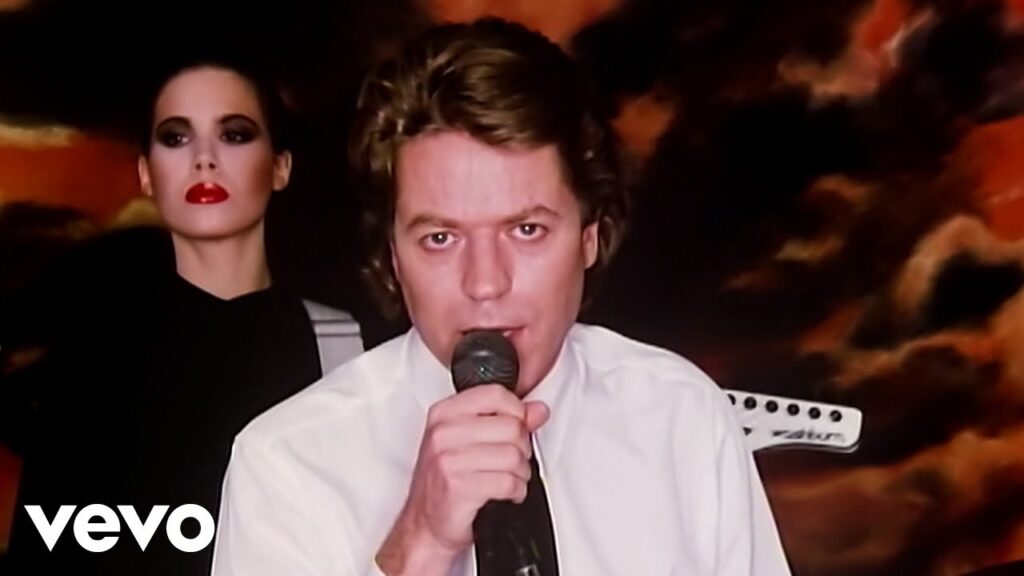
Some songs become famous for their unforgettable hooks. Others are remembered for groundbreaking music videos. “Addicted to Love” by Robert Palmer achieved both. Released in 1986 as the lead single from his album Riptide, the song combined hard-driving rock guitars, polished pop production, and Palmer’s effortlessly cool vocal style to create one of the defining hits of the decade.
The song topped the Billboard Hot 100, won a Grammy Award, and became inseparable from its iconic black-and-white music video featuring a line of expressionless fashion models posing as a rock band. While the visuals became a cultural phenomenon, the music itself was equally deserving of attention. Beneath its stylish exterior lies a tightly constructed rock song built on an irresistible groove and one of the catchiest riffs of the 1980s.
More than forty years later, “Addicted to Love” remains one of Robert Palmer’s signature recordings and one of the era’s most recognizable classics.
A New Chapter for Robert Palmer
By the mid-1980s, Robert Palmer had already built a respected career through a blend of rock, soul, funk, and new wave influences.
Although he had enjoyed previous success, Riptide introduced him to an even larger international audience.
“Addicted to Love” perfectly showcased Palmer’s unique strengths.
He wasn’t interested in flashy vocal gymnastics.
Instead, he relied on confidence, sophistication, and impeccable phrasing.
That understated style became his trademark.
It made him stand out in an era filled with larger-than-life performers.
An Instantly Recognizable Guitar Riff
The song opens with one of the most memorable guitar riffs of the decade.
Simple, powerful, and endlessly catchy, it immediately establishes the song’s driving energy.
The guitars remain at the center of the arrangement throughout, providing a muscular rock foundation while allowing Palmer’s smooth vocal to glide effortlessly above them.
The contrast works beautifully.
The music is aggressive.
The vocal remains calm.
Together, they create a distinctive tension that gives the song much of its appeal.
Robert Palmer’s Cool, Confident Vocal
One of Palmer’s greatest gifts was his ability to sound completely in control.
On “Addicted to Love,” he delivers every line with effortless confidence.
Rather than pushing his voice toward dramatic extremes, he allows subtle phrasing and impeccable timing to carry the performance.
His delivery feels conversational.
Relaxed.
Completely believable.
That restraint makes the chorus even more effective, giving the song an undeniable sense of swagger without ever becoming overblown.
It’s one of the defining vocal performances of the 1980s.
Polished Production That Still Sounds Fresh
Produced by Bernard Edwards, “Addicted to Love” balances rock power with pop accessibility.
The rhythm section provides a relentless pulse, while crisp guitars, layered backing vocals, and clean production create a recording that feels both powerful and sophisticated.
Nothing sounds cluttered.
Every instrument occupies its own space.
The result is a mix that continues to sound remarkably modern decades after its release.
Its clarity remains one of its greatest strengths.
The Music Video That Changed MTV
Few music videos are as instantly recognizable as “Addicted to Love.”
Directed by Terence Donovan, the black-and-white clip featured Palmer performing alongside a group of identically dressed female models portraying musicians with deliberately expressionless faces.
The minimalist visual style became one of MTV’s defining images.
It inspired countless parodies, tributes, and references across television, film, and advertising.
The video won multiple awards and helped cement Palmer’s place in pop culture history.
Even people unfamiliar with the song often recognize its iconic imagery.
A Worldwide Smash
Released in 1986, “Addicted to Love” became Robert Palmer’s first and only No. 1 hit on the Billboard Hot 100.
It also reached audiences around the world, helping Riptide become the most commercially successful album of Palmer’s career.
The song earned the Grammy Award for Best Male Rock Vocal Performance and transformed Palmer into an international superstar.
It represented the perfect combination of artistic credibility and commercial success.
More Than an MTV Favorite
Although the music video often receives much of the attention, “Addicted to Love” has endured because the song itself is exceptionally well crafted.
Its melody is memorable.
Its groove is irresistible.
Its production remains polished.
Its lyrics explore obsession and attraction with enough wit to avoid becoming cliché.
The music easily stands on its own, even without the famous visuals.
That’s the true mark of a lasting hit.
Why It Continues to Endure
“Addicted to Love” remains a staple of classic rock radio, ’80s playlists, films, sporting events, and television programs.
Its infectious rhythm and unforgettable chorus continue to attract new listeners while longtime fans appreciate its timeless craftsmanship.
The recording captures everything that worked about mainstream rock during the mid-1980s without becoming trapped by the era’s excesses.
Its style feels confident rather than dated.
Its energy remains undeniable.
Final Thoughts
“Addicted to Love” stands among the defining rock songs of the 1980s because it perfectly combines exceptional songwriting, polished production, unforgettable guitar work, and Robert Palmer’s uniquely cool vocal performance. The song demonstrated that confidence doesn’t have to be loud to command attention, and its remarkable balance of rock power and pop sophistication continues to impress decades after its release.
Its commercial success and groundbreaking music video made it a cultural landmark, but the music itself remains the true reason listeners continue coming back. Every riff, every chorus, and every perfectly delivered vocal line contributes to a recording that has lost none of its appeal.
Many songs become famous because of their videos.
“Addicted to Love” became legendary because the music was every bit as unforgettable as the images.
That lasting combination has secured its place among the greatest rock classics of the MTV generation.
This post has already been read 91 times!