Madonna was already the biggest female pop star in the world by the summer of 1986, but she wasn’t interested in playing it safe. After dominating radio with dance-pop hits like “Holiday,” “Like a Virgin,” and “Material Girl,” she surprised audiences with a song that tackled one of the most controversial topics imaginable. “Papa Don’t Preach” wasn’t another carefree pop anthem—it was a dramatic story about teenage pregnancy, family expectations, and standing by difficult decisions.
Released as the second single from True Blue, the song became another massive international hit while sparking debates that stretched far beyond the music world. Parents, religious groups, political commentators, and fans all had something to say about it. Some praised Madonna for giving voice to young women facing impossible choices, while others believed the song promoted a controversial message.
Nearly forty years later, “Papa Don’t Preach” remains one of Madonna’s most important recordings—not just because it topped the charts, but because it proved that mainstream pop music could spark conversations about real-life issues without sacrificing commercial appeal.
A Song Madonna Didn’t Write Alone
Unlike many of Madonna’s biggest hits, “Papa Don’t Preach” began with songwriter Brian Elliot. Inspired by the stories he heard from teenage girls in his California neighborhood, Elliot crafted a song told from the perspective of a young woman preparing to tell her father about an unexpected pregnancy.
Madonna immediately connected with the material.
She worked on the lyrics and arrangement, shaping the song into something that fit both her artistic vision and the more mature direction she wanted for True Blue. Rather than presenting herself as the playful, flirtatious pop star audiences had come to know, she embraced a role that required genuine emotional depth.
It marked another step in her evolution as an artist.
A Story Told From One Point of View
One reason “Papa Don’t Preach” generated so much discussion is that it never tells listeners what they should think.
Instead, it presents the thoughts of a young woman who has already made up her mind.
She isn’t asking permission.
She’s asking for understanding.
That distinction made the song unusually complex for mainstream pop radio. Instead of offering simple answers, it focused on family relationships, responsibility, and the emotional weight of difficult choices.
Listeners were left to interpret the story for themselves.
That ambiguity fueled countless conversations.
A New Musical Direction
Musically, “Papa Don’t Preach” represented a noticeable shift from Madonna’s earlier dance hits.
The opening string arrangement immediately signals that this is something different. Rather than launching into a club-ready groove, the song builds slowly before exploding into a driving pop-rock rhythm.
Producer Stephen Bray helped create a fuller, more dramatic sound that complemented the seriousness of the lyrics.
Electric guitars, orchestral flourishes, and powerful percussion gave the track an epic quality rarely heard in Madonna’s catalog up to that point.
It sounded bigger.
It sounded more cinematic.
Most importantly, it sounded like an artist determined to keep evolving.
Madonna’s Vocal Performance
Madonna’s early recordings often emphasized attitude more than vocal power.
On “Papa Don’t Preach,” she delivered one of her strongest performances to date.
She sings with conviction throughout, balancing vulnerability with determination.
Rather than sounding frightened, the narrator comes across as confident in her decision while still hoping to preserve her relationship with her father.
That emotional balance makes the song believable.
Madonna understood that subtlety would have far greater impact than melodrama.
The Iconic Music Video
The music video became almost as famous as the song itself.
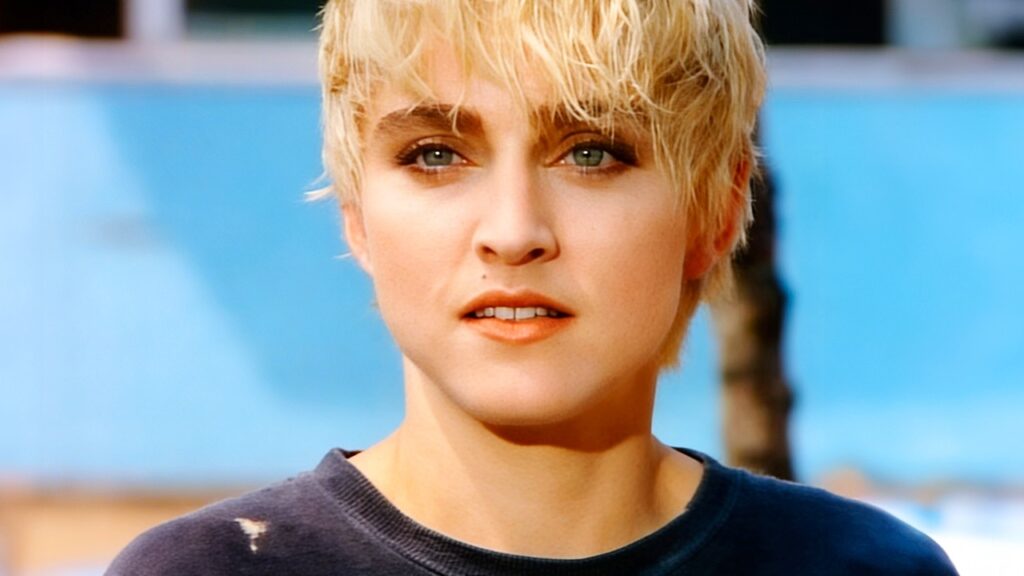
Directed by James Foley, it showed Madonna abandoning the glamorous “Material Girl” image in favor of a more natural look inspired by working-class America.
Short blonde hair.
Blue jeans.
Leather jacket.
Simple makeup.
It was another successful reinvention.
Actor Danny Aiello portrayed her father, and their scenes together formed the emotional core of the video. Instead of flashy choreography, viewers watched a family struggle with communication, disappointment, and unconditional love.
The video’s cinematic storytelling helped reinforce the emotional weight of the song.
A Firestorm of Debate
Almost immediately after its release, “Papa Don’t Preach” became the center of cultural debate.
Some interpreted the song as encouraging teenagers to keep unexpected pregnancies.
Others argued it simply portrayed one young woman’s personal decision without taking sides.
Both pro-life and pro-choice organizations attempted to claim the song supported their positions.
Madonna largely resisted offering a definitive interpretation.
She preferred allowing listeners to draw their own conclusions.
That refusal to simplify the issue only increased public fascination.
The discussions surrounding the song became almost as significant as the song itself.
Another Number One Smash
Despite the controversy—or perhaps partly because of it—”Papa Don’t Preach” became another enormous commercial success.
The single reached number one on the Billboard Hot 100 and topped charts across Europe, Australia, Canada, and several other countries.
It became one of the signature songs from True Blue, an album that cemented Madonna’s position as the defining female pop artist of the decade.
The success demonstrated that audiences were willing to embrace songs dealing with more serious themes, provided they were paired with memorable melodies and compelling performances.
Why It Connected With So Many People
The specific situation described in the song may not be universal, but the emotional conflict certainly is.
Almost everyone has experienced moments when they needed acceptance from someone they deeply respected.
The father-daughter relationship at the heart of “Papa Don’t Preach” gave the song emotional resonance far beyond its controversial subject matter.
It’s ultimately a story about family.
About growing up.
About making difficult decisions while hoping those closest to you will continue to offer love and support.
Those themes remain timeless.
One of Madonna’s Boldest Reinventions
Madonna built her career on constantly changing her image.
Every album introduced a slightly different version of herself.
“Papa Don’t Preach” marked one of the earliest examples of that strategy paying enormous dividends.
Instead of repeating the formula that had already made her famous, she embraced a more mature sound and more serious storytelling.
The gamble worked brilliantly.
It expanded her audience while demonstrating that she could succeed outside the dance-pop world.
Lasting Cultural Impact
Even decades after its release, “Papa Don’t Preach” continues appearing in discussions about controversial songs that shaped popular culture.
Its influence extends beyond music.
It demonstrated that pop stars could address sensitive social issues without abandoning mainstream success.
The song has been covered by numerous artists, referenced in television and film, and revisited countless times whenever conversations turn to Madonna’s most significant recordings.
Its ability to generate discussion has never disappeared.
Why It Still Matters
Today’s listeners may hear “Papa Don’t Preach” differently than audiences did in 1986, but its emotional honesty remains powerful.
The production still sounds energetic.
The chorus remains instantly recognizable.
Most importantly, the story continues inviting empathy rather than judgment.
Great songs don’t always provide answers.
Sometimes they simply encourage listeners to think.
That’s exactly what “Papa Don’t Preach” accomplished.
Legacy
“Papa Don’t Preach” stands as one of Madonna’s defining achievements, combining unforgettable pop craftsmanship with storytelling that challenged listeners to confront complicated emotions and difficult choices. It expanded perceptions of what mainstream pop music could accomplish while proving that chart-topping hits didn’t have to avoid controversial subjects. More than a generation later, the song remains a landmark recording—not because everyone agreed with its message, but because it inspired millions to start conversations that extended far beyond the radio. That combination of commercial success, emotional depth, and cultural impact has secured its place among the most important songs of the 1980s.
This post has already been read 79 times!