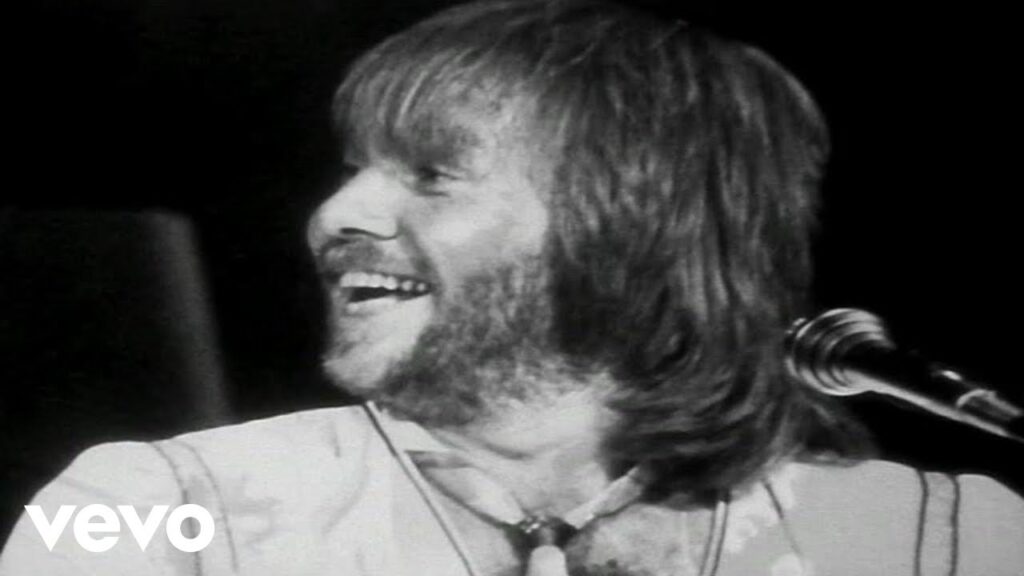
By 1980, ABBA had already conquered the world. The Swedish quartet had spent most of the previous decade producing an incredible string of international hits, becoming one of the biggest pop acts in history. Behind the scenes, however, life was changing dramatically. Both married couples within the group had gone through painful divorces, leading many fans to wonder how the band could continue making music together.
Then came “The Winner Takes It All.”
Released as the lead single from Super Trouper, the song became one of ABBA’s greatest achievements. A soaring piano ballad filled with heartbreak and emotional honesty, it showcased the remarkable songwriting partnership of Benny Andersson and Björn Ulvaeus, along with one of the finest vocal performances ever recorded by Agnetha Fältskog. Although many assumed the song was a direct account of Björn and Agnetha’s divorce, its true story is more nuanced.
Regardless of its inspiration, “The Winner Takes It All” remains one of the most moving pop songs ever written and one of the defining ballads of the 1980s.
Written During a Difficult Chapter
When Björn Ulvaeus wrote the lyrics, his marriage to Agnetha Fältskog had recently ended. Naturally, many listeners believed every line reflected their personal relationship.
Björn has repeatedly explained that while his own experiences undoubtedly influenced the emotions behind the song, the lyrics are largely fictional.
He wasn’t writing a diary.
He was writing a story.
Like many great songwriters, he borrowed from real emotions while creating a character whose experiences could resonate with anyone who had endured heartbreak.
That combination of truth and imagination gave the song extraordinary emotional depth.
Agnetha’s Remarkable Performance
If the lyrics made the song memorable, Agnetha Fältskog’s vocal performance made it unforgettable.
Knowing the public fascination surrounding the band’s divorce, many wondered how she could sing such emotionally charged material written by her former husband.
She answered with one of the greatest performances of her career.
Every line feels genuine.
Every note carries vulnerability without ever becoming melodramatic.
Her voice moves effortlessly between quiet reflection and emotional release, allowing listeners to believe every word.
It’s difficult to imagine another singer delivering the song with the same combination of grace and heartbreak.
Even Björn later admitted that Agnetha’s interpretation elevated the song beyond what he had imagined.
Benny Andersson’s Elegant Piano
The song begins with one of the most recognizable piano introductions in pop music.
Benny Andersson keeps the arrangement surprisingly restrained, allowing the melody to unfold naturally before gradually adding strings, drums, and subtle orchestration.
Nothing feels excessive.
Every instrument serves the emotion rather than distracting from it.
As the song builds, the arrangement grows richer without losing its intimacy.
That careful balance between simplicity and grandeur is one of ABBA’s greatest strengths as recording artists.
The production remains breathtaking more than forty years later.
More Than a Song About Divorce
While many people associate “The Winner Takes It All” with the end of a marriage, its themes are much broader.
At its core, the song explores the emotional imbalance that often follows the end of any important relationship.
One person moves forward.
The other is left trying to understand what happened.
The title itself captures that painful reality.
Love isn’t always fair.
Sometimes one person appears to emerge stronger while the other struggles to recover.
Whether listeners have experienced divorce, a breakup, or another significant loss, the emotions remain instantly recognizable.
A Different Side of ABBA
Much of ABBA’s success came from upbeat classics like “Dancing Queen,” “Mamma Mia,” and “Take a Chance on Me.”
“The Winner Takes It All” revealed another dimension of the group.
Instead of infectious dance rhythms, they embraced emotional storytelling.
Instead of carefree optimism, they explored vulnerability.
The result demonstrated that ABBA could create powerful dramatic music just as effectively as irresistible pop.
Many critics now consider it their finest ballad.
Some even regard it as their greatest song, period.
Climbing the Charts Again
Released in the summer of 1980, “The Winner Takes It All” quickly became another worldwide success.
The single reached No. 1 in numerous countries, including the United Kingdom, Belgium, Ireland, and the Netherlands. It also climbed into the Top 10 in the United States, helping introduce Super Trouper to a global audience.
The song’s success proved that ABBA remained one of the world’s biggest groups even as musical tastes continued evolving.
They had already dominated the 1970s.
Now they were showing they could thrive in a new decade as well.
A Song That Grew Even Stronger Over Time
Many chart-topping hits eventually become nostalgic favorites.
“The Winner Takes It All” followed a different path.
Its reputation has continued growing with each passing decade.
Today, it’s frequently cited among the greatest breakup songs ever written.
Critics praise its sophisticated songwriting.
Musicians admire its elegant construction.
Fans continue connecting with its emotional honesty.
The song has matured beautifully, proving that genuine emotion rarely goes out of style.
Countless Covers, Endless Interpretations
Artists from virtually every genre have recorded versions of “The Winner Takes It All.”
Country singers.
Jazz musicians.
Classical performers.
Broadway productions.
Television talent shows.
Its remarkable melody and universal themes allow each performer to bring something unique to the song while preserving its emotional core.
Perhaps its most famous modern appearance came in the Mamma Mia! musical and film adaptations, where it became one of the productions’ emotional highlights.
Its ability to move audiences remains unchanged regardless of the setting.
Why It Still Resonates
The production unmistakably reflects ABBA’s polished style, yet the song never feels dated.
Part of that comes from the extraordinary craftsmanship behind it.
The melody is timeless.
The lyrics remain deeply relatable.
The vocal performance still feels astonishingly sincere.
Everyone understands disappointment.
Everyone knows what it feels like to lose something important.
“The Winner Takes It All” transforms those emotions into something strangely beautiful.
That’s one of the highest achievements any songwriter can hope for.
One of Pop Music’s Finest Moments
ABBA produced countless classics during their remarkable career.
Yet even among a catalog filled with unforgettable songs, “The Winner Takes It All” occupies a special place.
It combines exceptional songwriting, flawless production, and a once-in-a-generation vocal performance into a recording that continues inspiring listeners around the world.
It’s a reminder that some of the greatest pop songs aren’t built around celebration.
Sometimes they’re built around survival.
Legacy
“The Winner Takes It All” stands as one of ABBA’s greatest accomplishments and one of the finest pop ballads ever recorded. Born during a period of personal upheaval but elevated through extraordinary artistry, the song transformed heartbreak into something universally relatable and deeply moving. Agnetha Fältskog’s unforgettable vocal performance, Benny Andersson’s elegant arrangement, and Björn Ulvaeus’s emotionally rich songwriting combined to create a timeless masterpiece that continues to resonate across generations. More than four decades after its release, “The Winner Takes It All” remains proof that the most powerful songs often come from life’s most difficult moments—and that great music has the ability to turn personal pain into something millions can share.
This post has already been read 99 times!