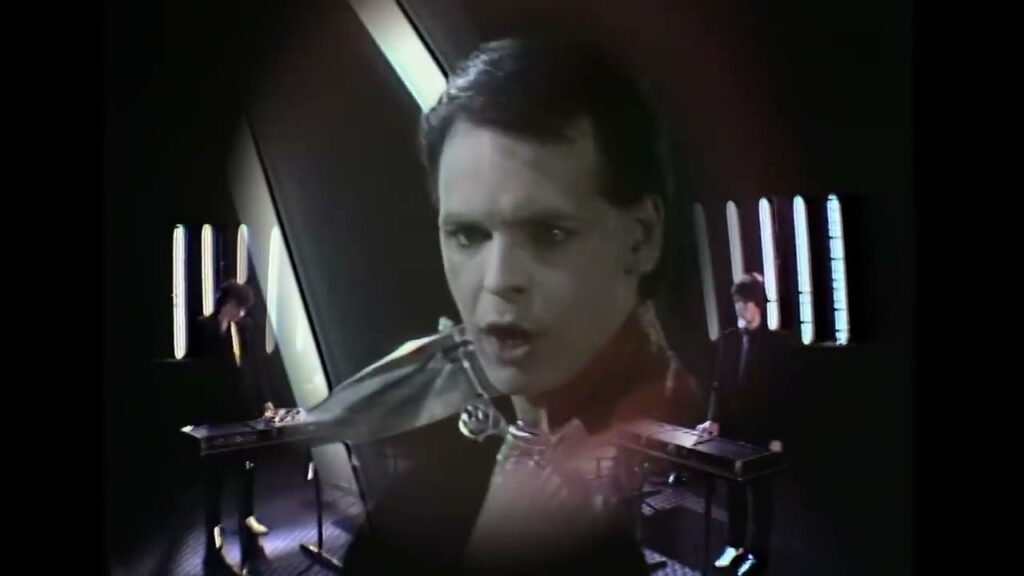
Long before synthesizers dominated pop music, one song showed the world what the future could sound like. Gary Numan’s “Cars,” released in 1979 and becoming a massive international hit in 1980, wasn’t simply another new wave single—it was a blueprint for an entirely new era of music. Built around icy synthesizers, robotic rhythms, and an unforgettable melody, the song introduced millions of listeners to a sound that would shape popular music for decades to come.
Despite its title, “Cars” isn’t really about automobiles. Beneath its futuristic production lies a surprisingly thoughtful meditation on isolation, personal space, and the invisible barriers people build around themselves. Combined with Gary Numan’s unique artistic vision, it became one of the most influential recordings of the late 20th century.
More than forty years later, “Cars” remains just as innovative, mysterious, and captivating as it was when it first rolled onto the airwaves.
An Accidental Pioneer
Gary Numan didn’t set out to invent synth-pop.
In the late 1970s, he was fronting the British punk-influenced band Tubeway Army, whose music relied heavily on guitars.
During a recording session, Numan picked up a synthesizer that had been left in the studio.
Almost immediately, he became fascinated by the instrument’s cold, electronic sound.
Rather than treating it as a background texture, he imagined it becoming the centerpiece of an entire song.
That discovery changed his career.
It also helped change popular music.
More Than a Song About Driving
Many listeners assume “Cars” celebrates automobiles.
The truth is much more psychological.
Numan has explained that the car represents a place of safety—a private environment where someone feels protected from an unpredictable outside world.
The lyrics reflect feelings of social anxiety and emotional distance rather than excitement about driving.
Inside the car, the narrator feels secure.
Outside, the world seems uncertain.
It’s an idea that resonated with listeners even if they didn’t fully understand the symbolism.
Everyone knows what it’s like to seek a place where they feel comfortable.
A Sound Unlike Anything Else
When “Cars” arrived on radio, it sounded completely different from nearly everything surrounding it.
The synthesizers weren’t decorating the arrangement.
They were the arrangement.
Instead of relying on flashy guitar solos, the song used pulsing electronic textures to create movement.
Producer Gary Numan, working with Tubeway Army, kept the rhythm steady and hypnotic while allowing the synthesizers to dominate the sonic landscape.
The result felt futuristic.
Mechanical.
Almost alien.
Yet somehow remarkably catchy.
It was unlike anything most audiences had ever heard.
The Signature Synth Hook
Few keyboard riffs in popular music are as instantly recognizable as the opening of “Cars.”
Simple yet unforgettable, it became one of the defining musical phrases of the electronic era.
Rather than constantly changing, the synthesizer pattern repeats with subtle variations, creating a hypnotic effect.
The groove builds naturally without becoming repetitive.
That balance between simplicity and innovation became one of the song’s greatest strengths.
Within seconds, listeners know exactly what’s coming.
That’s the hallmark of an iconic hook.
Gary Numan’s Unique Vocal Style
Numan’s voice perfectly complements the music.
Rather than delivering emotional, dramatic performances like many rock singers of the era, he adopted a calm, detached style.
His vocals sound almost mechanical.
That wasn’t a limitation.
It was a deliberate artistic choice.
The emotional distance reinforced the futuristic atmosphere surrounding the song.
Together, the voice and synthesizers created a sound that felt unlike any other performer at the time.
It became Gary Numan’s unmistakable signature.
Breaking Through Around the World
Released as a single in 1979 in the United Kingdom, “Cars” quickly reached No. 1.
Its success soon spread internationally.
In the United States, where synthesizer-driven music had not yet become mainstream, the song climbed into the Billboard Top 10 in 1980.
American audiences embraced its futuristic sound, helping Gary Numan become one of the first electronic artists to achieve major crossover success.
The song’s popularity demonstrated that synthesizers could produce commercially successful pop music rather than simply experimental recordings.
That lesson would influence an entire generation.
Opening the Door for the 1980s
It’s difficult to overstate the importance of “Cars.”
Without its success, the explosion of synth-pop during the 1980s might have unfolded very differently.
Artists such as Depeche Mode, Pet Shop Boys, New Order, A-ha, Erasure, Human League, and countless others benefited from audiences becoming comfortable with electronic music.
Even musicians outside synth-pop took notice.
Rock bands began incorporating keyboards more prominently.
Pop producers embraced electronic textures.
The musical landscape shifted dramatically.
Gary Numan helped lead that transformation.
MTV Embraced the Future
Although “Cars” was released before MTV launched in 1981, the music video became a regular feature during the network’s early years.
Its futuristic imagery, stark lighting, and minimalist aesthetic perfectly matched the emerging visual language of new wave music.
The exposure introduced Numan to a younger audience discovering electronic music for the first time.
The video’s distinctive look reinforced his image as one of pop’s true innovators.
It seemed like music from tomorrow.
Sampling and Rediscovery
Unlike many songs from its era, “Cars” has repeatedly found new life through later generations.
It has been sampled by hip-hop artists, covered by rock bands, and featured in films, television shows, commercials, and video games.
Each new appearance introduces another wave of listeners to its groundbreaking sound.
The song has never disappeared.
It simply keeps finding new roads to travel.
That remarkable longevity reflects the strength of its songwriting as much as its innovative production.
Why It Still Sounds Modern
Many recordings from the late 1970s reveal their age through production choices.
“Cars” somehow avoids that trap.
Its clean electronic arrangement still feels contemporary.
The synthesizers remain powerful.
The rhythm remains hypnotic.
The melody remains unforgettable.
Rather than sounding dated, it continues feeling surprisingly forward-looking.
That’s the mark of truly visionary music.
Legacy
“Cars” stands as one of the most influential recordings in modern popular music and the song that transformed Gary Numan into an international star. By embracing synthesizers as the foundation rather than the decoration of a pop song, Numan helped usher in the electronic revolution that would define much of the 1980s and beyond. More than four decades after its release, “Cars” remains a landmark of innovation, proving that bold ideas, unforgettable melodies, and fearless experimentation can create music that never stops moving forward.
This post has already been read 86 times!