Certain songs instantly transport listeners to another time. A single piano chord or saxophone phrase is enough to evoke memories of slow dances, late-night radio, and the polished elegance of the early 1980s. Spandau Ballet’s “True” is one of those rare recordings. Released in 1983, the heartfelt ballad became the British band’s biggest international success, transforming them from New Romantic favorites into worldwide pop stars.
Built around a silky melody, soulful vocals, and one of the most memorable saxophone solos of the decade, “True” showcased a more mature side of Spandau Ballet. The song’s sophisticated sound stood apart from the synthesizer-heavy pop dominating the charts, proving that emotional songwriting and timeless musicianship could still capture audiences around the world.
More than forty years later, “True” remains one of the defining love songs of the 1980s and a cornerstone of what would later become known as sophisti-pop.
From London’s New Romantic Scene
Spandau Ballet formed in London during the late 1970s, becoming one of the leading bands of the New Romantic movement.
Early hits leaned heavily on dance beats, stylish fashion, and electronic influences that reflected the vibrant club scene around London’s Blitz nightclub.
By the time work began on their third album, however, songwriter Gary Kemp wanted to take the band in a different direction.
Instead of chasing dance-floor trends, he began writing more melodic, soulful material.
“True” became the centerpiece of that evolution.
It revealed a side of the band that many listeners had never heard before.
Inspired by Love and Soul Music
Gary Kemp wrote “True” after becoming infatuated with actress Clare Grogan, lead singer of the Scottish band Altered Images.
Although the relationship never developed into a lasting romance, those feelings inspired one of the decade’s most memorable love songs.
Kemp also drew heavily from the smooth soul music he admired, particularly artists like Marvin Gaye and Al Green.
Rather than copying their style, he blended those influences with polished British pop.
The result felt both familiar and refreshingly original.
Tony Hadley’s Finest Vocal Performance
If “True” belongs to anyone besides Gary Kemp, it’s lead singer Tony Hadley.
His rich baritone voice carries the song with remarkable warmth and restraint.
Rather than overpowering the arrangement, Hadley allows the melody to unfold naturally, delivering every line with sincerity and confidence.
His vocal performance helped separate Spandau Ballet from many of their contemporaries.
While flashy production defined much of early-’80s pop, Hadley’s voice provided timeless emotional depth.
Many fans still consider “True” his greatest recorded performance.
A Smooth, Sophisticated Sound
Musically, “True” is beautifully understated.
The arrangement begins with gentle keyboards before gradually introducing tasteful guitar, bass, drums, and lush backing vocals.
One of its defining moments is Steve Norman’s elegant saxophone solo, which became nearly as famous as the song itself.
Producer Tony Swain, working alongside Steve Jolley, kept the recording clean and spacious.
Nothing feels rushed.
Every instrument has room to breathe.
That sense of balance gives the song its effortless sophistication.
A Worldwide Breakthrough
Released in April 1983, “True” quickly became an international sensation.
It reached No. 1 in the United Kingdom and climbed to No. 4 on the Billboard Hot 100 in the United States, becoming Spandau Ballet’s biggest American hit.
The success introduced the band to millions of listeners who had never encountered the New Romantic movement.
Suddenly, Spandau Ballet were no longer simply a stylish British act.
They had become global stars.
The song’s universal appeal crossed cultural and musical boundaries with ease.
The Album That Changed Everything
The song served as the title track of the band’s third album, True.
The record marked a dramatic departure from their earlier, more electronic releases.
It featured a stronger emphasis on live instrumentation, soulful melodies, and polished songwriting.
Alongside singles like “Gold,” the album became one of the defining releases of the band’s career.
Its commercial success demonstrated that Spandau Ballet could evolve without losing their identity.
In many ways, “True” became the blueprint for everything that followed.
MTV Opened New Doors
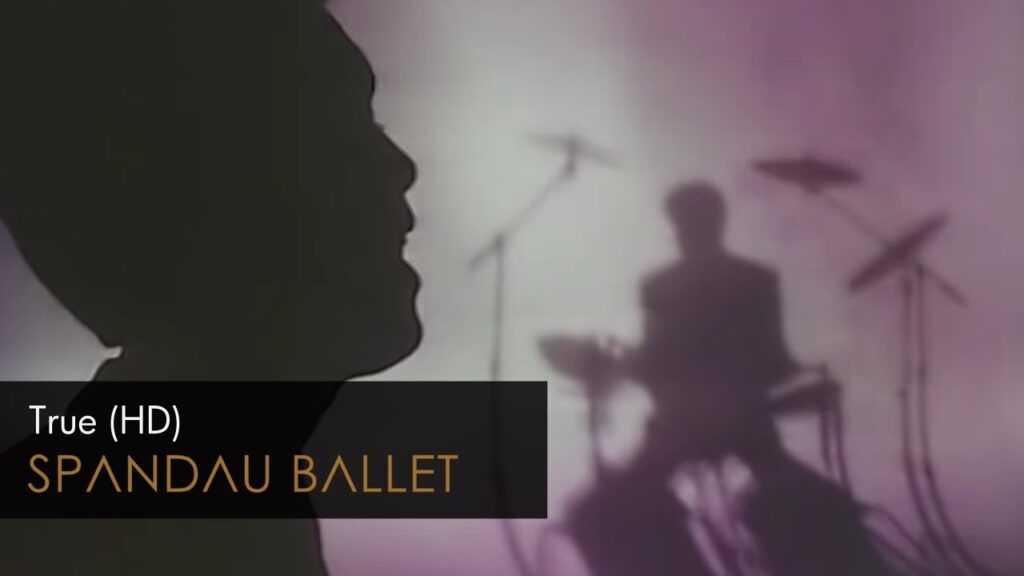
The music video played a significant role in expanding the song’s audience.
Featuring the band performing in a stylish, minimalist setting, the clip emphasized elegance over elaborate storytelling.
Heavy rotation on MTV introduced Spandau Ballet to American viewers at exactly the right moment.
The band’s fashionable image, combined with the song’s smooth sound, made them a natural fit for the emerging music television era.
The video became nearly as iconic as the recording itself.
A Favorite of Filmmakers and Musicians
Over the decades, “True” has appeared in numerous films, television shows, and commercials.
Its unmistakable opening instantly establishes an atmosphere of romance and nostalgia.
The song has also been sampled by several hip-hop artists, most famously PM Dawn on their 1991 hit “Set Adrift on Memory Bliss.”
That successful reinterpretation introduced the melody to an entirely new generation of listeners.
Great songs have a way of finding new audiences.
“True” has done exactly that.
Why It Still Feels Timeless
Part of the song’s lasting appeal comes from its sincerity.
Nothing about “True” feels artificial or overly dramatic.
The lyrics express vulnerability without becoming sentimental.
The musicianship is polished without sounding sterile.
Tony Hadley’s heartfelt vocal performance remains as moving today as it was in 1983.
Combined, those qualities create a recording that has aged remarkably well.
It still sounds effortlessly elegant.
More Than Just an ’80s Hit
Although “True” is firmly associated with the 1980s, its influence extends far beyond the decade.
It helped define the sophisticated pop sound that would inspire countless artists throughout the years.
More importantly, it demonstrated that subtlety could be just as powerful as spectacle.
In an era known for excess, Spandau Ballet achieved greatness through restraint.
That’s one reason the song continues to resonate with listeners of every generation.
Legacy
“True” remains Spandau Ballet’s signature song and one of the finest ballads of the 1980s. Inspired by unspoken romance and classic soul music, Gary Kemp crafted a timeless composition elevated by Tony Hadley’s unforgettable vocal performance and an elegant, understated arrangement. More than forty years after its release, the song continues to define an era while proving that honest emotion, exceptional musicianship, and beautifully crafted melodies never go out of style. It isn’t simply a nostalgic favorite—it’s a genuine pop classic.
This post has already been read 99 times!