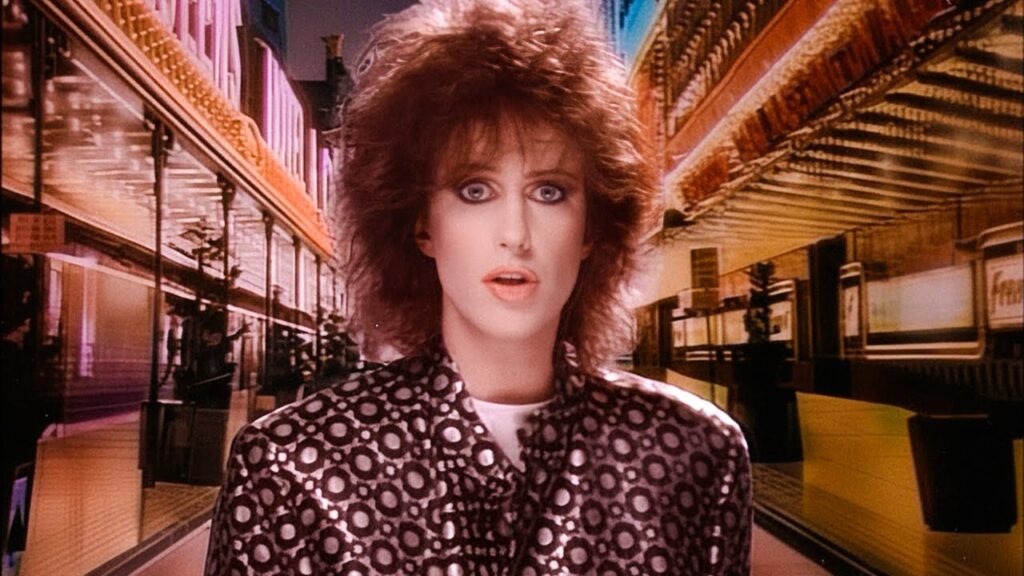
Released in August 1985 as the lead single from Knee Deep in the Hoopla, “We Built This City” marked one of the most dramatic reinventions in rock history. Starship had already evolved from Jefferson Airplane to Jefferson Starship before settling on its new name, and this song firmly established the band’s embrace of polished, radio-friendly pop-rock. While it became a massive commercial success, topping the charts in the United States and several other countries, it also sparked decades of debate. Loved by millions and ridiculed by critics, “We Built This City” remains one of the most recognizable—and controversial—songs of the 1980s.
Despite the criticism it has received over the years, the song continues to thrive on classic hits radio, streaming services, and nostalgic playlists. Its gigantic chorus, slick production, and unmistakable synthesizer hooks perfectly capture the sound of mid-1980s pop.
A New Beginning for Starship
By the mid-1980s, the band formerly known as Jefferson Starship was in transition. Legal disputes over the Jefferson name led to another rebranding, leaving vocalist Grace Slick and singer Mickey Thomas leading a group now simply called Starship.
Their first album under the new name needed a hit, and producer Peter Wolf helped steer the band toward a more contemporary sound. Gone were much of the psychedelic and folk-rock influences that had defined Jefferson Airplane in the late 1960s. In their place came synthesizers, arena-sized choruses, and glossy production that fit perfectly alongside artists like Survivor, Foreigner, and Heart.
“We Built This City” became the centerpiece of that transformation.
An Unusual Songwriting Team
Interestingly, none of the members of Starship wrote the song.
Instead, it came from British songwriters Martin Page and Bernie Taupin. Taupin was already legendary as Elton John’s longtime lyricist, while Page was an accomplished songwriter who would later co-write hits like “King of Wishful Thinking.”
The pair originally envisioned “We Built This City” as a commentary on how commercial interests were changing the music industry. Live venues were disappearing, radio programming was becoming increasingly corporate, and musicians often felt squeezed between artistic expression and business realities.
While the lyrics hint at these frustrations, the polished production caused many listeners to miss the satire entirely.
The Sound of 1985
If there is one song that defines big-budget 1985 production, this might be it.
Layered synthesizers dominate the arrangement while guitars provide texture rather than driving the song. The rhythm section is tightly produced, giving every instrument a crisp, polished sound that was common during the era.
Grace Slick and Mickey Thomas complement each other exceptionally well. Thomas delivers the soaring lead vocal with confidence, while Slick adds memorable harmonies and alternating lead lines that create one of the song’s most recognizable dynamics.
The massive chorus was engineered for maximum singalong appeal. Within one listen, most people can remember the title phrase, making it one of the decade’s great earworms.
The Lyrics
On the surface, “We Built This City” sounds like an anthem celebrating rock music.
Beneath that surface, however, the lyrics express frustration with changing priorities in the music business. References to corporations, radio stations, and fading live music scenes paint a picture of musicians feeling disconnected from the industry they helped build.
The famous line “Marconi plays the mamba” has puzzled listeners for decades. It intentionally blends references to radio pioneer Guglielmo Marconi with musical imagery, creating one of pop music’s most unusual opening lines.
Many listeners have interpreted different parts of the song in different ways, contributing to its enduring fascination.
Music Video
Like many videos of the MTV era, “We Built This City” leaned heavily into elaborate visual effects.
The band performs atop city skylines while computer-generated imagery and surreal backgrounds create an exaggerated fantasy world. Grace Slick’s commanding presence and Mickey Thomas’s energetic performance helped make the video a frequent MTV staple.
Although the special effects look dated today, they perfectly reflect the ambitious visual style of mid-1980s music television.
Chart Success
Regardless of what critics thought, audiences embraced the song.
“We Built This City” reached No. 1 on the Billboard Hot 100 in November 1985. It also became a major international success, charting strongly across Europe, Canada, and Australia.
The success propelled Knee Deep in the Hoopla to platinum status and gave Starship the biggest commercial hit of their career under the new band name.
The group would continue the momentum with future chart-toppers including “Sara” and “Nothing’s Gonna Stop Us Now.”
Why Critics Turned Against It
Very few hit songs have experienced such a dramatic shift in reputation.
Although successful upon release, critics gradually began citing “We Built This City” as an example of excessive 1980s commercialism. Its glossy production, polished vocals, and ironic anti-corporate message created an easy target for writers who preferred the band’s earlier psychedelic rock roots.
The criticism reached its peak in the early 2000s when several publications ranked it among the “worst songs ever made.”
Those lists generated enormous publicity, introducing the song to younger audiences who often discovered it because of its notorious reputation rather than its original popularity.
Ironically, that renewed attention helped keep the song alive.
Fans Never Left
While critics argued, listeners largely ignored them.
Classic rock stations, ’80s playlists, sporting events, commercials, and karaoke bars continued playing “We Built This City.” It became one of those songs that almost everyone recognizes within seconds.
Many fans argue that its critics overlook an important point: the song accomplishes exactly what mainstream pop music aims to do. It’s catchy, energetic, professionally performed, and instantly memorable.
Over time, some music writers have even reassessed it more favorably, suggesting that the backlash became more exaggerated than the song itself deserved.
Cultural Legacy
Few songs symbolize the excesses—and strengths—of 1980s production quite like “We Built This City.”
It has appeared in films, television shows, sporting events, advertisements, and countless nostalgic compilations. Even people who claim to dislike it often know every word of the chorus.
The song has also become shorthand for discussions about changing musical tastes. Supporters see it as infectious pop craftsmanship, while detractors view it as a departure from authentic rock music. That ongoing debate has arguably made it more culturally significant than many songs that were universally praised.
For Starship, it represented the successful completion of a long musical evolution that began with Jefferson Airplane nearly two decades earlier. Whether listeners prefer the psychedelic experimentation of the late 1960s or the polished arena-pop of the 1980s, “We Built This City” occupies an important place in that history.
More than forty years after its release, the song continues to spark conversations unlike almost any other hit from the decade. Commercial triumph, critical punching bag, nostalgic favorite, or misunderstood satire—its legacy contains elements of all four. Love it or hate it, “We Built This City” remains one of the defining songs of the 1980s and one of pop music’s most unforgettable cultural lightning rods.
This post has already been read 77 times!