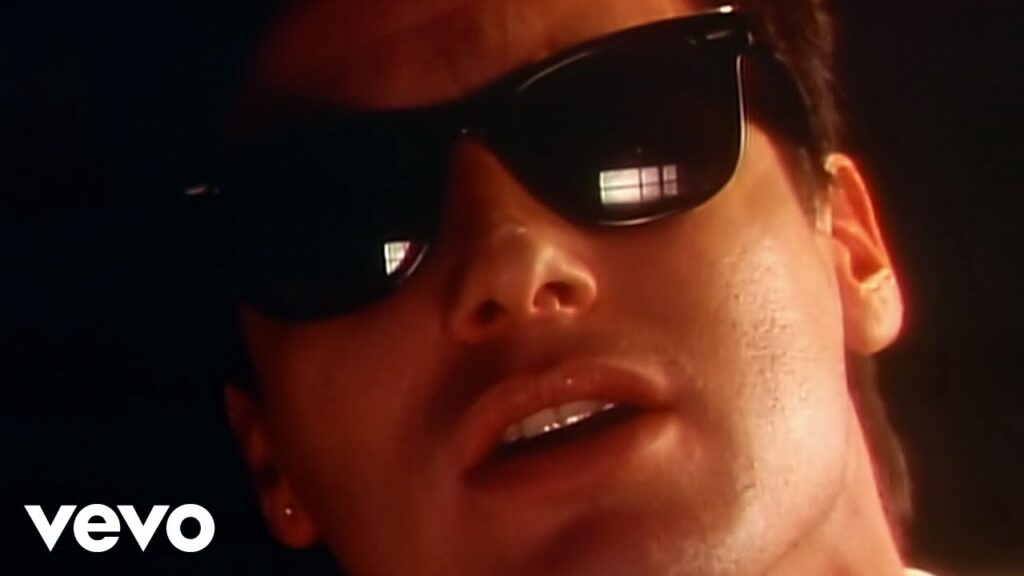
Released in January 1984 as the lead single from Corey Hart’s debut album First Offense, “Sunglasses at Night” became one of the defining songs of the MTV era. Built around shimmering synthesizers, driving guitars, and Hart’s unmistakable voice, the song climbed to No. 7 on the Billboard Hot 100 and introduced the young Canadian singer-songwriter to audiences around the world. Combining new wave, rock, and synth-pop influences, it quickly became one of the most recognizable hits of the decade.
More than forty years later, “Sunglasses at Night” remains a staple of ’80s radio, streaming playlists, and nostalgic pop culture. Its unforgettable chorus and mysterious title have helped it endure as one of the signature songs of the era.
A Remarkable Debut
Corey Hart was only in his early twenties when he burst onto the international music scene.
Born in Montreal, Hart had been writing songs and performing since his teenage years. Unlike many young artists who relied heavily on outside songwriters, he was determined to establish himself as a serious musician capable of creating his own material.
First Offense showcased that ambition, blending catchy pop hooks with thoughtful songwriting and polished production. While the album produced several successful singles, “Sunglasses at Night” immediately stood out as its breakout hit.
It launched Hart’s career almost overnight.
The Inspiration Behind the Title
One of the reasons “Sunglasses at Night” has remained so memorable is its unusual title.
Hart has explained that the idea came after staying in a hotel where staff instructed guests to keep the curtains open for security reasons. Bright lights outside his window made it difficult to sleep, leading him to wear sunglasses indoors during the night.
That simple experience sparked the title, but the song itself evolved into something far more symbolic.
Rather than focusing on literal sunglasses, the lyrics use them as a metaphor for emotional protection, mistrust, and refusing to become vulnerable.
The mystery surrounding that symbolism has encouraged listeners to interpret the song in their own ways for decades.
More Than a Love Song
Although “Sunglasses at Night” is often remembered for its catchy chorus, the lyrics reveal a darker emotional undercurrent.
The narrator struggles with issues of trust, manipulation, and emotional self-defense. Wearing sunglasses becomes a symbolic way of shielding oneself from deception or emotional pain.
Rather than presenting romance as carefree and joyful, the song explores the uncertainty that can exist beneath the surface of relationships.
That emotional complexity helped distinguish it from many other pop hits of the period.
A Perfect Blend of Rock and Synth-Pop
Musically, “Sunglasses at Night” captures the sound of the early 1980s while avoiding many of the production clichés that later dated some of the decade’s recordings.
The arrangement combines crisp synthesizers, pulsing bass lines, layered guitars, and steady electronic percussion into an energetic yet atmospheric mix. The balance between rock instrumentation and synthesizer textures gives the song a unique identity that appealed to fans of both genres.
The instantly recognizable keyboard riff provides an unforgettable musical hook from the opening seconds.
Its production remains remarkably fresh even today.
Corey Hart’s Confident Vocal Performance
Hart delivers the song with remarkable maturity for such a young performer.
His vocal blends determination, vulnerability, and confidence without ever sounding forced. He moves effortlessly between the restrained verses and the soaring chorus, allowing the emotional tension of the lyrics to build naturally.
His slightly raspy tone gives the song additional character, helping separate him from many of the polished pop vocalists dominating radio at the time.
The performance established Hart as far more than a one-hit wonder.
MTV Helps Create a Star
The success of “Sunglasses at Night” was closely tied to the rise of MTV.
The music video features Hart wearing his trademark sunglasses while presenting a dramatic story involving surveillance, authority, and youthful rebellion. Dark lighting, striking visuals, and memorable imagery perfectly complemented the song’s mysterious atmosphere.
Hart’s distinctive look quickly became part of his public identity, making both the artist and the song instantly recognizable.
Heavy MTV rotation helped turn him into an international star during 1984.
Climbing the Charts
“Sunglasses at Night” became a major commercial success.
The single reached No. 7 on the Billboard Hot 100, performed strongly across Canada and Europe, and established Corey Hart as one of Canada’s biggest musical exports of the decade. The success of the song paved the way for additional hits including “Never Surrender,” “It Ain’t Enough,” and “Everything in My Heart.”
Although Hart would enjoy several more successful singles, “Sunglasses at Night” remained his signature recording.
Its popularity introduced millions of listeners to his songwriting and performing talents.
Why It Still Resonates
Part of the song’s lasting appeal lies in its ambiguity.
Listeners continue to debate exactly what the lyrics mean, allowing each generation to bring its own interpretation. At the same time, the irresistible melody and driving rhythm ensure that the record remains enjoyable even without analyzing its deeper themes.
Its production also strikes an ideal balance between polished pop and atmospheric new wave, giving it a timeless quality that many ’80s hits have struggled to achieve.
The result is a recording that still sounds vibrant decades after its release.
Legacy
“Sunglasses at Night” stands as one of the defining synth-rock singles of the 1980s and the song most closely associated with Corey Hart’s career. It demonstrated that thoughtful songwriting, memorable hooks, and distinctive production could combine to create a pop classic that transcended its era.
The song also helped establish Hart as one of Canada’s most successful singer-songwriters, proving he possessed both commercial appeal and genuine artistic credibility. Its influence can still be heard in modern synth-pop and alternative music, while its unforgettable chorus continues to inspire covers, samples, and appearances in films, television, and advertising.
More than forty years after its release, “Sunglasses at Night” remains one of the most iconic songs of the MTV generation. Mysterious, catchy, and endlessly replayable, it continues to remind listeners why a simple idea—paired with exceptional songwriting and performance—can become a timeless pop phenomenon.
This post has already been read 85 times!