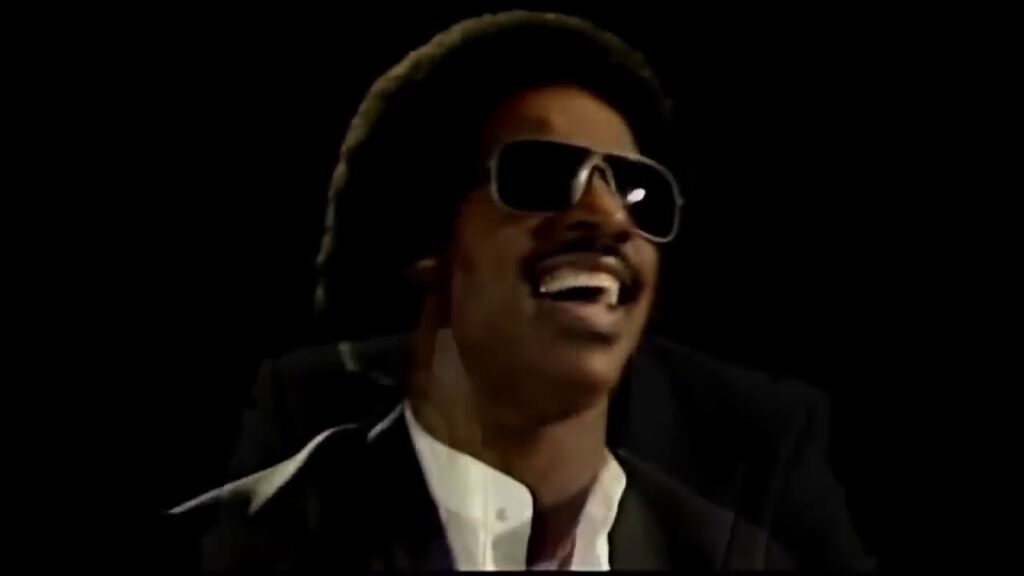
Released in March 1982 as the lead single from Paul McCartney’s album Tug of War, “Ebony and Ivory” brought together two of popular music’s greatest talents for one of the biggest hits of the decade. Featuring Paul McCartney and Stevie Wonder sharing lead vocals, the song became an international phenomenon, spending seven consecutive weeks at No. 1 on the Billboard Hot 100 while topping charts in numerous countries around the world. Built around a simple piano melody and an even simpler message of racial harmony, “Ebony and Ivory” became one of the defining songs of the early 1980s.
Although the song has occasionally been criticized for the straightforwardness of its lyrics, its message of unity, understanding, and coexistence continues to resonate in a world where those ideals remain as important as ever.
A Meeting of Two Musical Legends
By 1982, Paul McCartney and Stevie Wonder hardly needed introductions.
McCartney had already changed popular music forever as a member of The Beatles before launching one of the most successful solo careers in rock history. Stevie Wonder had become one of the most innovative artists of the 1970s, creating groundbreaking albums while earning widespread acclaim as a songwriter, vocalist, and multi-instrumentalist.
Bringing the two together seemed almost inevitable.
Their contrasting voices and complementary musical styles created a collaboration that felt both natural and historic.
The chemistry between them became one of the song’s greatest strengths.
A Simple Metaphor with a Powerful Message
The inspiration behind “Ebony and Ivory” comes from the black and white keys of a piano.
Individually, each set of keys serves an important purpose, but together they create beautiful music. McCartney used that image as a metaphor for people of different races living and working together in harmony.
The message is intentionally uncomplicated.
Rather than exploring complex political issues, the song focuses on a universal ideal: that cooperation and mutual respect produce something far greater than division.
Its optimism remains one of its defining characteristics.
Warm, Complementary Vocals
One of the recording’s greatest pleasures is hearing McCartney and Wonder sing together.
McCartney’s smooth, melodic delivery blends beautifully with Wonder’s soulful warmth. Neither performer dominates the other, allowing the duet to embody the very sense of partnership the lyrics promote.
Their vocal harmonies are especially memorable during the chorus.
The performance feels genuine rather than calculated, giving emotional weight to the song’s central message.
Elegant Songwriting and Production
Written by Paul McCartney and produced by George Martin, “Ebony and Ivory” demonstrates how restraint can be remarkably effective.
The arrangement centers on piano, subtle percussion, tasteful synthesizers, and understated orchestration, allowing the melody and lyrics to remain the focus. Rather than relying on elaborate production, the song succeeds through clarity and emotional sincerity.
George Martin’s polished production enhances every musical element without overwhelming the vocal performances.
The recording has maintained its graceful sound over the decades.
Dominating the Charts
“Ebony and Ivory” became one of the biggest hits of both artists’ careers.
The single spent seven weeks at No. 1 on the Billboard Hot 100, topped the Adult Contemporary chart, and reached No. 1 in the United Kingdom, Canada, Australia, and many other countries. It became one of the best-selling singles of 1982 and earned widespread international recognition.
Its success demonstrated the enormous appeal of combining two legendary performers with a universally positive message.
Few collaborations have enjoyed such immediate commercial impact.
A Memorable Music Video
The music video emphasized the partnership between McCartney and Wonder through simple yet effective performance footage.
Rather than relying on elaborate visual effects or storytelling, the clip focused on the chemistry between the two artists as they performed together in the studio. Their relaxed interactions reinforced the sincerity of the song’s message.
Heavy MTV airplay helped introduce the duet to younger audiences.
It quickly became one of the channel’s early signature videos.
Why the Song Still Matters
Over the years, some listeners have argued that “Ebony and Ivory” presents an overly idealistic view of racial harmony.
Even so, its enduring popularity suggests that many people appreciate its hopeful perspective. The song doesn’t pretend to solve society’s challenges; instead, it encourages empathy, cooperation, and respect.
Those values remain timeless.
Its message continues to find new audiences with each generation.
An Enduring Collaboration
“Ebony and Ivory” remains one of the most successful duets in pop music history.
It represents a rare moment when two iconic artists came together at the height of their careers to record a song whose appeal extended far beyond commercial success. The collaboration demonstrated how music itself can serve as a bridge between different cultures, backgrounds, and experiences.
The recording continues to be celebrated as one of the standout collaborations of the 1980s.
Legacy
“Ebony and Ivory” stands as one of Paul McCartney’s greatest post-Beatles hits and one of Stevie Wonder’s most memorable collaborations. Its chart-topping success, elegant production, and heartfelt performances have ensured its place among the defining songs of the MTV era.
While musical tastes and cultural conversations have evolved since its release, the song’s central message—that people are strongest when they live and work together—remains as meaningful today as it was in 1982. More than four decades after spending seven weeks atop the Billboard Hot 100, “Ebony and Ivory” continues to inspire listeners with its warmth, optimism, and timeless belief in the power of unity.
This post has already been read 80 times!