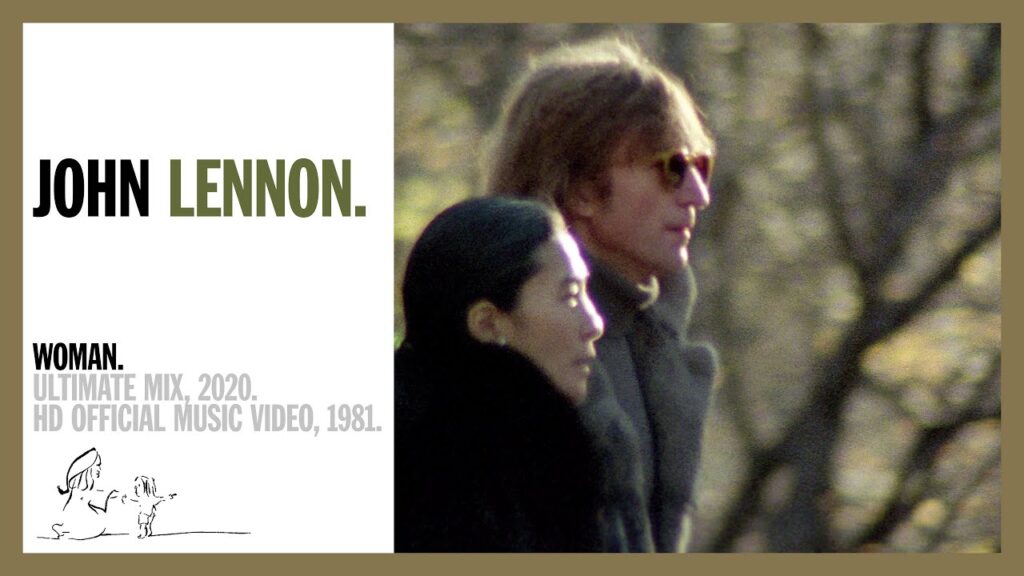
Released in January 1981 as the second single from Double Fantasy, “Woman” became one of John Lennon’s most moving and beloved solo recordings. Written as a heartfelt tribute to his wife, Yoko Ono, and as a broader expression of gratitude toward women everywhere, the song reached No. 2 on the Billboard Hot 100 and topped the charts in several countries, including the United Kingdom. Arriving just weeks after Lennon’s tragic death in December 1980, “Woman” carried an emotional weight that resonated deeply with millions of listeners around the world.
Gentle, sincere, and beautifully crafted, the song stands as one of Lennon’s finest achievements outside of The Beatles and remains a timeless expression of love, appreciation, and reflection.
A New Beginning Interrupted
By 1980, John Lennon had spent five years away from the music industry.
Following the birth of his son Sean, Lennon stepped back from recording to focus on family life. When he returned with Double Fantasy, he appeared energized and creatively refreshed, sharing songwriting duties with Yoko Ono on an album centered around marriage, parenthood, and everyday life.
The comeback was warmly received.
Then, on December 8, 1980, Lennon was murdered outside his apartment building in New York City.
The tragedy transformed Double Fantasy into far more than a comeback album. Songs like “Woman” became poignant reminders of an artist whose life and career had been cut short.
A Love Letter to Yoko Ono—and Beyond
Although inspired by Yoko Ono, Lennon intended “Woman” to express appreciation for women in general.
He described the song as a tribute to half of humanity, acknowledging the love, strength, compassion, and support women provide throughout life. The lyrics combine personal affection with broader gratitude, making the song feel both intimate and universal.
There is no bitterness or regret.
Instead, Lennon offers humility, admiration, and a desire to express feelings that often go unspoken.
Its sincerity remains one of its greatest strengths.
A Tender Vocal Performance
John Lennon delivers one of the most heartfelt vocal performances of his solo career.
His voice is warm, vulnerable, and deeply personal, avoiding unnecessary theatrics in favor of emotional honesty. Every phrase feels conversational, as though he is speaking directly to someone he loves.
One memorable touch is the whispered opening.
Inspired by the French phrase “Je t’aime,” Lennon softly murmurs before the song begins, immediately creating an atmosphere of intimacy.
His vocal restraint makes the emotional moments even more powerful.
Elegant Songwriting and Production
Produced by John Lennon, Yoko Ono, and Jack Douglas, “Woman” features a beautifully understated arrangement.
Acoustic guitars, piano, gentle percussion, subtle keyboards, and tasteful orchestration create a warm musical backdrop that never overshadows the melody. The production allows Lennon’s voice and lyrics to remain the emotional center of the recording.
Every instrument serves the song.
The simplicity gives it a timeless quality that has aged remarkably well.
A Worldwide Hit
Following Lennon’s death, “Woman” became one of the biggest hits of his solo career.
The single reached No. 2 on the Billboard Hot 100, climbed to No. 1 on the UK Singles Chart, and enjoyed enormous success across Europe, Canada, Australia, and many other countries. It helped keep Double Fantasy at the top of album charts around the world while introducing the song to millions of new listeners.
Its commercial success reflected both its musical excellence and the emotional connection audiences felt after Lennon’s passing.
It quickly became one of his defining solo recordings.
A Simple but Moving Music Video
The music video for “Woman” relied primarily on archival footage rather than elaborate production.
Scenes of Lennon and Yoko Ono together, along with moments from his life and career, reinforced the deeply personal nature of the song. The understated visuals allowed viewers to focus on the emotion behind the music.
Its quiet presentation suited the recording perfectly.
The video remains one of the most touching tributes to Lennon’s legacy.
Why It Still Resonates
“Woman” continues to connect with audiences because its message is universal.
Everyone understands the importance of expressing gratitude to the people they love. Lennon’s words encourage listeners not to take those relationships for granted, making the song meaningful across generations.
Its gentle melody and heartfelt delivery also contribute to its enduring appeal.
Rather than relying on grand gestures, the song finds its strength in honesty.
One of Lennon’s Finest Solo Moments
Although John Lennon created countless classics with The Beatles, “Woman” ranks among the very best work of his solo years.
It reflects the maturity he developed during his time away from the spotlight and reveals an artist who had become increasingly comfortable writing about family, love, and personal growth.
The song captures a peaceful, reflective side of Lennon that fans had only occasionally glimpsed during his earlier career.
It remains one of the clearest expressions of the man he had become.
Legacy
“Woman” stands as one of John Lennon’s greatest solo achievements and one of the most heartfelt love songs ever recorded. Its graceful melody, sincere lyrics, and intimate performance combine to create a recording that feels deeply personal while speaking to universal human emotions.
The song’s chart success, lasting popularity, and emotional significance have secured its place among the essential classics of the early 1980s. More importantly, it serves as a reminder of Lennon’s extraordinary gift for expressing profound feelings with remarkable simplicity.
More than four decades after its release, “Woman” continues to move listeners with its warmth, honesty, and quiet beauty. Gentle, reflective, and timeless, it remains one of John Lennon’s most cherished songs and a fitting testament to an artist whose voice continues to inspire the world.
This post has already been read 73 times!