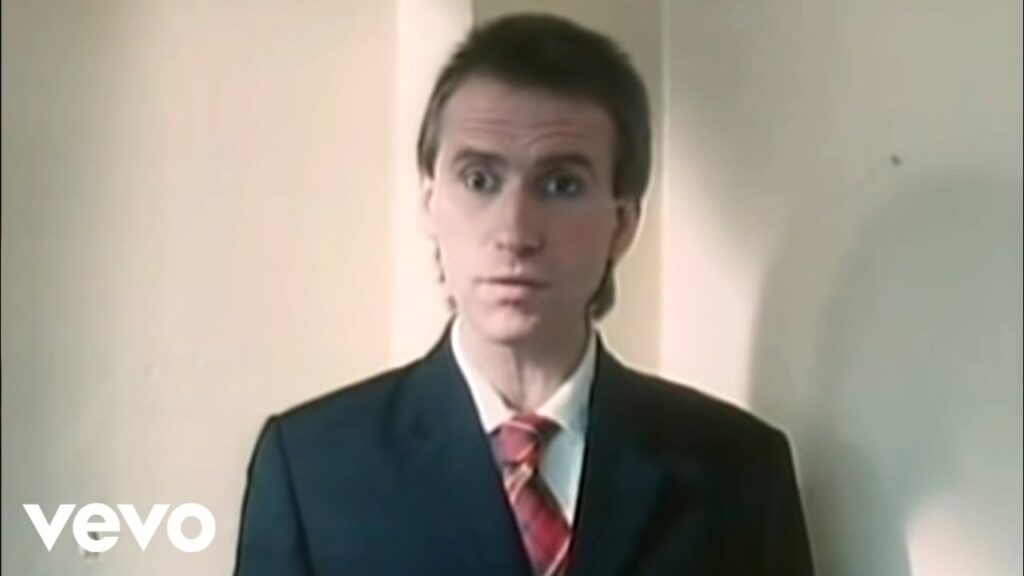
Released in June 1981 in Australia and later internationally in 1982, “Who Can It Be Now?” became the breakthrough hit that introduced Men at Work to audiences around the world. Built around Greg Ham’s unforgettable saxophone riff, Colin Hay’s distinctive vocals, and an irresistible blend of new wave, pop, reggae, and rock, the song climbed to No. 1 on the Billboard Hot 100 in the United States. Its quirky lyrics, infectious melody, and memorable music video helped establish Men at Work as one of the defining bands of the MTV era.
More than four decades after its release, “Who Can It Be Now?” remains one of the most recognizable songs of the 1980s and a perfect example of how clever songwriting and unique musicianship can create a timeless pop classic.
Australia’s Breakthrough Export
Before conquering America, Men at Work had already become one of Australia’s biggest bands.
Formed in Melbourne, the group featured Colin Hay, Greg Ham, Ron Strykert, John Rees, and Jerry Speiser. Their debut album, Business as Usual, showcased a fresh sound that blended catchy pop melodies with reggae rhythms, rock guitars, and a healthy sense of humor.
The album quickly became a sensation in Australia.
When it was released internationally, songs like “Who Can It Be Now?” and “Down Under” helped launch Men at Work into worldwide superstardom.
Inspired by Everyday Anxiety
The inspiration for “Who Can It Be Now?” came from Colin Hay’s own experiences.
Living in an apartment where unexpected visitors frequently knocked on his door, Hay found himself becoming increasingly anxious whenever someone arrived unannounced. That everyday annoyance evolved into a song about wanting privacy and avoiding unwanted interruptions.
The lyrics can also be interpreted on a deeper level.
Many listeners see the song as reflecting social anxiety, loneliness, or the desire to escape overwhelming situations. Its openness allows people to connect with it in different ways.
Colin Hay’s Instantly Recognizable Voice
Colin Hay delivers one of the most distinctive vocal performances of the decade.
His slightly nervous, expressive delivery perfectly captures the narrator’s uncertainty while maintaining an upbeat sense of humor. Hay’s unique accent and phrasing gave Men at Work an instantly recognizable sound that stood apart from nearly every other band on the radio.
His performance balances tension and playfulness beautifully.
It’s one of the key reasons the song remains so memorable.
The Saxophone That Everyone Remembers
While the entire band shines, Greg Ham’s saxophone riff became the song’s signature musical hook.
Appearing immediately in the introduction and returning throughout the recording, the catchy sax line gives “Who Can It Be Now?” its unmistakable identity. At a time when synthesizers dominated much of pop music, the prominent use of saxophone helped the song stand out.
The riff is both simple and unforgettable.
It remains one of the most recognizable instrumental hooks of the 1980s.
Polished New Wave Production
Produced by Peter McIan, “Who Can It Be Now?” combines clean production with an energetic live-band feel.
Bright guitars, steady drums, melodic bass, subtle keyboards, reggae-inspired rhythms, and crisp horn arrangements all work together without competing for attention. Every instrument has room to breathe, allowing the song’s groove to remain front and center.
The arrangement feels effortless.
Its polished yet natural sound has aged remarkably well.
An International Smash
“Who Can It Be Now?” became Men at Work’s first worldwide hit.
The single reached No. 1 on the Billboard Hot 100, topped charts in several countries, and helped Business as Usual become one of the most successful debut albums of the decade. The album would go on to produce another No. 1 hit with “Down Under,” confirming that the band’s success was no accident.
The song introduced Australian new wave to millions of listeners.
It remains one of the country’s greatest musical exports.
A Memorable MTV Favorite
The music video embraced the song’s quirky personality.
Featuring Colin Hay repeatedly interrupted by visitors while performing alongside the band, the clip captured the playful frustration described in the lyrics. The humorous visuals perfectly matched the song’s offbeat charm and became a regular feature during MTV’s early years.
Frequent airplay helped Men at Work gain a massive international audience.
The video remains one of the memorable classics of early MTV.
Why It Still Connects
The enduring popularity of “Who Can It Be Now?” comes from its unique personality.
The catchy melody, unforgettable saxophone riff, and relatable theme of wanting a little peace and quiet make it instantly appealing. At the same time, its subtle exploration of anxiety and personal boundaries gives the song greater emotional depth than many listeners initially realize.
It manages to be both funny and thoughtful.
That balance has helped it remain fresh across generations.
Legacy
“Who Can It Be Now?” stands as one of Men at Work’s greatest achievements and one of the defining new wave songs of the 1980s. Its distinctive vocals, memorable saxophone hook, clever lyrics, and polished musicianship combined to create a recording unlike anything else on the radio at the time.
The song’s chart-topping success, memorable MTV presence, and lasting popularity have secured its place among the essential classics of the MTV generation. More importantly, it demonstrated that originality, personality, and intelligent songwriting could achieve enormous mainstream success without following conventional formulas.
More than forty years after reaching No. 1, “Who Can It Be Now?” continues to delight listeners with its infectious groove, playful storytelling, and unforgettable musical hooks. Clever, catchy, and endlessly entertaining, it remains Men at Work’s perfect introduction to the world and one of the most distinctive pop songs ever recorded.
This post has already been read 89 times!