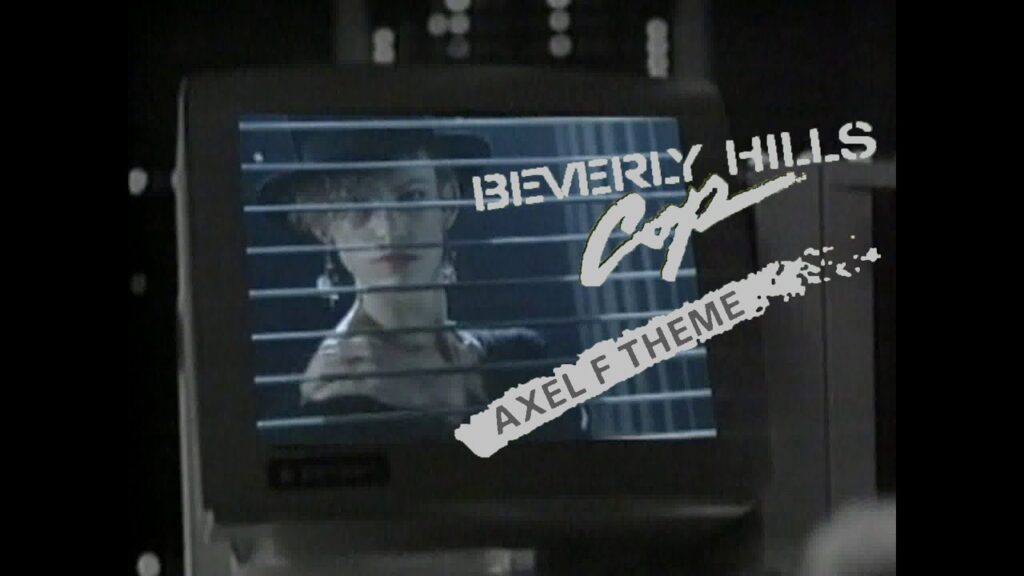
Released in 1984 as the instrumental theme from the blockbuster film Beverly Hills Cop, “Axel F” became one of the most recognizable electronic recordings ever made. Composed and performed by German musician Harold Faltermeyer, the song reached the Top 10 in numerous countries and became synonymous with Eddie Murphy’s wisecracking Detroit detective Axel Foley. While it contains no lyrics, “Axel F” demonstrated that a purely instrumental synthesizer composition could become a worldwide pop hit and remain a fixture of popular culture for decades.
More than forty years after its debut, “Axel F” continues to be celebrated for its unforgettable melody, groundbreaking electronic production, and lasting influence on film music and synth-pop.
Creating the Sound of Axel Foley
When producers of Beverly Hills Cop needed a musical theme for the film’s main character, Harold Faltermeyer was given the challenge of capturing Axel Foley’s personality in music.
Rather than writing a traditional orchestral score, Faltermeyer chose to build the theme almost entirely with synthesizers and drum machines. The result perfectly reflected the fast-paced energy, humor, and confidence of Eddie Murphy’s performance.
The title “Axel F” simply refers to the character Axel Foley.
The minimalist name became attached to one of the most famous instrumental themes in movie history.
An Instrumental That Told a Story
Despite having no vocals, “Axel F” communicates a remarkable amount of personality.
The bright lead melody conveys confidence and curiosity, while the pulsing bassline creates a sense of movement and excitement. The playful rhythm mirrors Foley’s quick wit and resourcefulness as he navigates the luxurious world of Beverly Hills.
Listeners can almost picture scenes from the film while hearing the music.
That cinematic quality is one of the composition’s greatest strengths.
Harold Faltermeyer’s Innovative Performance
Faltermeyer performed virtually every part of the recording himself.
Using multiple synthesizers, sequencers, and electronic percussion, he layered each musical element with remarkable precision. His technical expertise allowed him to create a recording that felt both futuristic and surprisingly warm.
Rather than relying on flashy solos, the performance emphasizes memorable melodies and rhythmic consistency.
Its restraint is a key reason the track remains so effective.
A Showcase for Electronic Music
The production of “Axel F” was groundbreaking for its time.
Faltermeyer employed cutting-edge synthesizers, including the Roland Jupiter-8, Yamaha DX7, and Moog bass synthesizers, along with drum machines that gave the track its crisp, mechanical groove. Every sound was carefully programmed to create a polished yet energetic arrangement that immediately stood apart from traditional film scores.
The recording helped demonstrate the commercial potential of electronic music.
Its sound became highly influential throughout the remainder of the decade.
A Worldwide Hit
Although movie themes had enjoyed chart success before, few instrumentals achieved the popularity of “Axel F.”
The single reached the Top 10 in countries including the United Kingdom, Germany, Switzerland, Canada, and Australia, while also becoming a substantial hit in the United States. Its success helped make the Beverly Hills Cop soundtrack one of the defining releases of the 1980s.
The theme quickly became inseparable from the film.
Even listeners who never saw the movie recognized the melody.
A Constant Presence on MTV and Radio
While “Axel F” had no singer to feature in a traditional music video, promotional clips and scenes from Beverly Hills Cop received heavy exposure during MTV’s early years.
Combined with constant radio airplay, the instrumental became one of the most familiar electronic recordings of the decade. It proved that audiences would enthusiastically embrace instrumental pop when the melody was strong enough.
Its catchy hook required no lyrics.
The music spoke for itself.
Why It Remains So Popular
Part of the enduring appeal of “Axel F” comes from its simplicity.
The melody is instantly recognizable after only a few notes, while the driving rhythm keeps the music constantly moving forward. Unlike many electronic recordings from the era, the production feels surprisingly timeless rather than tied to a passing trend.
The composition also carries a strong sense of nostalgia.
For many listeners, hearing it immediately recalls one of the biggest action-comedies of the 1980s.
A Lasting Cultural Legacy
Over the decades, “Axel F” has appeared in countless films, television programs, sporting events, commercials, and video games.
It has also inspired numerous remixes and cover versions, introducing the melody to younger audiences. Perhaps the most commercially successful reinterpretation came in 2005 when Crazy Frog’s version topped charts around the world, although many listeners continue to regard Faltermeyer’s original as the definitive recording.
Its influence extends well beyond the world of film music.
It helped establish synthesizer-driven instrumentals as legitimate pop hits.
Legacy
“Axel F” stands as Harold Faltermeyer’s signature composition and one of the greatest instrumental recordings of the 1980s. Its unforgettable melody, pioneering electronic production, and close association with Beverly Hills Cop combined to create a piece of music that remains instantly recognizable across generations.
The song’s international chart success, enduring popularity, and influence on film scoring have secured its place among the most iconic instrumentals ever recorded. More importantly, it proved that a brilliantly crafted melody and innovative production could tell a story every bit as effectively as lyrics.
More than forty years after its release, “Axel F” continues to sound fresh, energetic, and unmistakably cool. Sleek, memorable, and endlessly entertaining, it remains one of the defining electronic compositions of the MTV era and one of the greatest movie themes ever written.
This post has already been read 87 times!