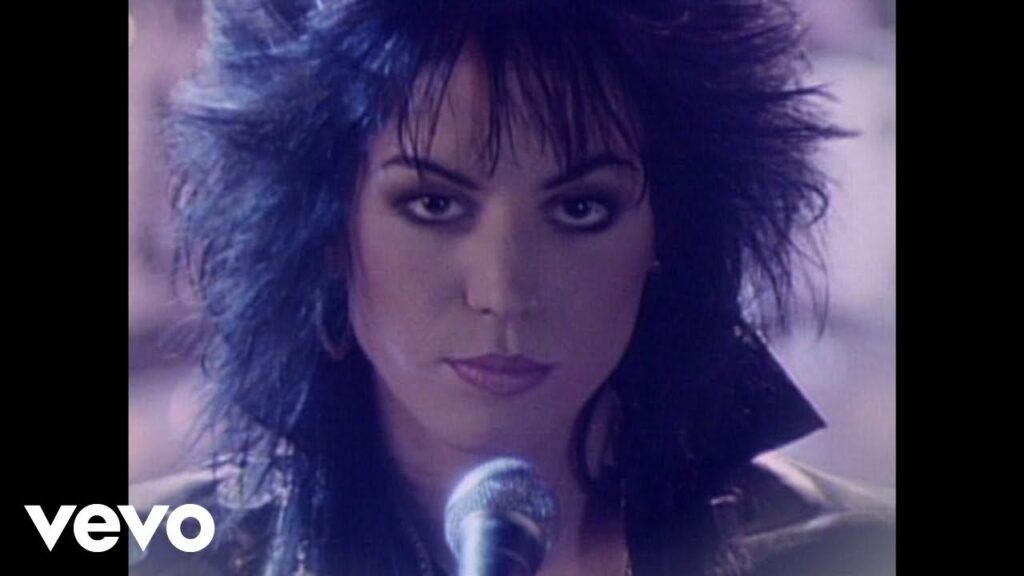
Joan Jett built her career on attitude. From her groundbreaking days with The Runaways to her success leading The Blackhearts, she became one of rock’s most recognizable rebels, refusing to fit neatly into anyone else’s expectations. Her songs celebrated independence, confidence, and living life on her own terms.
Yet one of her biggest hits wasn’t about freedom at all.
Released in 1988, “I Hate Myself for Loving You” explored the maddening contradiction of knowing someone is bad for you while being unable to walk away. It’s a feeling that has fueled countless songs over the decades, but few captured the frustration with the same swagger and power that Joan Jett brought to the recording.
Driven by crunchy guitars, a stomping rhythm, and one of the catchiest choruses of the late 1980s, the song became another signature hit for Joan Jett & the Blackhearts. More than three decades later, it remains a concert favorite, a sports arena staple, and one of the defining rock songs of its era.
Joan Jett’s Second Act
By the late 1980s, Joan Jett had already overcome enormous obstacles.
After The Runaways dissolved in the late 1970s, many record labels dismissed her, believing there wasn’t a market for a female artist fronting a hard rock band. Rather than give up, Jett and longtime collaborator Kenny Laguna formed Blackheart Records, allowing her to release music independently.
That gamble paid off spectacularly.
“I Love Rock ‘n Roll” became one of the biggest hits of the early 1980s, spending seven weeks at No. 1 on the Billboard Hot 100. Songs like “Crimson and Clover” and “Do You Wanna Touch Me (Oh Yeah)” followed, cementing Joan Jett as one of rock’s biggest stars.
As the decade progressed, however, musical tastes were shifting. Glam metal dominated MTV, while pop production became increasingly polished. Rather than chasing trends, Jett stayed true to her stripped-down rock-and-roll approach.
“I Hate Myself for Loving You” proved that straightforward guitar rock could still compete with the biggest acts on the charts.
Built by a Winning Songwriting Team
The song was written by Joan Jett and Desmond Child, one of the most successful songwriters of the era.
Child had already co-written massive hits for artists like Bon Jovi, Aerosmith, Kiss, and Alice Cooper. He had an extraordinary talent for crafting choruses that listeners remembered after hearing them only once.
Combined with Joan Jett’s rock instincts, the partnership produced something special.
The verses simmer with tension before exploding into a chorus that’s impossible not to sing along with.
It’s polished enough for radio while retaining enough grit to satisfy rock fans.
That balance helped the song appeal to an unusually broad audience.
A Love Song with Teeth
At its core, “I Hate Myself for Loving You” is about emotional contradiction.
The narrator understands the relationship isn’t healthy.
She recognizes the frustration, disappointment, and emotional chaos.
Yet despite all of that, she keeps coming back.
Rather than portraying herself as helpless, however, Joan Jett delivers the lyrics with defiance.
There’s anger.
There’s sarcasm.
There’s self-awareness.
Instead of quietly accepting heartbreak, she’s practically shouting her frustration into the microphone.
That’s what separates the song from many traditional love ballads.
The emotion isn’t sadness.
It’s exasperation.
Joan Jett’s Signature Vocal Style
Few singers sound as instantly recognizable as Joan Jett.
Her voice isn’t built around elaborate vocal runs or enormous range.
Instead, it carries authenticity.
Every word sounds lived-in.
She sings with the confidence of someone who’s experienced exactly what she’s describing.
That honesty gives “I Hate Myself for Loving You” its credibility.
Listeners believe her because nothing feels forced.
She’s not trying to impress anyone.
She’s simply telling the truth as loudly as possible.
The rough edges in her voice become an advantage rather than a limitation, adding character that polished vocal perfection could never duplicate.
Pure Rock Energy
Musically, the song is everything great rock radio should be.
The opening guitar riff immediately establishes the mood.
The rhythm section keeps everything driving forward with relentless momentum.
The guitars remain thick without becoming overly complicated.
Every element serves the song.
There’s no unnecessary solo stretching past its welcome.
No elaborate production tricks.
No overthinking.
Just a tight rock band delivering an unforgettable performance.
Producer Kenny Laguna wisely avoided burying the recording beneath fashionable late-’80s studio effects, allowing the guitars to remain front and center.
Because of that approach, the song still sounds remarkably fresh today.
Climbing the Charts
Released as the lead single from the album Up Your Alley, “I Hate Myself for Loving You” became Joan Jett’s biggest hit since the early part of the decade.
The song reached the Top 10 on the Billboard Hot 100, introduced Joan Jett to a new generation of listeners, and received heavy rotation on MTV.
It also helped Up Your Alley become one of the most commercially successful albums of her career.
At a time when hard rock was becoming increasingly theatrical, Joan Jett reminded audiences that straightforward, hook-filled rock music still had plenty of life left.
A Song That Found New Life in Sports
One of the most fascinating chapters in the song’s history came years after its original release.
The melody of its chorus proved so memorable that sports fans began adapting it into chants.
Perhaps the most famous example came when the Sunday Night Football theme incorporated a rewritten version featuring new lyrics performed by country superstar Carrie Underwood.
Week after week, millions of viewers heard a melody that originated with Joan Jett’s rock hit.
Although the words changed, the instantly recognizable musical foundation remained.
That exposure introduced “I Hate Myself for Loving You” to countless younger listeners who may not have realized they were hearing a song first released in 1988.
Few rock songs achieve that kind of cultural longevity.
Why It Still Works
The song continues to resonate because its central idea is timeless.
Almost everyone has experienced a relationship that made little logical sense.
Friends say to walk away.
Common sense agrees.
Yet emotions rarely follow logic.
“I Hate Myself for Loving You” captures that internal conflict better than most songs ever written about romance.
It also avoids becoming overly dramatic.
There’s humor hiding beneath the frustration.
The narrator recognizes the absurdity of her own situation, making the song surprisingly relatable.
Add an unforgettable chorus and powerful guitar work, and it’s easy to understand why listeners keep returning to it.
A Concert Favorite
Joan Jett has performed “I Hate Myself for Loving You” thousands of times over the years, and it consistently ranks among the highlights of her live shows.
The audience barely needs encouragement.
As soon as those opening guitar chords ring out, fans begin singing before Joan Jett even reaches the microphone.
It’s one of those rare songs where the crowd becomes an essential part of the performance.
Generations of fans know every word.
That kind of audience participation isn’t manufactured.
It’s earned through decades of emotional connection.
A Lasting Legacy
Joan Jett has always represented perseverance. She overcame industry rejection, built her own record label, and proved that women could lead hard rock bands on the biggest stages in the world without compromising their identity.
“I Hate Myself for Loving You” embodies that spirit.
Although the lyrics deal with romantic frustration, the performance itself radiates strength rather than weakness. Joan Jett transforms emotional confusion into a roaring declaration that listeners can shout along with, turning vulnerability into empowerment.
More than thirty-five years after its release, the song remains one of rock’s most enduring anthems. Its unforgettable chorus, driving guitars, and unapologetic attitude continue to sound just as exhilarating today as they did during the final years of the 1980s.
For Joan Jett & the Blackhearts, it wasn’t simply another hit single. It was proof that authentic rock and roll never goes out of style, especially when it’s delivered with honesty, confidence, and enough volume to shake the walls.
This post has already been read 83 times!