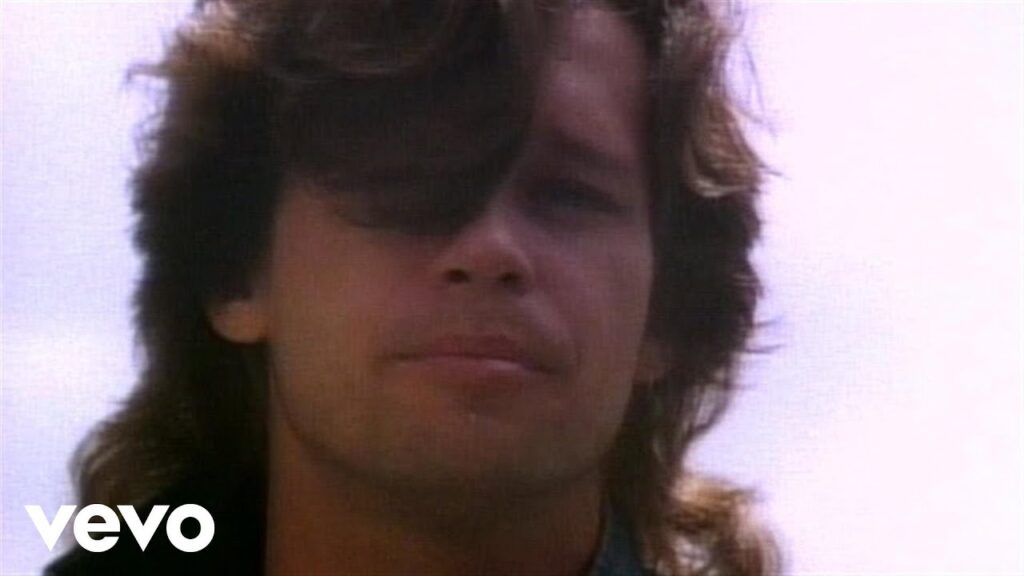
Released in 1983 as the second single from Uh-Huh, “Pink Houses” became one of John Cougar Mellencamp’s signature songs and one of the defining rock anthems of the decade. At first listen, its upbeat guitar riff, singalong chorus, and heartland rock energy make it sound like a simple celebration of small-town America. Spend a little more time with it, however, and a much richer picture emerges.
“Pink Houses” isn’t about perfect neighborhoods or idealized patriotism. Instead, Mellencamp paints a series of vivid portraits of ordinary Americans, celebrating their resilience while quietly questioning whether the promises of the American Dream always match reality. That combination of catchy music and thoughtful storytelling helped make the song one of his greatest achievements.
Inspired by a Simple Sight
The inspiration came while Mellencamp was driving through Indianapolis.
He noticed a small pink house sitting beside a major highway. Outside stood an older Black man holding a cat, calmly watching traffic pass by.
That ordinary image stayed with him.
Rather than writing about the house itself, Mellencamp began thinking about the lives of everyday Americans and the dreams, struggles, and contradictions that shape them. The result became one of the most recognizable songs of his career.
More Than a Patriotic Anthem
Over the years, “Pink Houses” has often been mistaken for a straightforward patriotic song.
In reality, it’s much more nuanced.
Mellencamp uses several characters to illustrate different aspects of American life, touching on economic hardship, changing communities, and the gap between expectations and reality.
Yet the song never feels cynical.
Instead, it expresses affection for ordinary people while encouraging listeners to think about the world around them.
That balance is one reason it has remained relevant for more than four decades.
Heartland Rock at Its Best
Musically, “Pink Houses” is a perfect example of heartland rock.
Crunchy guitars, driving drums, and an unforgettable chorus create an instantly recognizable sound that feels equally at home on classic rock radio or in a packed arena.
Producer Don Gehman gave the recording a clean but powerful mix that emphasized the band’s live energy without sacrificing melody.
Everything serves the song.
Nothing feels overproduced.
The result still sounds fresh today.
Mellencamp’s Everyman Voice
John Mellencamp has never relied on vocal perfection.
His strength has always been authenticity.
On “Pink Houses,” his slightly raspy delivery makes every line sound believable.
He doesn’t sing as though he’s preaching from a stage.
He sounds like someone telling stories about neighbors, friends, and people he’s actually known.
That honesty has always been one of his greatest qualities as a songwriter and performer.
A Major Hit
Released in late 1983, “Pink Houses” climbed to No. 8 on the Billboard Hot 100, becoming one of Mellencamp’s biggest hits.
Its success helped propel Uh-Huh to multi-platinum status and firmly established him among the leading rock artists of the decade.
The song became a concert favorite almost immediately, with audiences enthusiastically joining in on the unforgettable chorus.
It remains one of the highlights of his live performances.
A Lasting Legacy
“Pink Houses” has endured because it refuses to offer simple answers.
Its observations about the American experience continue to resonate with listeners from different backgrounds and generations.
The song celebrates resilience without ignoring challenges.
It embraces community without pretending life is perfect.
Few rock songs manage to balance optimism and realism so effectively.
One of Mellencamp’s Defining Songs
John Mellencamp built an impressive catalog filled with classics like “Jack & Diane,” “Small Town,” “Crumblin’ Down,” and “Authority Song,” but “Pink Houses” stands among his very best.
Its memorable riff, thoughtful lyrics, and timeless themes have earned it a permanent place in the history of American rock music.
More than forty years after its release, “Pink Houses” remains a reminder that some of the greatest songs are built not on fantasy, but on ordinary people living ordinary lives. Mellencamp turned everyday observations into something universal, creating a rock anthem that still sparks conversation while getting audiences to sing along at the top of their lungs. That’s the mark of a true classic.
This post has already been read 86 times!