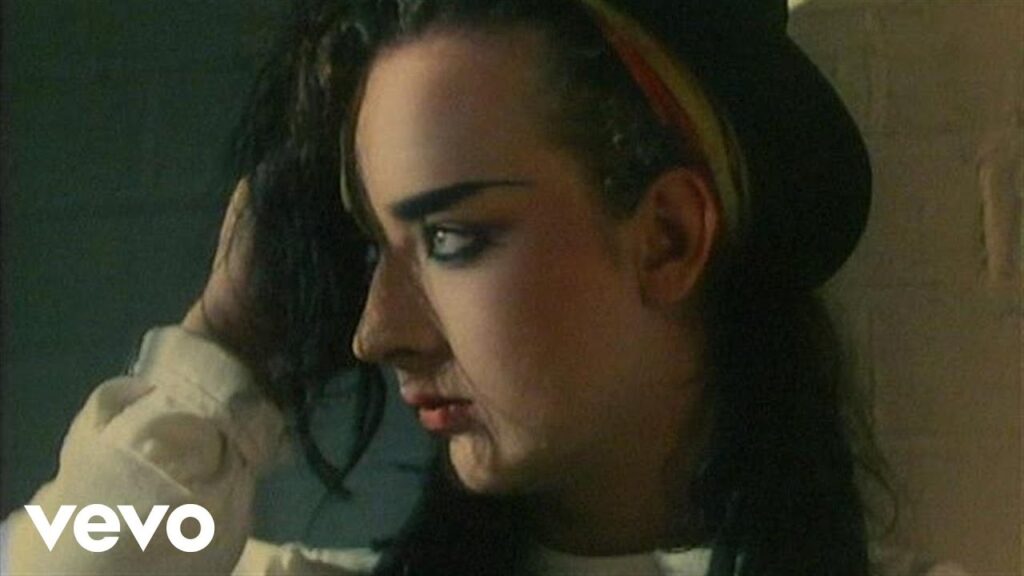
The early 1980s were filled with colorful fashion, adventurous music, and artists eager to challenge convention. Few bands embodied that spirit more completely than Culture Club, and no song introduced them to the world more effectively than “Do You Really Want to Hurt Me.” Released in 1982, the single transformed an unknown British group into international superstars while introducing audiences to the unmistakable voice and unforgettable image of Boy George.
At first listen, the song sounds gentle and understated, built around a smooth reggae-inspired rhythm rather than explosive guitars or pounding synthesizers. Underneath that calm surface, however, lies a heartfelt meditation on vulnerability, rejection, and emotional honesty. It was unlike almost anything dominating pop radio at the time, and its uniqueness became one of its greatest strengths.
More than forty years later, “Do You Really Want to Hurt Me” remains one of the defining songs of the 1980s and one of the finest debut singles of the decade.
An Overnight Success That Took Years to Build
Although Culture Club appeared to burst onto the music scene overnight, the band’s success was anything but accidental.
Before forming the group, Boy George had spent years trying to establish himself in London’s vibrant new wave and New Romantic scenes. Alongside bassist Mikey Craig, guitarist Roy Hay, and drummer Jon Moss, he created a sound that blended pop, reggae, soul, and British new wave into something refreshingly original.
That musical diversity immediately separated Culture Club from many of their contemporaries.
Rather than chasing trends, they combined influences from several decades into a style entirely their own.
“Do You Really Want to Hurt Me” became the perfect introduction.
A Song Filled with Emotional Honesty
One reason the song connected so deeply with listeners is its sincerity.
Instead of relying on dramatic storytelling or exaggerated heartbreak, it focuses on the simple pain of wondering why someone would intentionally hurt another person emotionally.
The questions posed throughout the song feel universal.
Almost everyone has experienced disappointment in a relationship.
Almost everyone has wondered what went wrong.
Boy George delivers those emotions with remarkable restraint, allowing the sadness to emerge naturally rather than overwhelming the listener.
That honesty continues to resonate today.
Boy George’s Instantly Recognizable Voice
From the very first note, it’s obvious this isn’t an ordinary pop singer.
Boy George possessed one of the most distinctive voices of the decade.
Warm.
Soulful.
Expressive.
His vocal performance draws inspiration from classic soul singers while remaining unmistakably his own.
Rather than relying on technical showmanship, he communicates emotion through subtle phrasing and remarkable control.
It’s impossible to imagine another vocalist giving the song the same emotional impact.
His voice became one of the defining sounds of the MTV generation.
Reggae Influences Give the Song Its Identity
Unlike many synth-heavy hits of 1982, “Do You Really Want to Hurt Me” leans heavily into reggae rhythms.
The relaxed groove allows every instrument room to breathe.
Mikey Craig’s bass anchors the song beautifully.
Jon Moss provides understated percussion that never overwhelms the arrangement.
Roy Hay contributes tasteful guitar work and keyboards that add color without distracting from the melody.
The production feels spacious and elegant.
Every element serves the song rather than competing for attention.
MTV Helped Create Global Stars
The arrival of MTV couldn’t have been timed much better for Culture Club.
Boy George’s androgynous fashion, colorful makeup, braided hair, and magnetic personality immediately attracted viewers’ attention.
The music video for “Do You Really Want to Hurt Me” stood out from nearly everything else on television.
While audiences were initially fascinated by George’s appearance, they quickly discovered that the music was every bit as compelling.
The band’s visual identity helped open doors.
The quality of the songwriting kept those doors open.
A Worldwide Chart Phenomenon
Released in the fall of 1982, “Do You Really Want to Hurt Me” became an enormous international success.
It reached No. 1 on the UK Singles Chart and climbed to No. 2 on the Billboard Hot 100 in the United States.
The single also topped charts across Europe, Canada, Australia, and numerous other countries.
Its success launched Culture Club’s debut album, Kissing to Be Clever, and established the group as one of the biggest new acts in popular music.
Almost overnight, they became household names.
Breaking Down Barriers
Beyond its musical accomplishments, the song played an important cultural role.
Boy George challenged traditional ideas about gender expression at a time when mainstream pop culture offered very few comparable figures.
His confidence, charisma, and refusal to conform helped broaden conversations about individuality and self-expression.
Importantly, audiences embraced the music first.
The quality of the songs allowed Culture Club to transcend novelty and earn lasting respect.
That combination of artistic excellence and cultural significance remains an important part of the band’s legacy.
Why It Still Sounds Timeless
Many early-1980s pop songs are closely tied to the production styles of their era.
“Do You Really Want to Hurt Me” has aged remarkably well.
Its reggae foundation gives it a timeless groove.
The arrangement avoids excessive studio gimmicks.
Most importantly, the emotional message remains just as relatable today.
Heartbreak.
Confusion.
Hope.
Those feelings never become outdated.
The song continues finding new audiences because genuine emotion never goes out of style.
The Song That Introduced an Icon
Culture Club would go on to release numerous classics, including “Karma Chameleon,” “Time (Clock of the Heart),” and “Miss Me Blind.” Yet “Do You Really Want to Hurt Me” remains the song that introduced the world to one of pop music’s most unforgettable performers.
Its gentle melody, soulful vocal performance, tasteful production, and emotional honesty combined to create one of the most memorable debut singles of the 1980s. More than four decades later, it continues to sound every bit as fresh and moving as it did when listeners first encountered it.
For Culture Club, “Do You Really Want to Hurt Me” became much more than a breakthrough hit. It announced the arrival of a band willing to blend genres, challenge expectations, and create music built on authenticity rather than trends. In doing so, it earned a permanent place among the defining classics of the MTV era and proved that sometimes the quietest songs leave the biggest impression.
This post has already been read 84 times!