Following the unprecedented success of Thriller was one of the toughest assignments in music history. Michael Jackson had created the biggest-selling album of all time, producing seven Top 10 singles and becoming the most famous entertainer on the planet. Expectations for whatever came next were almost impossible to meet.
Then, in 1987, Jackson answered with “Bad.”
Released as the lead single and title track from his long-awaited seventh studio album, “Bad” introduced a more aggressive, streetwise image while delivering another irresistible pop masterpiece. Combining explosive production, unforgettable hooks, and one of the most iconic music videos ever made, the song proved Michael Jackson had no intention of repeating himself.
More than three decades later, “Bad” remains one of the defining songs of the 1980s and a cornerstone of Jackson’s extraordinary career.
The Pressure After Thriller
Almost any artist would have struggled to follow Thriller.
Michael Jackson approached the challenge by refusing to create a sequel.
Instead, he expanded his sound, incorporating harder-edged rhythms, sharper production, and a more confident attitude. While Thriller balanced pop, rock, R&B, and funk with broad appeal, Bad pushed further into contemporary pop while maintaining the musical sophistication that had made Jackson a global superstar.
The title track announced those ambitions immediately.
It sounded familiar enough to satisfy longtime fans while offering something excitingly different.
A Song About Respect
Despite its title, “Bad” isn’t really about being mean or dangerous.
Jackson described the song as being about self-confidence, personal strength, and refusing to be intimidated.
The idea centers on standing your ground, earning respect, and believing in yourself even when others try to bring you down.
It’s an empowering message wrapped inside one of the most energetic pop recordings of the decade.
Like many of Jackson’s best songs, it transforms a simple idea into something much larger.
Quincy Jones and Michael Jackson Strike Gold Again
Once again, Jackson partnered with legendary producer Quincy Jones, continuing one of the greatest artist-producer collaborations in music history.
The production on “Bad” feels bigger, louder, and more modern than much of Thriller.
Punchy drums.
Layered synthesizers.
Sharp horn accents.
Intricate vocal arrangements.
Every detail was carefully crafted to maximize excitement without sacrificing musical clarity.
The result remains a masterclass in pop production.
Michael Jackson’s Commanding Vocal Performance
Jackson attacks “Bad” with remarkable energy.
His vocal moves effortlessly between smooth melodies, rhythmic spoken phrases, and explosive bursts of emotion.
Every trademark vocal hiccup, shout, and ad-lib serves the song rather than distracting from it.
His performance perfectly matches the confident attitude at the center of the recording.
Few singers have ever communicated charisma so naturally.
Jackson makes every line sound completely believable.
Martin Scorsese’s Legendary Music Video
The music video elevated “Bad” into a true cultural event.
Directed by acclaimed filmmaker Martin Scorsese, the original version ran nearly 18 minutes and featured a dramatic story inspired by urban life and questions of identity and belonging.
The short film starred a young Wesley Snipes in one of his earliest screen appearances.
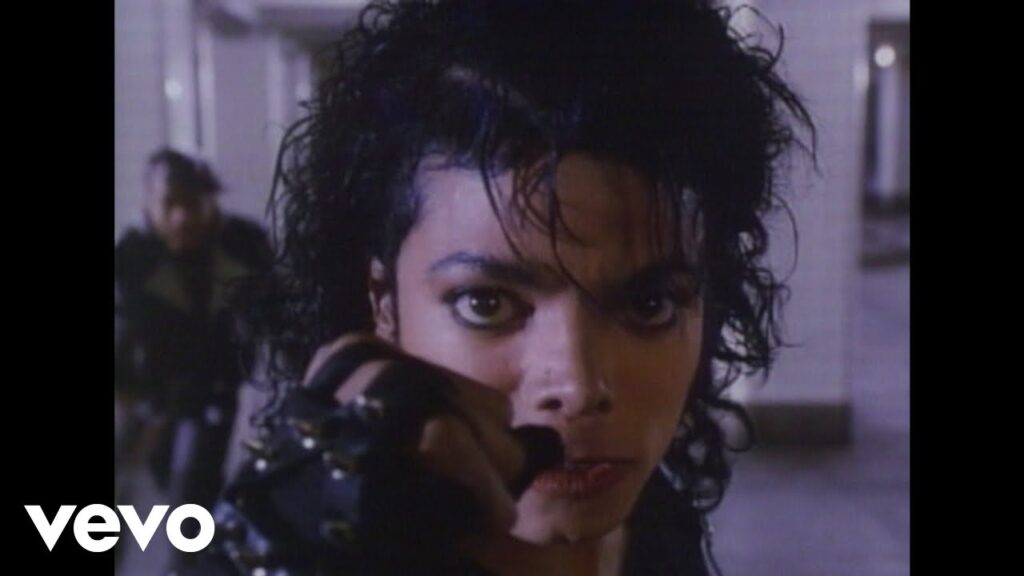
When the performance sequence begins, Jackson unveils a striking new look, complete with black leather outfits, intricate choreography, and an attitude unlike anything audiences had previously seen from him.
The video became one of MTV’s defining moments.
A Historic Chart Success
Released in September 1987, “Bad” climbed to No. 1 on the Billboard Hot 100, beginning one of the most remarkable runs in chart history.
The Bad album would eventually produce five consecutive No. 1 singles, a record at the time.
Songs like “The Way You Make Me Feel,” “Man in the Mirror,” “Dirty Diana,” and “I Just Can’t Stop Loving You” followed, cementing the album as another massive commercial triumph.
Although Thriller remains Jackson’s biggest-selling release, Bad proved he was no one-album phenomenon.
A New Image for a New Decade
“Bad” marked more than a musical evolution.
It represented a transformation of Jackson’s public image.
Gone were many of the youthful visuals associated with Thriller.
In their place came darker fashion, sharper choreography, and a more assertive stage presence.
The change helped keep Jackson artistically fresh while influencing countless performers who followed.
The look became nearly as famous as the song itself.
Why It Still Sounds Powerful
Many pop songs from the late 1980s sound firmly rooted in their era.
“Bad” has largely escaped that fate.
Its groove remains infectious.
Its production still feels dynamic.
Most importantly, Jackson’s performance remains electrifying.
The song’s message of confidence and self-belief continues connecting with listeners across generations.
It’s impossible to hear those opening beats without immediately recognizing what’s coming next.
One of Michael Jackson’s Signature Performances
Michael Jackson recorded dozens of unforgettable songs, but “Bad” occupies a unique place in his remarkable catalog. It wasn’t simply another hit—it was a declaration that he intended to keep pushing forward creatively after reaching the highest level imaginable with Thriller.
Its unforgettable melody, Quincy Jones’ brilliant production, Martin Scorsese’s groundbreaking video, and Jackson’s commanding vocal performance combined to create one of the defining pop records of the decade. More than thirty-five years later, it remains every bit as exciting, confident, and entertaining as it was in 1987.
For Michael Jackson, “Bad” became much more than the title of an album. It became a statement of artistic ambition, proving that true superstars don’t spend their careers chasing past success—they create new standards for everyone else to follow.
This post has already been read 85 times!