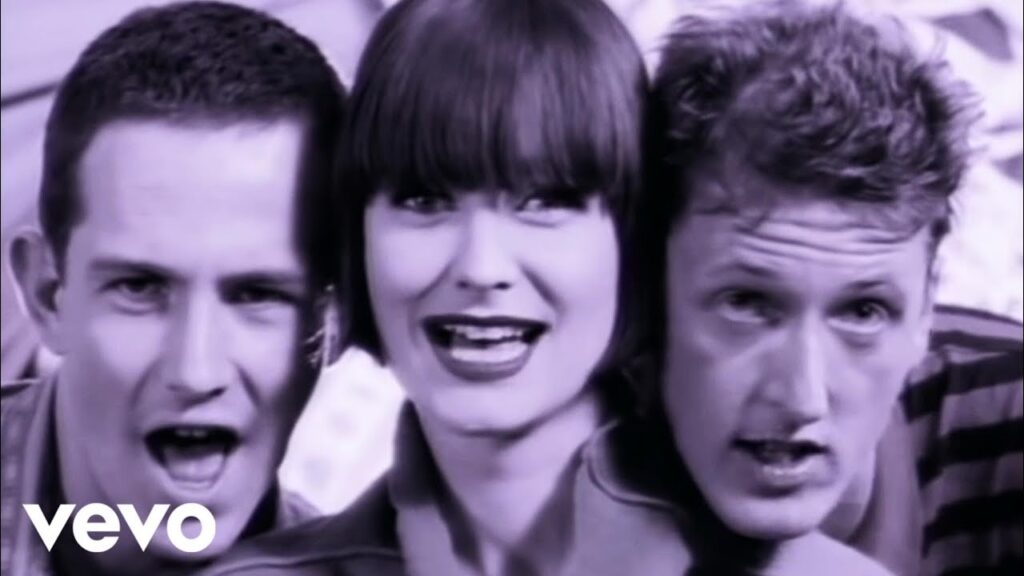
Released in 1986, “Breakout” introduced much of the world to Swing Out Sister and immediately established the British group as something different from the typical synth-pop acts dominating the decade. Bright, sophisticated, and impossibly polished, the song combined electronic pop with jazz, soul, and the lush orchestration of an earlier era. Fronted by Corinne Drewery’s distinctive voice, “Breakout” became an international hit and remains the recording most closely associated with Swing Out Sister.
The group formed in Manchester in 1985 with Drewery, keyboardist Andy Connell, and drummer Martin Jackson. Their musical interests extended well beyond the electronic pop dominating British radio. Connell had a strong interest in jazz and soul, while Drewery brought a cool, understated vocal style that fit perfectly with the group’s sophisticated arrangements.
“Breakout” emerged from this combination of influences and appeared on Swing Out Sister’s debut album, It’s Better to Travel. The single was first released in the United Kingdom in 1986 before becoming a major American hit the following year.
From its opening seconds, “Breakout” sounds optimistic. A crisp electronic rhythm provides the foundation while bright keyboards, bass, horns, and sweeping orchestral touches gradually fill the arrangement. The production is unmistakably rooted in the 1980s, yet the group’s fascination with older styles prevents the song from becoming merely another period synth-pop recording.
One of its greatest strengths is Andy Connell’s arrangement. There is a tremendous amount happening within the track, but nothing feels chaotic. Synthesizers provide a modern foundation while brass gives the recording a punchy soul influence. Strings add elegance, and the rhythm section keeps everything moving with remarkable precision.
Producer Paul Staveley O’Duffy helped transform those ideas into an exceptionally polished recording. Rather than making the electronic and acoustic elements compete with one another, he blended them into a seamless whole. The result feels almost cinematic, with different instrumental textures appearing and disappearing throughout the song.
Then there is Corinne Drewery.
Her performance is crucial to everything that makes “Breakout” work. Drewery doesn’t possess the kind of oversized vocal style associated with many major 1980s singers. Instead, her voice is controlled, warm, and effortlessly stylish. She delivers the song with confidence while maintaining an appealing sense of restraint.
That approach perfectly complements the song’s central idea. “Breakout” is ultimately about recognizing that something needs to change and finding the courage to make that change happen. Rather than presenting that message with excessive drama, Swing Out Sister wraps it inside one of the most cheerful arrangements of the decade.
The contrast works beautifully. The song acknowledges uncertainty while sounding completely optimistic about what might come next.
The chorus is especially effective. Instead of exploding into a radically different section, it feels like the natural release of everything established during the verses. The melody rises, the instrumentation becomes fuller, and Drewery’s vocal gains additional confidence. It’s an expertly constructed pop hook that becomes memorable without relying on repetition alone.
Commercial success quickly followed.
“Breakout” reached No. 4 on the UK Singles Chart, giving Swing Out Sister an enormous breakthrough almost immediately. In the United States, the song eventually climbed to No. 6 on the Billboard Hot 100. It also became a major adult contemporary hit and helped It’s Better to Travel reach No. 1 on the UK Albums Chart.
The song even earned Grammy recognition, with Swing Out Sister receiving nominations connected to their breakthrough success.
Its music video complemented the record’s sophisticated personality. Corinne Drewery’s distinctive fashion and stylish presentation helped establish the group’s visual identity without overshadowing the music. At a time when MTV could make image nearly as important as songwriting, Swing Out Sister managed to look fashionable while maintaining an unmistakably musical identity.
“Breakout” also stood apart from much of what surrounded it on radio.
The mid-1980s were filled with enormous drums, screaming guitars, heavily processed vocals, and increasingly elaborate synthesizer production. Swing Out Sister used plenty of contemporary technology, but their musical reference points stretched backward toward Burt Bacharach-style pop arrangements, Motown, jazz, and sophisticated 1960s orchestral pop.
That mixture ultimately became the group’s signature.
Martin Jackson departed Swing Out Sister during the making of their debut album, eventually leaving Drewery and Connell as the core partnership. Instead of attempting to repeatedly manufacture another “Breakout,” the pair moved further toward jazz, easy listening, soul, and orchestral pop. Their later recordings became increasingly sophisticated, earning the group a particularly devoted following in Japan.
Still, “Breakout” remains the perfect entry point into their music.
The production has plenty of obvious 1980s characteristics, particularly its programmed rhythms and keyboard sounds, but the underlying composition is strong enough to survive changing fashions. Strip away the technology and there is still an excellent melody, a strong chord progression, and an arrangement built around genuine musical ideas.
The horn arrangement deserves particular appreciation. Rather than serving as decoration, the brass provides much of the song’s personality. Those sharp bursts of sound give “Breakout” a classic soul flavor while contrasting beautifully with the smoother synthesizers and strings.
The bass is similarly important. Its melodic movement gives the track a subtle funkiness that keeps the sophisticated arrangement from becoming overly polished or sterile. There is always a groove underneath the elegance.
Drewery’s vocal has aged especially well. Because she avoided many of the exaggerated vocal techniques fashionable during the period, her performance doesn’t feel locked to 1986. There’s an effortless quality to her singing that sounds just as appealing decades later.
That timelessness helps explain why “Breakout” continues appearing on 1980s radio, retro playlists, and compilations. It creates an immediate mood. Within seconds, the record feels energetic, stylish, and optimistic.
It is also an excellent example of how adventurous mainstream pop could be during the decade. Swing Out Sister managed to incorporate jazz harmonies, soul instrumentation, orchestral arrangements, electronic production, and straightforward pop songwriting into a single record—and somehow made the entire combination sound effortless.
“Breakout” could easily have become a novelty of its era. Instead, it has endured as one of the classiest pop singles of the 1980s.
The song’s greatest accomplishment may be how naturally everything fits together. The synthesizers never overwhelm the horns. The strings never bury the rhythm. The sophisticated arrangement never gets in the way of the melody. Most importantly, the production never overshadows Corinne Drewery.
More than four decades after Swing Out Sister first encouraged listeners to break away from uncertainty, “Breakout” still delivers the same rush of optimism. It remains a beautifully constructed piece of sophisticated pop—bright enough for mainstream radio, musically adventurous enough to reward repeated listening, and stylish enough to sound unmistakably like Swing Out Sister.
This post has already been read 46 times!