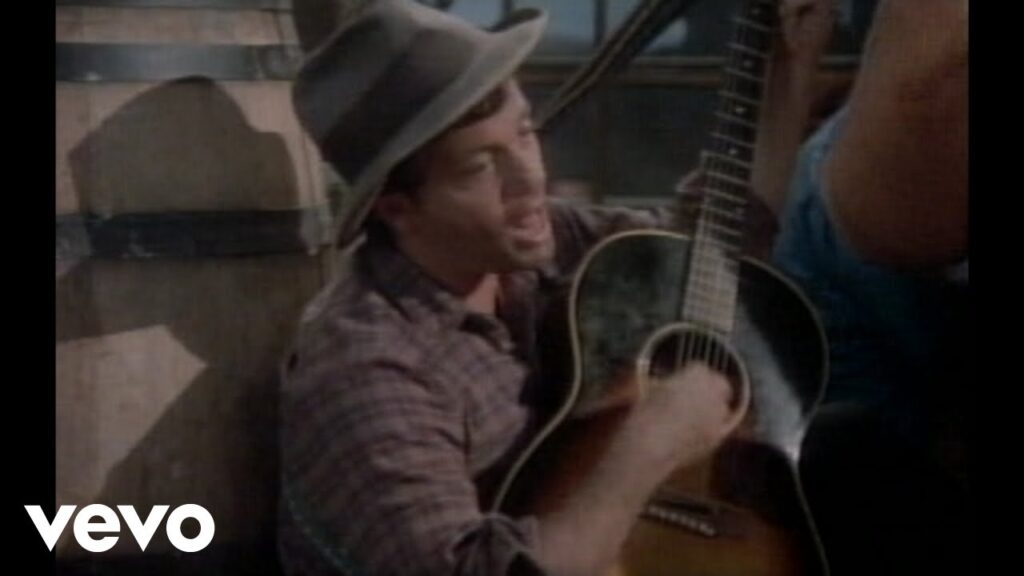
Released in 1982 as the second single from The Nylon Curtain, “Allentown” stands as one of Billy Joel’s most socially conscious and emotionally resonant songs. While many listeners assume it’s specifically about the Pennsylvania city of Allentown, Joel has explained that the song represents the struggles of countless American industrial towns that saw their economic foundations crumble during the late 1970s and early 1980s.
At a time when steel mills, factories, and manufacturing plants were closing across the Northeast and Midwest, “Allentown” gave a voice to working-class Americans facing unemployment, broken promises, and uncertain futures. The song became a major hit, reaching No. 17 on the Billboard Hot 100, but its true achievement lies in its enduring relevance.
More than forty years later, “Allentown” remains one of the finest examples of storytelling in popular music and one of Billy Joel’s most important recordings.
Song Overview
“Allentown” paints a portrait of hardworking people whose expectations for a stable future have slowly disappeared.
Rather than focusing on a single individual, Joel speaks for an entire generation raised to believe that hard work would guarantee prosperity. As factories close and opportunities vanish, those promises begin to ring hollow.
Despite its frustration, the song isn’t consumed by bitterness.
Instead, it reflects resilience.
The people at its center continue working, raising families, and trying to preserve hope even as the economic landscape changes around them.
That humanity is what gives the song its lasting emotional power.
Songwriting
Written entirely by Billy Joel, “Allentown” showcases his remarkable ability to combine social commentary with memorable pop songwriting.
The verses vividly describe economic hardship without becoming preachy or political. Joel avoids assigning simple blame, instead focusing on the emotional consequences experienced by ordinary workers.
The chorus is one of his strongest.
Its driving melody captures both determination and disappointment, allowing listeners to feel the weight of the story without sacrificing accessibility.
The song proves that mainstream pop can tackle serious issues while remaining commercially successful.
Performance
Billy Joel delivers one of the finest vocal performances of his career.
His voice perfectly balances empathy, frustration, and quiet determination. Rather than dramatizing the lyrics, he sings with the sincerity of someone genuinely invested in the people whose stories he’s telling.
The musicianship throughout the recording is outstanding.
Liberty DeVitto’s steady drumming provides the song’s relentless pulse, while Doug Stegmeyer’s bass and David Brown’s guitar create a muscular rock foundation. Joel’s piano work remains central to the arrangement without overwhelming the other instruments.
The entire band performs with remarkable discipline, allowing the song’s message to remain front and center.
Production
Produced by Phil Ramone, “Allentown” features a polished yet restrained production that perfectly serves the material.
The iconic metallic percussion opening immediately evokes the sounds of industry, setting the tone before Joel even begins singing.
Layered synthesizers, piano, guitars, bass, and drums build a rich but uncluttered arrangement that emphasizes rhythm and atmosphere.
Unlike many productions of the era, nothing feels excessive.
Every musical choice supports the emotional weight of the lyrics.
The recording has aged exceptionally well because it prioritizes substance over trends.
Standout Moments
Several elements make “Allentown” unforgettable:
- Billy Joel’s heartfelt vocal performance.
- Powerful storytelling rooted in real economic struggles.
- The unforgettable industrial percussion opening.
- A soaring, emotionally charged chorus.
- Outstanding band performance throughout.
The opening alone immediately creates a vivid sense of place.
Before a single lyric is sung, listeners can almost picture factories, rail yards, and steel mills beginning another day.
It’s one of the most effective introductions in Joel’s catalog.
Weak Points
There are remarkably few weaknesses.
Some listeners expecting a traditional rock anthem may find the song’s serious subject matter less immediately catchy than hits like “Uptown Girl” or “It’s Still Rock and Roll to Me.”
Others occasionally interpret the song too literally as being exclusively about Allentown, Pennsylvania, when Joel intended it as a broader reflection on America’s industrial decline.
Neither issue diminishes the recording itself.
Its thoughtful perspective is exactly what has allowed it to remain relevant for decades.
Legacy
“Allentown” became one of Billy Joel’s signature songs and has endured as one of the defining musical portraits of America’s Rust Belt. Although inspired by the struggles of industrial communities during the early 1980s, its themes of economic uncertainty, disappearing manufacturing jobs, and working-class resilience continue to resonate with new generations.
The song has often been referenced in discussions about deindustrialization and the changing American economy because it captures the emotional reality behind the statistics. Rather than focusing on political arguments, Joel chose to tell the human story, making the song accessible to listeners regardless of their background.
Today, “Allentown” remains one of Billy Joel’s most respected compositions. It demonstrates that great songwriting can entertain while also documenting an important moment in history, preserving the voices of people whose stories might otherwise have been forgotten.
Final Score
10/10
“Allentown” is a masterpiece of storytelling, musicianship, and emotional honesty. Billy Joel transforms the struggles of America’s industrial heartland into a deeply personal and universally relatable song, supported by exceptional songwriting, powerful vocals, and beautifully restrained production. More than just a hit single, “Allentown” is a musical time capsule that continues to speak to anyone who has experienced change, uncertainty, or the determination to keep moving forward despite difficult circumstances. It stands among the very finest songs in Billy Joel’s extraordinary catalog and one of the greatest socially conscious recordings of the 1980s.
This post has already been read 73 times!