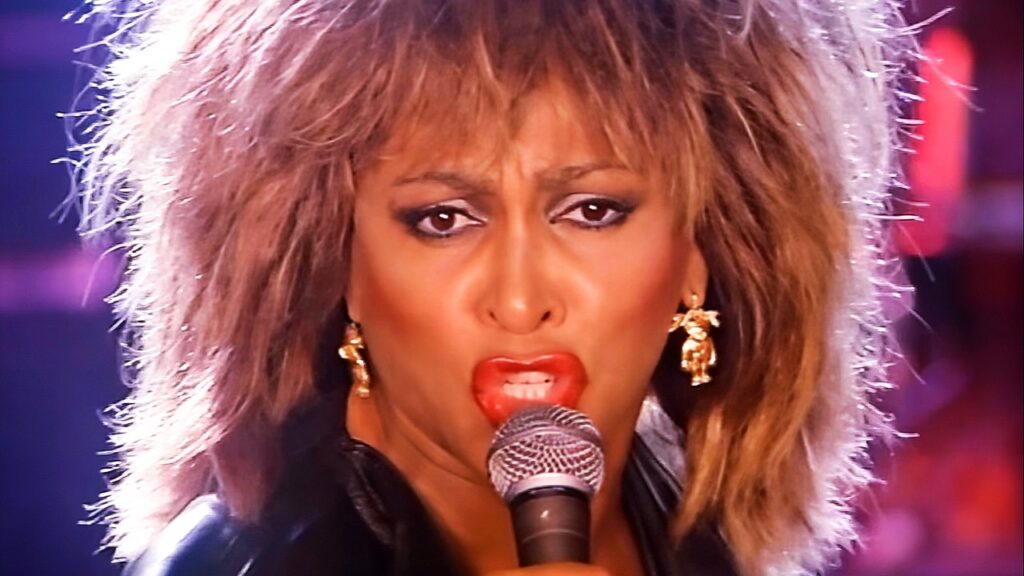
By 1984, Tina Turner was doing something almost unheard of in popular music—staging one of the greatest comebacks in entertainment history. After years of personal and professional struggles following the end of her partnership with Ike Turner, she reinvented herself as a global rock superstar. Her album Private Dancer became a worldwide phenomenon, producing a remarkable string of hit singles that introduced her to an entirely new generation of fans. Among the album’s standout tracks was “Better Be Good to Me,” a fiery anthem that perfectly showcased Turner’s grit, confidence, and commanding vocal power.
Released as the fourth U.S. single from Private Dancer, the song reached No. 5 on the Billboard Hot 100 and won the Grammy Award for Best Female Rock Vocal Performance. Combining hard rock guitars, driving rhythms, and one of the most passionate vocal performances of the decade, “Better Be Good to Me” remains one of Tina Turner’s signature songs and one of the defining rock hits of the 1980s.
The Story Behind the Song
Interestingly, “Better Be Good to Me” was not originally written for Tina Turner. The song was penned by Holly Knight, Mike Chapman, and Nicky Chinn and was first recorded in 1981 by the group Spider, fronted by Amanda Blue.
Although Spider’s version received modest attention, it wasn’t until Tina Turner recorded the song for Private Dancer that its full potential was realized.
Producer Rupert Hine recognized that the song’s themes of self-respect, emotional strength, and refusing to settle for less were a perfect fit for Turner. Given everything she had overcome in her personal life, the lyrics carried a level of authenticity that few performers could match.
At a time when many listeners already viewed Turner as a symbol of resilience, the song became more than just another rock single—it became an empowering declaration from an artist who had earned every word she sang.
The Sound
“Better Be Good to Me” opens with a tense, bluesy guitar riff before exploding into one of the most powerful grooves on Private Dancer.
The arrangement blends hard rock, pop, and R&B into a sound that was uniquely Tina Turner. Crunching electric guitars, muscular bass lines, crisp drums, and dramatic keyboard textures create a sense of urgency from beginning to end.
Producer Rupert Hine gives every instrument room to shine while maintaining a raw edge that prevents the recording from feeling overly polished. The verses simmer with controlled intensity before bursting into an unforgettable chorus filled with explosive energy.
The guitar work deserves particular praise. Rather than relying on flashy solos, the riffs drive the song forward with relentless momentum, perfectly matching the emotional force of Turner’s vocal.
Even decades later, the production sounds remarkably fresh because it emphasizes performance over studio gimmicks.
Performance and Musicianship
Tina Turner delivers one of the most electrifying performances of her solo career.
From the opening line, she commands complete attention. Her voice is filled with authority, grit, and confidence, conveying both vulnerability and determination without ever losing control.
What makes the performance especially remarkable is her ability to shift effortlessly between restrained verses and explosive choruses. Every emotional transition feels completely natural, making the song as believable as it is exciting.
The musicians surrounding Turner match her intensity throughout. The rhythm section creates a rock-solid groove, while guitars and keyboards constantly build tension without overwhelming the vocal.
Background harmonies add extra punch during the chorus, enhancing the song’s dramatic impact while keeping Turner firmly at the center of the performance.
Together, they create one of the strongest rock recordings of the decade.
Why It Worked
Several factors helped “Better Be Good to Me” become one of Tina Turner’s biggest solo hits.
First, the song’s message resonated with audiences. Its emphasis on self-worth and refusing to accept mistreatment felt empowering without becoming preachy.
Second, Tina Turner was the perfect artist to deliver that message. Her remarkable life story gave every lyric added credibility, making the performance feel deeply personal.
The production also struck an ideal balance between rock and pop, allowing the song to receive airplay across multiple radio formats. It appealed equally to rock fans, pop audiences, and adult contemporary listeners.
MTV further amplified its success. The energetic performance-based music video showcased Turner’s magnetic stage presence and reinforced her reputation as one of the greatest live performers of her generation.
The Legacy
“Better Be Good to Me” remains one of the defining songs of Tina Turner’s extraordinary comeback.
Although Private Dancer produced several iconic hits, including “What’s Love Got to Do with It” and “Private Dancer,” this song stands apart because of its sheer intensity. It demonstrated that Turner wasn’t simply returning as a pop singer—she had become one of rock’s most powerful voices.
The Grammy Award for Best Female Rock Vocal Performance recognized exactly what audiences already knew: few singers could match Tina Turner’s ability to combine technical excellence with raw emotional power.
Today, the song remains a staple on classic rock and ’80s playlists while continuing to inspire listeners with its message of confidence and self-respect. It also serves as an excellent introduction to one of the most remarkable second acts in music history.
Final Thoughts
“Better Be Good to Me” is much more than another successful single from Private Dancer. It is a statement of strength, independence, and resilience delivered by an artist whose life gave every word extraordinary meaning.
Tina Turner’s unforgettable vocal performance transforms an already outstanding rock song into something timeless. Supported by exceptional musicianship and Rupert Hine’s polished yet powerful production, the recording continues to sound every bit as exciting today as it did in 1984.
More than forty years after its release, “Better Be Good to Me” remains one of the defining rock anthems of the 1980s and one of the finest performances of Tina Turner’s legendary career. It captures everything that made her an icon: unmatched charisma, fearless emotion, extraordinary vocal ability, and the unwavering determination to demand nothing less than the respect she deserved.
This post has already been read 63 times!