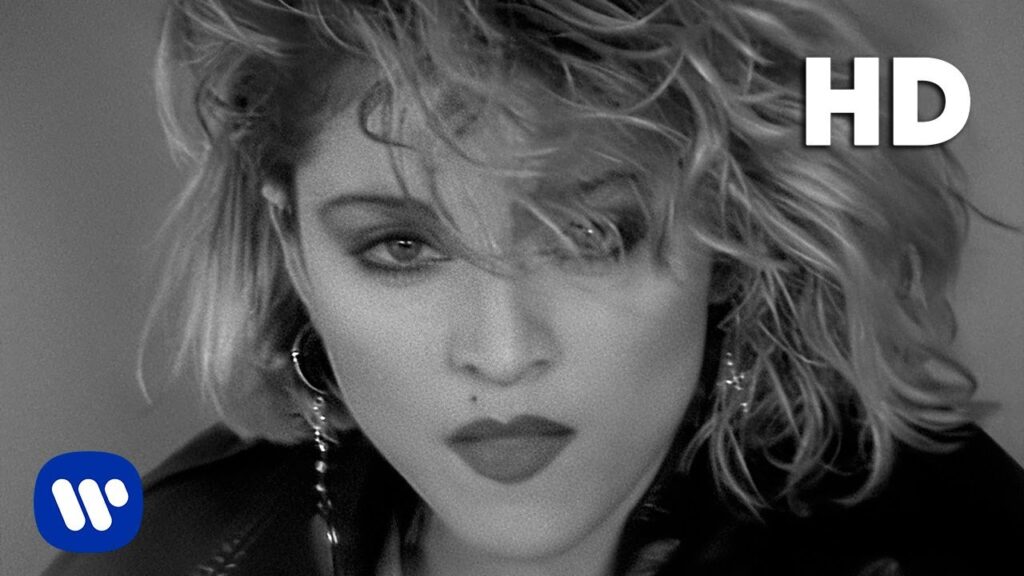
Before Madonna became one of the biggest names in music history, she was simply another ambitious young artist trying to stand out in a crowded pop landscape. She had already attracted attention with dance club favorites like “Everybody” and “Burning Up,” but it was “Borderline” that truly changed everything. Released in 1984, the song introduced mainstream audiences to a performer who possessed not only undeniable charisma but also the ability to deliver emotionally engaging pop music.
“Borderline” wasn’t built around controversy or spectacle. Instead, it paired heartfelt lyrics with an irresistible melody, blending dance music, pop, and rhythm and blues into a polished package that showcased Madonna’s growing confidence as both a singer and performer.
Looking back, it’s easy to see why the song became such an important milestone. It marked the moment when Madonna stopped being a promising newcomer and became a genuine pop star, setting the stage for one of the most remarkable careers in entertainment history.
Building a Career One Club at a Time
Madonna Louise Ciccone arrived in New York City in 1978 with little money but enormous ambition. She studied dance, performed with several bands, and gradually found her way into the city’s thriving club scene.
Her earliest recordings reflected that environment.
Songs like “Everybody” and “Burning Up” emphasized infectious dance rhythms designed to fill nightclubs rather than dominate mainstream radio. They gained attention, particularly among DJs, but widespread commercial success remained elusive.
Her self-titled debut album, released in 1983, began changing that narrative.
Produced primarily by Reggie Lucas, the record combined dance beats with accessible pop songwriting. It offered a glimpse of Madonna’s potential while allowing her personality to shine through.
“Borderline” would become the album’s breakthrough single.
A Song Written for Madonna
Unlike many of Madonna’s later hits, “Borderline” was not written by the singer herself.
The song came from songwriter Reggie Lucas, who also produced much of her debut album. Lucas crafted a composition that balanced vulnerability with confidence, giving Madonna an opportunity to demonstrate emotional depth without abandoning the dance-floor energy that had launched her career.
The lyrics describe the frustration of being caught in an uncertain relationship.
Rather than pleading for affection, the narrator questions why someone continues pushing her emotional limits.
There’s disappointment.
There’s hope.
There’s strength.
That emotional mixture helped distinguish “Borderline” from many disposable dance songs of the era.
Madonna Finds Her Voice
Although Madonna would continue developing as a vocalist throughout her career, “Borderline” revealed qualities that would define her greatest recordings.
She doesn’t overpower the song with vocal acrobatics.
Instead, she focuses on personality.
Her delivery feels conversational, sincere, and surprisingly warm.
That approach allows listeners to connect with the narrator rather than simply admire technical singing ability.
Madonna understood something many performers overlook.
Emotion often matters more than perfection.
Her slightly breathy vocal style became one of the most recognizable sounds in pop music, and “Borderline” remains one of its finest early examples.
Pop Meets Dance
Musically, “Borderline” bridges several different styles.
Its steady dance beat reflects Madonna’s club roots, while shimmering keyboards, tasteful guitar work, and melodic bass lines give the recording broader pop appeal.
Unlike some early-’80s dance tracks built almost entirely around electronic production, “Borderline” maintains an organic warmth.
The arrangement never feels mechanical.
Each musical layer supports the melody rather than competing for attention.
That careful balance helped the song appeal equally to dance clubs, Top 40 radio, and adult contemporary audiences.
It demonstrated Madonna’s ability to cross musical boundaries long before that became her trademark.
A Defining Music Video
The success of “Borderline” coincided with the rapid growth of MTV.
Its music video became one of the first major showcases of Madonna’s on-screen charisma.
Directed by Mary Lambert, who would later collaborate with Madonna on several iconic videos, the clip tells the story of a young woman caught between an ambitious photographer and her working-class boyfriend.
Rather than relying on elaborate visual effects, the video emphasizes Madonna’s natural magnetism.
She commands attention in every scene.
Her fashion choices, expressive dancing, and unmistakable confidence helped establish the image that millions of fans would soon recognize around the world.
It also highlighted MTV’s growing influence in creating pop superstars.
Breaking into the Mainstream
Released as the fifth single from Madonna’s debut album, “Borderline” steadily climbed the charts during the spring of 1984.
It reached the Top 10 on the Billboard Hot 100, becoming Madonna’s first major mainstream hit in the United States.
Internationally, the song also performed well, introducing her to audiences across Europe, Australia, and other markets.
More importantly, it proved that Madonna wasn’t simply a dance-club phenomenon.
She could compete successfully on mainstream pop radio.
That achievement fundamentally changed the trajectory of her career.
Record executives, radio programmers, and audiences all began paying much closer attention.
The Beginning of a Remarkable Run
It’s difficult to overstate how important “Borderline” became in hindsight.
Without it, the extraordinary sequence of hits that followed might have unfolded very differently.
Within the next few years, Madonna released classics including “Lucky Star,” “Like a Virgin,” “Material Girl,” “Into the Groove,” “Dress You Up,” “Papa Don’t Preach,” “Open Your Heart,” and “Live to Tell.”
Each expanded her artistic identity.
But “Borderline” served as the bridge between promising newcomer and international superstar.
It gave listeners a reason to invest in everything that came afterward.
Why It Still Resonates
Unlike some early dance-pop songs that feel tied to their era, “Borderline” continues sounding remarkably fresh.
Several factors contribute to its longevity.
The melody remains instantly memorable.
The production avoids excessive gimmicks.
The emotional message feels timeless.
Almost everyone has experienced the uncertainty of wondering where a relationship stands.
Madonna’s performance captures that confusion without becoming melodramatic.
She sounds hopeful but realistic.
Strong but vulnerable.
Those emotional contradictions make the song feel authentic even decades later.
A Favorite Among Fans
Although later hits often receive greater attention, many longtime Madonna fans continue ranking “Borderline” among her finest recordings.
It captures an artist on the verge of global superstardom while retaining an intimacy that became less common as her productions grew increasingly elaborate.
The song also serves as a reminder of Madonna’s remarkable instincts.
Even early in her career, she understood how to choose songs that balanced commercial appeal with emotional substance.
That talent became one of the defining characteristics of her extraordinary longevity.
The Song That Opened the Door
Madonna would go on to become one of the best-selling recording artists of all time, earning countless awards, breaking chart records, and continually reinventing herself across four decades of popular music.
Every legendary career has a turning point.
For Madonna, that moment was “Borderline.”
The song introduced the world to an artist who could combine dance rhythms, memorable melodies, emotional storytelling, and undeniable charisma into something uniquely compelling. It wasn’t her biggest hit, nor was it her most controversial recording, but it may have been her most important.
More than forty years after its release, “Borderline” remains one of the defining songs of early 1980s pop. It stands as the first clear indication that Madonna wasn’t destined to become merely another successful singer.
She was about to become a cultural phenomenon.
This post has already been read 78 times!