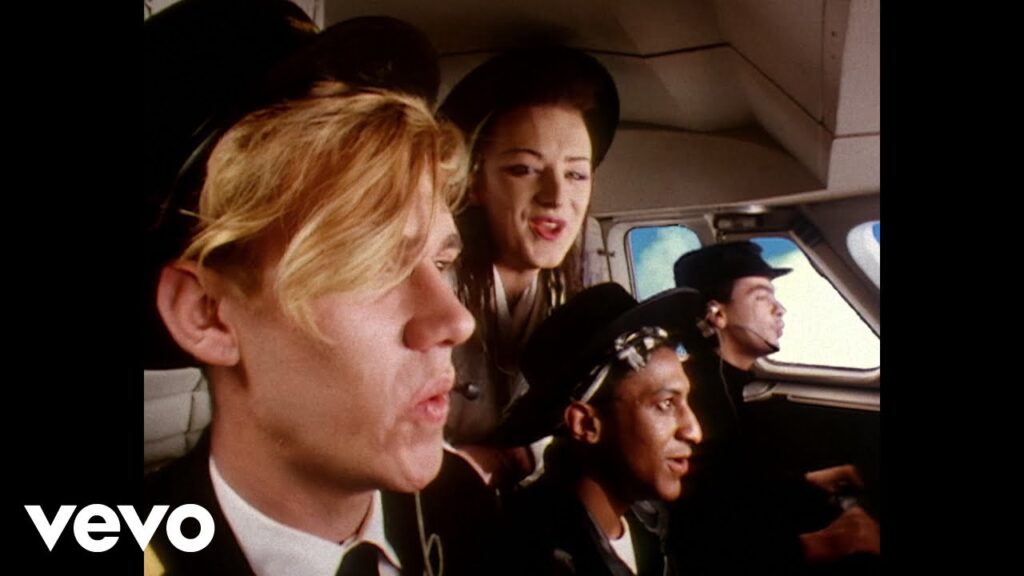
By 1983, Culture Club had become one of the biggest bands in the world. Led by the charismatic Boy George, the British quartet burst onto the international music scene with a sound that blended pop, soul, reggae, and new wave into something entirely unique. While songs like “Do You Really Want to Hurt Me” introduced audiences to the band, it was “Church of the Poison Mind” that proved their success was no fluke. Bursting with energy, infectious hooks, and a joyful Motown-inspired groove, the song showcased a different side of Culture Club while cementing their place among the defining acts of the decade.
Released as the lead single from the album Colour by Numbers, the song reached No. 10 on the Billboard Hot 100 and climbed to No. 2 on the UK Singles Chart. More importantly, it set the stage for an album that would become one of the biggest-selling releases of the 1980s. More than forty years later, “Church of the Poison Mind” remains one of the band’s most exhilarating recordings and one of the finest examples of ’80s blue-eyed soul.
The Story Behind the Song
Culture Club formed in London in 1981, bringing together Boy George, bassist Mikey Craig, guitarist Roy Hay, and drummer Jon Moss. From the beginning, the band stood apart thanks to George’s unmistakable voice, striking fashion sense, and songwriting partnership with the rest of the group.
Following the international breakthrough of Kissing to Be Clever, expectations for their second album were enormous. Rather than simply repeating the sound of their earlier hits, Culture Club looked backward for inspiration, drawing heavily from the classic Motown and Northern Soul records they admired.
“Church of the Poison Mind” became the perfect introduction to that musical direction. Written by the four members of the band, the song blended vintage soul influences with modern production, creating something that felt nostalgic and contemporary at the same time.
Adding another layer of authenticity was vocalist Helen Terry, whose powerful supporting vocals gave the recording a classic soul flavor while creating one of the most memorable vocal pairings of the era.
The Sound
From its opening piano chords, “Church of the Poison Mind” explodes with joyful energy.
Unlike many synth-heavy hits of 1983, the song places equal emphasis on live instrumentation. Bright piano, punchy horns, rhythmic guitar, lively bass, crisp drumming, and handclaps combine to create a groove that recalls the golden age of Motown while remaining unmistakably rooted in the 1980s.
Producer Steve Levine deserves tremendous credit for capturing that balance. The recording feels polished without becoming sterile, allowing every instrument to contribute naturally to the infectious rhythm.
The horn arrangements are especially effective, providing bursts of excitement throughout the song. Meanwhile, the rhythm section maintains an irresistible bounce that makes it almost impossible not to move.
Although synthesizers appear subtly in the background, they never dominate the mix. Instead, the recording celebrates live musicianship in a way that helped distinguish Culture Club from many of their contemporaries.
Performance and Musicianship
Boy George delivers one of the most exuberant performances of his career.
His soulful voice effortlessly navigates the song’s rapid pace while conveying warmth, excitement, and playful confidence. George had always possessed an extraordinary ability to blend pop accessibility with classic soul phrasing, and “Church of the Poison Mind” may be one of his finest examples.
Helen Terry’s contribution is equally important. Her gospel-influenced backing vocals don’t merely support George—they create a spirited dialogue that recalls the great soul duets of the 1960s.
The rest of Culture Club performs with remarkable precision. Mikey Craig’s bass provides a lively foundation, Jon Moss delivers energetic yet controlled drumming, and Roy Hay contributes tasteful guitar work that perfectly complements the song’s upbeat feel.
The result is a performance overflowing with joy, confidence, and exceptional musicianship.
Why It Worked
Several factors helped “Church of the Poison Mind” become one of Culture Club’s signature songs.
First, its melody is immediately memorable. The chorus arrives quickly and remains one of the band’s strongest sing-along moments.
Second, the song’s blend of Motown influences and contemporary pop production gave it broad appeal. Older listeners appreciated its classic soul elements, while younger audiences embraced its fresh energy and modern sound.
The chemistry between Boy George and Helen Terry also added something unique. Their contrasting voices created a dynamic rarely heard in mainstream pop during the early 1980s.
MTV further expanded the song’s popularity. The colorful music video showcased Boy George’s unmistakable charisma and fashion sense, helping make him one of the most recognizable figures of the decade while introducing Culture Club to millions of viewers around the world.
The Legacy
Although Colour by Numbers would later produce even bigger hits like “Karma Chameleon,” “Church of the Poison Mind” remains one of Culture Club’s most beloved recordings.
The song marked an important creative step for the band, demonstrating their willingness to explore different musical styles without losing their identity. Its celebration of classic soul music helped inspire many later pop artists to revisit similar influences.
Today, it remains a staple of ’80s radio, soul-inspired playlists, and compilations celebrating the greatest British pop songs of the decade. It also serves as an excellent reminder that Culture Club’s success was built on much more than image—they were an exceptionally talented group of musicians and songwriters.
For many fans, the song captures the band at their most energetic and optimistic.
Final Thoughts
“Church of the Poison Mind” is one of the brightest and most joyful recordings of the 1980s. Its irresistible blend of Motown-inspired grooves, polished pop production, exceptional musicianship, and unforgettable vocal performances creates a song that remains every bit as exciting today as it was upon its release.
Boy George’s charismatic lead vocal, Helen Terry’s powerful harmonies, and the band’s remarkable chemistry combine to produce a recording filled with infectious enthusiasm from beginning to end. Every note reflects the confidence of a group reaching the height of its creative powers.
More than forty years after it first climbed the charts, “Church of the Poison Mind” continues to stand as one of Culture Club’s greatest achievements. It reminds listeners that great pop music can be stylish, soulful, and endlessly fun all at once, making it one of the true gems of the 1980s.
This post has already been read 62 times!