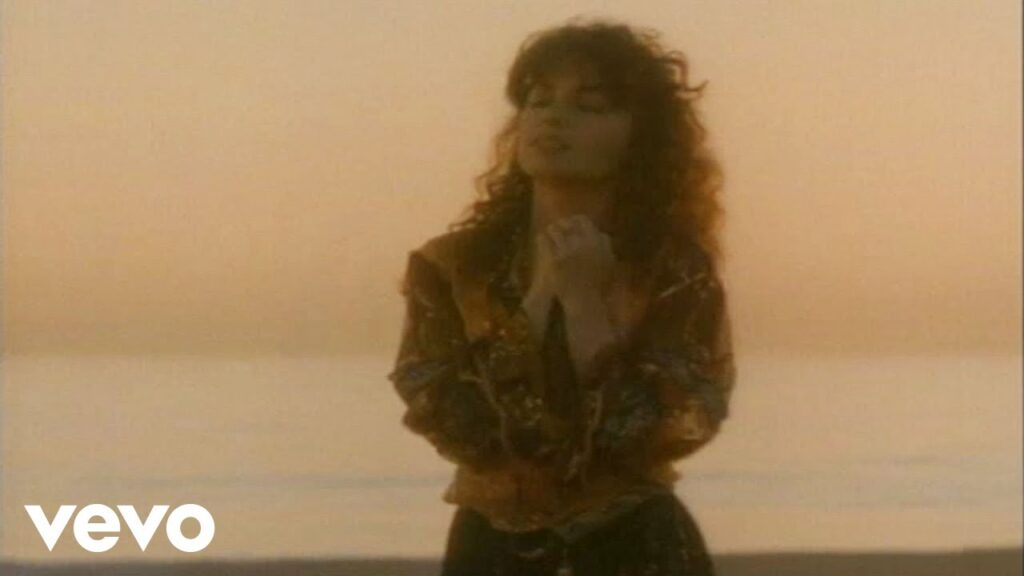
Rock bands rarely become known for power ballads. The Bangles built their reputation on jangly guitars, rich harmonies, and energetic pop-rock songs inspired by the sounds of the 1960s. They scored hits with songs like “Walk Like an Egyptian” and “Manic Monday,” both of which showcased their ability to deliver catchy melodies with plenty of personality.
Then came “Eternal Flame.”
Instead of driving guitars and upbeat rhythms, listeners were treated to a delicate piano melody, soft vocals, and one of the most memorable love songs of the 1980s. It was a dramatic departure from the band’s previous hits, yet it became one of their biggest successes and remains the song they’re most closely associated with decades later.
While countless love songs have faded into obscurity, “Eternal Flame” continues to appear on wedding playlists, movie soundtracks, television shows, and classic radio stations around the world. Its emotional honesty has proven remarkably durable, helping it transcend the decade that produced it.
A Band at a Crossroads
By 1988, The Bangles had already experienced tremendous success. Formed in Los Angeles in the early 1980s, the band consisted of Susanna Hoffs, Vicki Peterson, Debbi Peterson, and Michael Steele. They combined influences from classic rock, garage bands, folk, and power pop into a sound that stood apart from many of their MTV-era contemporaries.
Their breakthrough came with Different Light in 1986, which featured several massive hits. Success arrived quickly, but it also created challenges. Media attention increasingly focused on Susanna Hoffs, leading many fans to mistakenly assume she was a solo artist backed by a band rather than one member of an equal group.
As work began on their third album, Everything, internal tensions were growing. The group was under enormous pressure to produce another blockbuster album while navigating increasingly complicated relationships behind the scenes.
Ironically, the song that would become their signature hit emerged during one of the most difficult periods of their career.
The Story Behind the Flame
“Eternal Flame” was written by the legendary songwriting trio of Billy Steinberg, Tom Kelly, and Susanna Hoffs.
The title came from an unusual source. While visiting Graceland, Hoffs noticed an eternal flame honoring Elvis Presley. At one point, however, the flame had temporarily gone out because of a technical malfunction. The irony of an “eternal” flame needing maintenance stuck with her.
Steinberg later expanded the idea into a romantic metaphor.
Rather than writing about dramatic heartbreak or impossible love, the song asks a remarkably simple question: Is the love we’re feeling truly forever?
That uncertainty gives the lyrics much of their emotional power. The narrator isn’t making bold declarations—she’s quietly hoping that what she’s experiencing is genuine and lasting.
It’s vulnerable rather than theatrical.
Susanna Hoffs’ Gentle Performance
One of the song’s greatest strengths is Susanna Hoffs’ vocal performance.
Instead of trying to overwhelm listeners with huge notes and vocal gymnastics, she sings with extraordinary restraint. Nearly every line feels intimate, almost as though she’s whispering directly to one person rather than performing for millions.
That subtlety makes the emotional moments even stronger.
Many singers might have turned “Eternal Flame” into a dramatic showcase. Hoffs wisely avoids over-singing, allowing the melody itself to carry the emotion.
The result feels authentic.
Her voice possesses a warmth that’s difficult to manufacture, making listeners believe every word.
Less Is More
Production often defines songs from the late 1980s.
The decade wasn’t exactly known for restraint. Huge synthesizers, booming drums, gated reverb, and towering guitar solos dominated pop radio.
“Eternal Flame” chose another path.
The arrangement remains surprisingly minimal throughout much of its running time.
Piano serves as the emotional foundation while tasteful keyboards, soft percussion, and subtle orchestration gradually build the atmosphere.
Nothing feels excessive.
Every instrument exists to support the vocal rather than compete with it.
Because of that simplicity, the song has aged considerably better than many contemporary ballads overloaded with production trends that immediately identify them as products of the late ’80s.
The Famous Recording Story
No discussion of “Eternal Flame” would be complete without mentioning one of pop music’s most unusual recording stories.
Producer Davitt Sigerson reportedly suggested that Susanna Hoffs record her lead vocal without wearing any clothes, claiming Olivia Newton-John had done something similar to achieve a more relaxed performance.
Whether scientifically sound or not remains highly debatable.
Hoffs agreed.
Unfortunately, the studio air conditioning unexpectedly switched on during the recording session.
Needless to say, it probably wasn’t the comfortable atmosphere anyone envisioned.
The story has become one of pop music’s stranger studio anecdotes, although Hoffs herself has laughed about it over the years.
Fortunately, listeners only hear a beautiful vocal—not someone wondering why the temperature suddenly dropped ten degrees.
A Worldwide Smash
Released in early 1989, “Eternal Flame” quickly became one of the biggest songs in the world.
It reached No. 1 on the Billboard Hot 100 in the United States and topped charts across Europe, Australia, and numerous other countries.
The single also became one of the biggest-selling songs of The Bangles’ career.
Its international appeal demonstrated that genuine emotion could cross cultural and language barriers with ease.
Whether someone lived in New York, London, Sydney, or Tokyo, the song connected in remarkably similar ways.
Love, hope, vulnerability, and commitment require very little translation.
Why It Connected
Several factors explain the song’s enduring popularity.
First, the melody is unforgettable.
Many hit songs rely heavily on production or rhythm, but “Eternal Flame” succeeds even when performed by a lone singer at a piano.
Second, the lyrics remain universal.
Nearly everyone has wondered whether a relationship would last forever. The song captures that mixture of optimism and uncertainty without becoming overly sentimental.
Third, the performance feels believable.
Listeners aren’t hearing a fictional character.
They’re hearing someone quietly expressing emotions most people have experienced themselves.
Finally, the arrangement leaves room for listeners to insert their own memories.
Unlike songs packed with specific details, “Eternal Flame” provides enough emotional space that it becomes personal for almost anyone who hears it.
The Song Outlived the Band
Ironically, “Eternal Flame” arrived just before The Bangles temporarily disbanded.
Growing internal conflicts ultimately proved too much to overcome, and the group split in 1989.
That meant one of the biggest songs of their career also became something of a farewell.
Although the band reunited years later and has continued performing periodically, “Eternal Flame” remains the centerpiece of virtually every concert.
Its popularity never disappeared.
Instead, each new generation seems to discover it through streaming playlists, movie soundtracks, television appearances, or parents introducing their favorite music to their children.
Endless Covers
One hallmark of a truly great song is its adaptability.
“Eternal Flame” has been covered by artists from numerous genres, including pop, country, adult contemporary, and even acoustic singer-songwriters.
Perhaps the best-known version came from the British pop group Atomic Kitten, whose recording topped charts in several countries during the early 2000s.
Yet despite the many reinterpretations, the original remains definitive.
There’s something about the balance of Hoffs’ vocals, The Bangles’ harmonies, and the understated production that later versions rarely duplicate.
More Than an ’80s Ballad
Many songs become trapped inside their decade.
The synthesizers sound dated.
The production feels old-fashioned.
The lyrics reflect trends that no longer resonate.
“Eternal Flame” escaped that fate.
Instead, it joined the relatively small collection of love songs that continue feeling relevant regardless of era.
Its emotional sincerity allows younger listeners to connect with it just as strongly as audiences did in 1989.
That’s a difficult achievement for any pop song.
A Lasting Legacy
The Bangles produced plenty of memorable music throughout their career, but “Eternal Flame” occupies a unique place in pop history.
It demonstrated that a band famous for energetic pop-rock could also create one of the most elegant love songs ever recorded.
Its success also highlighted the importance of restraint. Rather than overwhelming listeners with production tricks or flashy performances, the song trusted its melody, lyrics, and emotional honesty.
More than thirty-five years later, that decision continues paying dividends.
Whenever “Eternal Flame” begins playing, conversations tend to quiet down. People instinctively recognize those opening piano notes, and for a few minutes, they’re transported back to first loves, weddings, heartbreaks, reunions, or simply quieter moments in their lives.
Not every chart-topping single earns that kind of emotional permanence.
“Eternal Flame” did.
Like the title suggests, its glow never really faded. It simply continues burning, one generation after another.
This post has already been read 87 times!