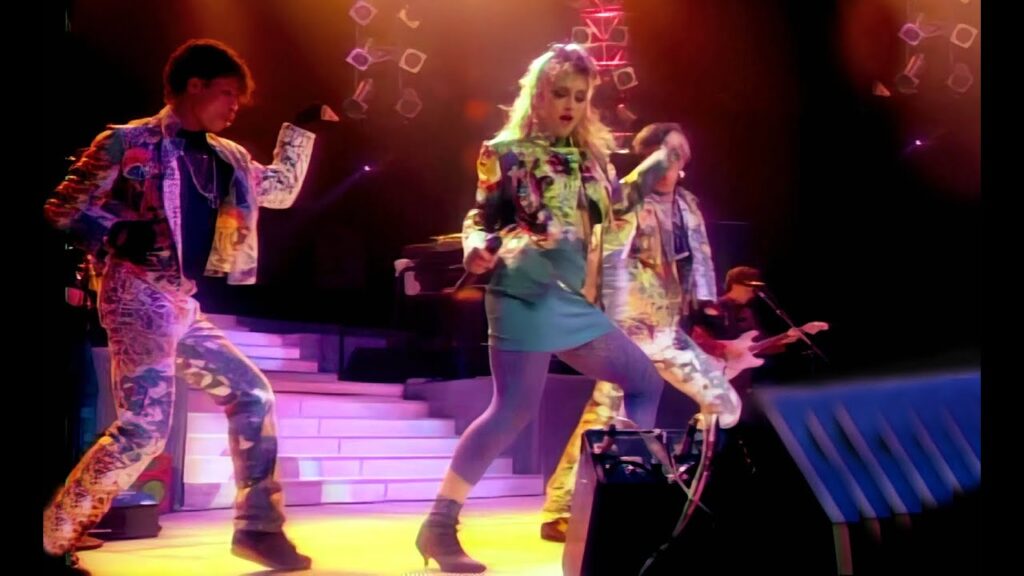
Released in September 1983, “Holiday” was the song that introduced Madonna to much of the world and launched one of the most extraordinary careers in popular music history. While her debut single, “Everybody,” had earned attention in dance clubs, it was “Holiday” that became her first major international hit, proving she could connect with mainstream audiences as well as clubgoers. Built around an irresistible groove, uplifting lyrics, and infectious energy, the song remains one of the defining dance-pop records of the 1980s and one of Madonna’s most enduring classics.
In 1983, Madonna Louise Ciccone was still an unknown artist trying to establish herself in New York City’s competitive music scene. After moving from Michigan with dreams of becoming a dancer, she worked odd jobs while performing with various bands before catching the attention of record executives through a series of dance demos. Her self-titled debut album showcased her confidence, charisma, and instinct for memorable pop hooks, but no one could have predicted just how rapidly she would become a global superstar.
Interestingly, Madonna did not write “Holiday.” The song was composed by Curtis Hudson and Lisa Stevens of the R&B group Pure Energy. Several artists reportedly passed on recording it before it reached Madonna. She immediately recognized its potential, transforming it into the breakout hit that would forever change her career.
From the opening synthesizer riff, “Holiday” radiates optimism. The production is bright and uncluttered, built around crisp drum programming, funky bass, rhythmic guitar, and shimmering keyboards. Rather than relying on dramatic changes or complex arrangements, the song succeeds through its joyful simplicity and relentless sense of momentum.
Producer John “Jellybean” Benitez played a crucial role in shaping the recording. One of New York’s most respected DJs and producers, Benitez understood how to blend dance-floor rhythms with pop accessibility. His production allows every element to complement the groove without becoming overwhelming, creating a sound that feels equally comfortable in clubs and on the radio.
Madonna’s vocal performance perfectly matches the song’s carefree spirit. At this stage of her career, she wasn’t trying to showcase vocal power or technical virtuosity. Instead, she sang with confidence, personality, and enthusiasm. Her playful delivery makes the listener believe every word, helping establish the approachable charm that would become one of her trademarks.
Lyrically, “Holiday” delivers a simple but timeless message. Rather than focusing on romance or heartbreak, it encourages people to set aside their differences, celebrate life, and enjoy a break from everyday stress. The idea that everyone deserves a holiday resonated across cultures and generations, giving the song universal appeal. Its optimistic message remains just as relevant today as it was more than forty years ago.
The arrangement benefits from subtle layers that reveal themselves with repeated listening. Bright synthesizers provide melodic hooks, Nile Rodgers-inspired rhythm guitar adds a touch of funk, and the rhythm section keeps everything moving with effortless precision. The chorus arrives naturally, lifting the song without sacrificing its relaxed groove.
Commercially, “Holiday” marked Madonna’s first major breakthrough. While its initial chart performance in the United States was modest, it gradually gained momentum through heavy club play and radio exposure. It eventually reached the Billboard Hot 100’s Top 20 and became a Top 10 hit in numerous countries, including the United Kingdom when it was re-released. More importantly, the song established Madonna as a major new talent and paved the way for the remarkable success that followed.
The accompanying music videos reflected Madonna’s emerging image as a confident, energetic performer. Rather than relying on elaborate storylines, the clips focused on dancing and performance, showcasing the charisma that quickly made her an MTV favorite. At a time when music television was becoming increasingly influential, Madonna understood better than almost anyone how visual presentation could enhance a song’s popularity.
One of the most remarkable aspects of “Holiday” is how well it has aged. Many early-1980s dance tracks sound dated because of their production techniques, but “Holiday” continues to feel fresh thanks to its strong melody and uncluttered arrangement. Its blend of electronic instrumentation with funk influences gives it a timeless quality that transcends its era.
The song also became a cornerstone of Madonna’s live performances. Since the early days of her career, “Holiday” has appeared in numerous tours, often serving as a celebratory finale. She has continually reinvented the arrangement, incorporating new musical styles while preserving the joyful spirit that made the original recording so beloved.
Looking back, “Holiday” represents far more than Madonna’s first major hit. It introduced many of the qualities that would define her career: an instinct for unforgettable pop melodies, a willingness to embrace dance music without apology, and an uncanny ability to create songs that encourage participation and celebration.
It also demonstrated the changing landscape of pop music during the early 1980s. Dance music was becoming increasingly mainstream, and artists who could successfully bridge clubs and pop radio stood to reach enormous audiences. Madonna became the undisputed queen of that movement, and “Holiday” was the record that opened the door.
Today, the song remains a fixture on classic hits, 1980s, and dance music playlists around the world. It has been featured in countless films, television shows, sporting events, and celebrations, continuing to introduce new generations to Madonna’s earliest work.
More than forty years after its release, “Holiday” stands as one of the great feel-good songs in pop history. Its uplifting message, infectious groove, polished production, and Madonna’s irresistible performance transformed a relatively simple composition into an enduring classic. It remains a joyful reminder that sometimes the best songs don’t need complicated ideas—they simply need a great melody, a memorable rhythm, and the ability to make people smile.
This post has already been read 84 times!