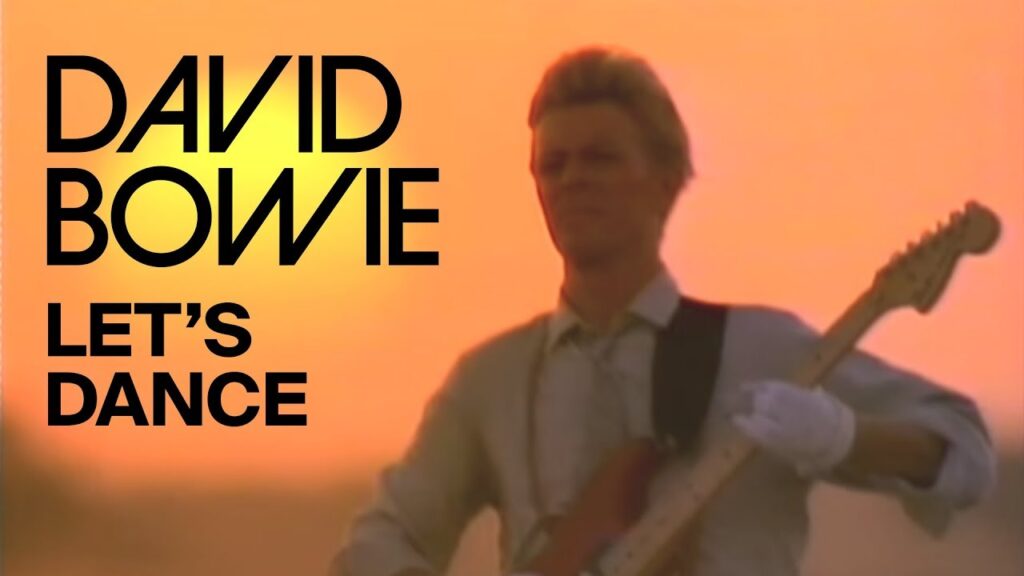
David Bowie spent his career refusing to stand still. Every few years he seemed to reinvent his sound, image, and artistic direction, constantly staying one step ahead of popular music. When “Let’s Dance” arrived in 1983, it represented yet another remarkable transformation. Released as the title track and lead single from the album Let’s Dance, the song combined Bowie’s adventurous songwriting with danceable rhythms, polished production, and a blistering guitar performance from a then-relatively unknown Stevie Ray Vaughan.
The result was an international smash that introduced Bowie to an entirely new generation of listeners. While longtime fans appreciated his willingness to evolve, younger audiences discovered an artist capable of blending art rock, pop, funk, and dance music into something effortlessly stylish.
More than forty years later, “Let’s Dance” remains one of Bowie’s signature recordings and one of the defining songs of the 1980s.
Reinventing Himself Once Again
By the early 1980s, David Bowie had already built one of the most fascinating careers in rock history.
He had explored glam rock, soul, electronic experimentation, avant-garde music, and New Wave, proving that he was never interested in repeating himself.
For Let’s Dance, Bowie teamed with legendary producer Nile Rodgers, whose work with Chic had helped define modern funk and dance music.
Rodgers encouraged Bowie to simplify his songwriting without sacrificing sophistication.
The collaboration proved to be inspired.
Together, they created an album that balanced commercial appeal with artistic ambition.
Nile Rodgers’ Signature Groove
One of the defining features of “Let’s Dance” is its irresistible rhythm.
Rodgers built the song around crisp guitar work, tight percussion, and an infectious groove that immediately invites movement. Every instrument feels perfectly placed, allowing the arrangement to remain spacious while maintaining tremendous energy.
Unlike many heavily produced recordings of the era, nothing feels excessive.
The groove does most of the work.
Everything else serves the rhythm.
That understated confidence has helped the song remain fresh decades after its release.
David Bowie’s Charismatic Vocal
Bowie delivers one of the smoothest performances of his career.
His voice is relaxed, confident, and effortlessly cool, perfectly matching the sophisticated atmosphere of the recording. Rather than overwhelming the arrangement, he allows the melody to unfold naturally, drawing listeners into the song with understated charisma.
His phrasing feels conversational.
His timing is impeccable.
Every note carries the unmistakable confidence that made Bowie one of rock’s greatest frontmen.
It’s a performance built on style rather than excess.
Stevie Ray Vaughan’s Explosive Guitar
While much of “Let’s Dance” is driven by funk rhythms and polished production, Stevie Ray Vaughan’s guitar work provides the song’s fiery edge.
Still largely unknown outside blues circles when the album was recorded, Vaughan delivers solos that contrast beautifully with the sleek groove underneath.
His expressive playing injects raw emotion into an otherwise polished production.
The result is one of the most memorable guitar performances of the decade.
It also introduced millions of listeners to one of blues-rock’s greatest talents.
More Than an Invitation to Dance
Despite its upbeat title, “Let’s Dance” carries greater emotional depth than many casual listeners realize.
The song explores themes of connection, escape, and embracing the present moment despite life’s uncertainties. Bowie invites listeners to leave behind everyday worries and lose themselves in music, even if only for a little while.
That sense of temporary freedom gives the song lasting emotional resonance.
It’s joyful without being shallow.
Optimistic without feeling naïve.
Those qualities help explain its enduring popularity.
A Worldwide Smash Hit
Released in 1983, “Let’s Dance” quickly became the biggest commercial success of David Bowie’s remarkable career.
The single reached No. 1 in the United States, the United Kingdom, Canada, Australia, and numerous other countries, while the album itself became one of the best-selling releases of the decade.
The success dramatically expanded Bowie’s audience, turning an already respected artist into one of the world’s biggest pop stars.
Few musicians have successfully reinvented themselves on such a massive scale.
A Powerful Music Video
The music video for “Let’s Dance” further strengthened the song’s impact.
Filmed in Australia, it combined striking imagery with thoughtful social commentary, exploring issues surrounding Indigenous Australians while contrasting wealth and poverty against the backdrop of an otherwise celebratory song.
Rather than serving as simple promotional material, the video reflected Bowie’s long-standing interest in using visual media as another form of artistic expression.
Its heavy MTV rotation introduced millions of viewers to both the song and its deeper themes.
A Lasting Influence
“Let’s Dance” helped shape the sound of mainstream pop throughout the 1980s.
Its blend of rock, funk, dance music, and polished production inspired countless artists seeking to bridge genres without losing their identity.
The song remains a staple of classic rock radio, dance playlists, sporting events, and live performances, while continuing to introduce younger audiences to Bowie’s extraordinary catalog.
Its groove remains irresistible.
Its chorus remains unforgettable.
Its style remains unmatched.
Final Thoughts
“Let’s Dance” stands among David Bowie’s greatest achievements because it demonstrates his remarkable ability to evolve without losing the qualities that made him unique. The combination of Nile Rodgers’ impeccable production, Stevie Ray Vaughan’s electrifying guitar work, and Bowie’s charismatic vocal created one of the defining recordings of the 1980s.
Its commercial success brought Bowie to an even larger audience, but its true legacy lies in its effortless fusion of artistic sophistication and mainstream appeal. The song proves that intelligent songwriting, exceptional musicianship, and irresistible rhythm can coexist beautifully.
Many artists spend their careers chasing reinvention.
David Bowie mastered it.
“Let’s Dance” remains a shining example of his fearless creativity and one of the greatest dance-rock songs ever recorded.
This post has already been read 85 times!