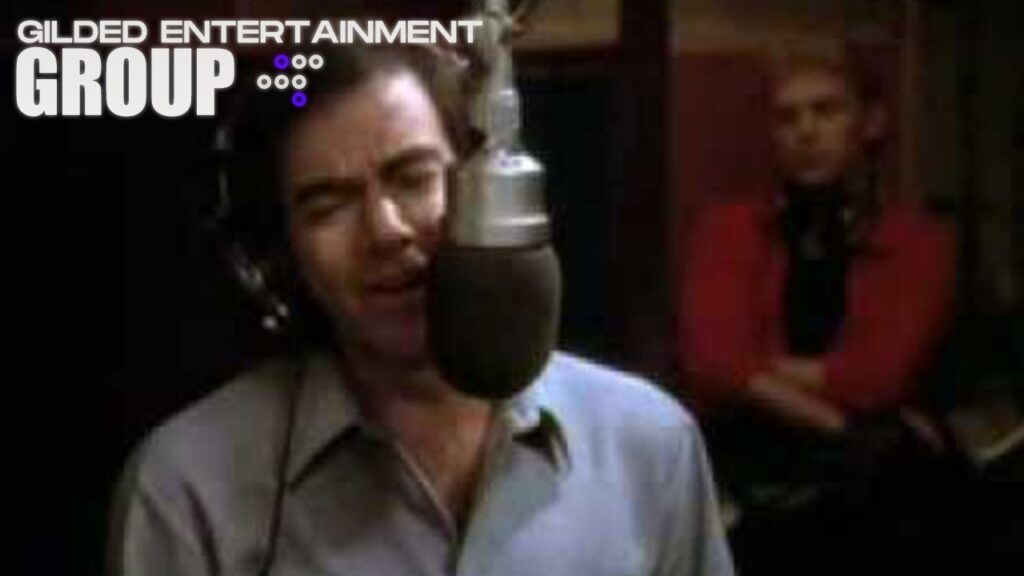
The Heartbreaking Ballad That Became One of Neil Diamond’s Greatest Performances
Released in 1980 as the second single from the soundtrack to The Jazz Singer, “Love on the Rocks” stands among the most emotionally powerful recordings of Neil Diamond’s career. Built around a soaring melody, deeply personal lyrics, and one of Diamond’s finest vocal performances, the song became an international hit, reaching No. 2 on the Billboard Hot 100 and No. 1 on the Adult Contemporary chart.
While The Jazz Singer received mixed reviews as a film, its soundtrack produced several of Diamond’s most enduring songs. Among them, “Love on the Rocks” remains the emotional centerpiece, capturing the pain of a relationship falling apart with honesty and remarkable restraint. It has since become one of his signature concert performances and one of the defining adult contemporary ballads of the early 1980s.
More than four decades later, the song continues to resonate with anyone who has experienced heartbreak.
A Career at Its Peak
By 1980, Neil Diamond had already established himself as one of the most successful singer-songwriters in popular music. Hits like “Sweet Caroline,” “Cracklin’ Rosie,” “Song Sung Blue,” and “You Don’t Bring Me Flowers” had made him one of the biggest recording artists in the world.
For The Jazz Singer, Diamond not only starred in the film but also wrote much of its music.
Although opinions about the movie varied, nearly everyone agreed on one point—the soundtrack was outstanding.
“Love on the Rocks,” written by Neil Diamond with Gilbert Bécaud, became one of the album’s most memorable moments and one of the strongest singles of his entire career.
Songwriting
“Love on the Rocks” examines the loneliness and disappointment that accompany a relationship coming to an end.
Rather than assigning blame, the lyrics focus on emotional emptiness and the realization that love has slowly disappeared.
The title itself is a clever double meaning.
It refers both to a drink served “on the rocks” and to a romance that has reached troubled waters.
That simple phrase immediately establishes the mood before a single verse has been sung.
Diamond’s writing avoids excessive melodrama.
Instead, he expresses heartbreak through honest observations that feel deeply personal while remaining universally relatable.
The result is a song that listeners continue to connect with decades after its release.
Neil Diamond’s Performance
Neil Diamond delivers one of the greatest vocal performances of his remarkable career.
He begins quietly, almost conversationally, before gradually increasing the emotional intensity as the song unfolds.
By the final chorus, his voice is filled with passion, frustration, and vulnerability.
Despite the dramatic build, Diamond never loses control.
Every phrase feels intentional.
His ability to balance raw emotion with vocal precision is one of the reasons the recording has remained so powerful over the years.
Few singers communicate heartbreak with greater sincerity.
Production
The production perfectly complements the song’s emotional journey.
The arrangement features:
- Expressive piano
- Warm acoustic guitar
- Rich orchestral strings
- Gentle percussion
- Subtle backing vocals
- Dynamic crescendos
Rather than overwhelming the listener, the instrumentation gradually expands alongside Diamond’s vocal performance.
The orchestra enhances the drama without becoming excessive, allowing the emotion to remain authentic.
The recording sounds polished yet timeless.
Chart Success
“Love on the Rocks” became one of Neil Diamond’s biggest hits.
The song reached:
- No. 2 on the Billboard Hot 100
- No. 1 on the Adult Contemporary chart
- Top 10 in Canada
- Strong international chart success
Its popularity helped drive soundtrack sales and further cemented Diamond’s reputation as one of the premier balladeers of his generation.
It also became one of the highlights of his live concerts, where audiences enthusiastically sang along to every chorus.
Why It Still Resonates
Honest Emotion
The lyrics avoid clichés by focusing on genuine feelings of disappointment and loss.
That sincerity gives the song lasting power.
A Magnificent Vocal
Diamond’s gradual emotional build remains one of the finest vocal performances of his career.
Timeless Melody
The melody perfectly complements the emotional weight of the lyrics.
It’s memorable without ever feeling forced.
Elegant Production
The tasteful orchestration enhances the song rather than overshadowing it.
The recording has aged remarkably well.
Cultural Impact
“Love on the Rocks” quickly became one of the defining heartbreak songs of the early 1980s.
Its universal themes have kept it in regular rotation on adult contemporary and classic hits radio for decades.
The song has appeared in films, television shows, and live performances, often serving as shorthand for romantic disappointment.
Unlike many breakup songs rooted in anger, “Love on the Rocks” succeeds because it focuses on sadness and acceptance instead.
That emotional maturity continues to resonate with listeners of every generation.
Legacy
Among Neil Diamond’s many classic recordings, “Love on the Rocks” occupies a special place.
While “Sweet Caroline” is synonymous with celebration and audience participation, this song represents Diamond at his most emotionally vulnerable.
It showcases his remarkable gifts as both a songwriter and performer, demonstrating that he could communicate heartbreak with the same conviction that he brought to his more uplifting material.
Today, it remains one of the essential recordings in his extraordinary catalog.
Final Thoughts
“Love on the Rocks” is a masterfully written and beautifully performed ballad that captures the pain of lost love with honesty, dignity, and unforgettable melody.
Neil Diamond’s passionate vocal performance, supported by elegant production and thoughtful songwriting, creates an emotional experience that continues to move listeners more than forty years after its release.
Whether heard alone through headphones or sung by thousands during one of Diamond’s concerts, the song remains one of the finest heartbreak ballads ever recorded.
This post has already been read 44 times!