Love Across the Iron Curtain: Why “Nikita” Remains One of Elton John’s Most Emotional Hits
Released in October 1985 as the second single from Ice on Fire, “Nikita” became one of Elton John’s biggest international hits of the decade. Built around a soaring melody, lush production, and an unusual lyrical concept, the song stood apart from much of the synth-pop dominating the charts at the time. While many love songs focus on relationships that have ended, “Nikita” tells the story of one that never has the opportunity to begin.
Written by longtime lyricist Bernie Taupin, the song imagines a Western traveler falling in love with a border guard stationed behind the Iron Curtain during the Cold War. That unique premise transformed what could have been a standard power ballad into a moving story about separation, politics, and hope. More than forty years after its release, “Nikita” remains one of Elton John’s defining songs of the 1980s and a favorite among fans.
The Background
By the mid-1980s, Elton John had already established himself as one of the greatest recording artists in popular music. After dominating the 1970s with classic albums and hit singles, he entered a new musical era filled with synthesizers, larger productions, and radio-friendly arrangements.
Ice on Fire, released in 1985, reunited Elton with producer Gus Dudgeon, who had helped shape many of his greatest albums. The record featured several successful singles, but “Nikita” quickly emerged as its standout track.
Bernie Taupin found inspiration in the political climate of the time. Europe remained divided, and crossing from East to West Germany was nearly impossible for ordinary citizens. Rather than writing about governments or ideology, Taupin focused on the human side of those divisions. The result was a song about longing, curiosity, and impossible romance.
Interestingly, the name “Nikita” caused some confusion because it is traditionally a masculine Russian name. Taupin has explained that he simply liked how the name sounded, and the ambiguity only added another layer to the song’s mystique.
Songwriting
One of the greatest strengths of “Nikita” is its restraint.
The lyrics never become overly dramatic or political. Instead, they paint the picture of someone who watches another person from afar, knowing that circumstances beyond either person’s control make a relationship impossible.
That idea gives the song a timeless quality. While the Cold War setting firmly places it in the 1980s, the emotions are universal. Everyone has experienced wanting something that feels forever out of reach.
Taupin wisely avoids explaining every detail. Listeners are left to imagine the conversations that never happened, the life that might have been, and the future that could never exist. Sometimes what remains unsaid carries more emotional weight than what is spoken.
The chorus is wonderfully simple. Elton repeats the title while the melody climbs higher, creating an emotional release that perfectly matches the story.
Elton John’s Performance
Elton John’s vocal performance is one of his finest from the decade.
He begins quietly, almost conversationally, allowing the verses to unfold naturally before opening up during the chorus. Rather than overpowering the song, he lets the emotion develop gradually.
His piano remains central to the arrangement, reminding listeners that even in the age of synthesizers, Elton’s greatest instrument was still the keyboard in front of him.
Backing vocals add tremendous depth without distracting from the lead. George Michael contributed harmony vocals to the recording, adding warmth that many listeners never realized was there.
The combination of Elton’s expressive voice and understated piano playing gives “Nikita” an emotional honesty that keeps it from becoming overly sentimental.
Production
Producer Gus Dudgeon crafted one of the most polished recordings of Elton John’s 1980s career.
The arrangement features:
- Layered synthesizers
- Bright electric piano textures
- Powerful gated drums
- Rich vocal harmonies
- Tasteful guitar accents
- Expansive orchestral-style keyboards
Despite the number of elements involved, the production never feels cluttered. Every instrument serves the story, building gradually until the chorus explodes with emotion.
Many recordings from the mid-1980s sound dated today because production trends often overshadowed the songwriting. “Nikita” avoids that problem because the melody remains strong enough to support every production choice.
The Music Video
The music video became nearly as famous as the song itself.
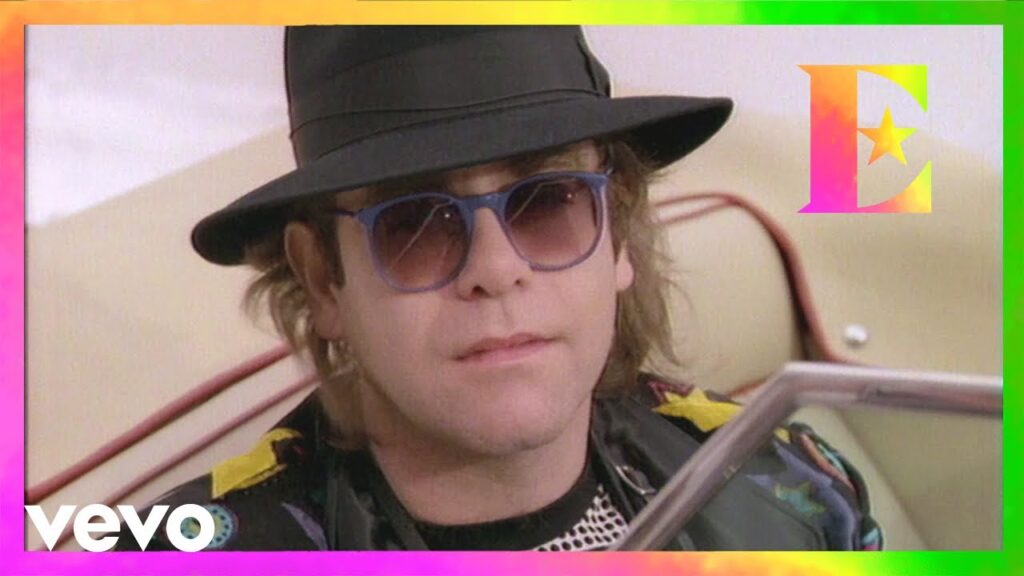
Set at a border crossing between East and West Germany, it tells the visual version of the lyrics as Elton watches Nikita from afar. Actress and model Anya Major portrays the title character, while Elton appears as the traveler whose affection can never become reality.
The video’s imagery—guards, checkpoints, fences, and divided families—captured the reality of Cold War Europe without turning the song into a political statement.
Looking back today, the video serves as an unexpected historical document. Younger audiences who never experienced the Berlin Wall or the Cold War can immediately understand the emotional stakes through its visuals.
Chart Success
“Nikita” became a worldwide hit.
It reached the Top 10 across much of Europe, performed strongly in North America, and topped the charts in several countries. The song expanded Elton John’s already enormous international audience and became one of his signature singles of the decade.
Its success demonstrated that audiences were still eager for sophisticated storytelling in mainstream pop music.
Why the Song Still Works
The Story Feels Real
Although most listeners have never stood at an international border during the Cold War, everyone understands the feeling of loving someone who seems impossible to reach.
The Chorus Is Unforgettable
Few artists wrote memorable choruses as consistently as Elton John. “Nikita” features one that listeners remember after a single play.
Politics Stay in the Background
The Cold War provides the setting rather than the message. By focusing on people instead of governments, the song has aged remarkably well.
Emotional Honesty
“Nikita” never becomes melodramatic. It succeeds because it tells a quiet story with genuine feeling.
Legacy
Among Elton John’s enormous catalog, “Nikita” occupies a special place.
It represents one of the strongest songs from his 1980s output while proving he could continue evolving without abandoning the melodic gifts that made him famous. Although Ice on Fire isn’t always ranked among his essential albums, “Nikita” has become larger than the record that introduced it.
The song remains a staple of greatest-hits compilations and continues to receive regular radio airplay around the world. It also appears frequently in concert setlists, where audiences still enthusiastically sing along to every chorus.
Perhaps its greatest achievement is that it has survived the end of the Cold War. The Berlin Wall fell only a few years after the song’s release, removing the political reality that inspired it. Yet the emotional core remains completely intact because its true subject was never politics—it was hope, longing, and the dream of overcoming impossible odds.
Final Thoughts
“Nikita” is a reminder that great songwriting can transform current events into timeless art. Bernie Taupin took one of the defining political realities of the twentieth century and turned it into an intimate love story, while Elton John delivered one of his most heartfelt vocal performances of the decade.
Its combination of memorable melodies, cinematic production, and emotional storytelling has allowed it to outlive many bigger hits from the era. Whether heard as a nostalgic 1980s classic or discovered for the first time today, “Nikita” continues to resonate because it speaks to something universal: the desire to connect with someone, even when the world seems determined to keep you apart.
This post has already been read 72 times!