The Song That Reinvented Olivia Newton-John and Defined a New Era of Pop
Released in September 1981, “Physical” didn’t just become Olivia Newton-John’s biggest hit—it completely transformed her public image. After spending much of the 1970s as the wholesome country-pop sweetheart behind songs like “I Honestly Love You” and starring as Sandy in Grease, Newton-John shocked audiences with a song that was flirtatious, playful, and far more provocative than anything she had recorded before.
The gamble paid off spectacularly. “Physical” became one of the biggest hits of the entire decade, spending an astonishing ten consecutive weeks at No. 1 on the Billboard Hot 100. It was Billboard’s biggest single of 1982, despite being released the previous year, and remains one of the defining pop songs of the early MTV era.
More than four decades later, “Physical” continues to be remembered for its irresistible hook, groundbreaking music video, and the moment it proved Olivia Newton-John was much more than the girl next door.
A Bold New Direction
Following the massive success of Grease in 1978, Olivia Newton-John found herself at a crossroads. While audiences still loved her soft pop ballads, musical tastes were changing. Rock, disco, and new wave were dominating the charts, and artists increasingly needed to reinvent themselves to remain relevant.
Songwriters Steve Kipner and Terry Shaddick originally envisioned “Physical” for British singer Rod Stewart. When that didn’t happen, the song eventually made its way to Newton-John. At first, she was hesitant.
The lyrics were undeniably suggestive, especially compared to the clean-cut image she had cultivated throughout the previous decade. She reportedly worried about how longtime fans would react and considered passing on the song altogether.
Fortunately, she decided to take the risk.
That decision changed her career forever.
Songwriting
One of the reasons “Physical” became so successful is that it walks a careful line between playful and provocative.
While the lyrics clearly push beyond innocent romance, they never become explicit. Instead, they rely on implication, humor, and clever phrasing, allowing listeners to interpret the song however they wished.
In 1981, that approach generated just enough controversy to attract attention without crossing into territory that would make the song unacceptable for mainstream radio.
The chorus is brilliantly simple. Built around repetition and a steadily building melody, it becomes impossible not to sing along after hearing it only once.
Unlike many dance hits of the era, “Physical” also contains a strong melodic structure, giving it lasting appeal beyond its initial shock value.
Olivia’s Performance
Olivia Newton-John delivers one of the most confident performances of her career.
Her vocals remain smooth and polished, but there’s a new sense of attitude underneath the sweetness that longtime fans hadn’t heard before. Rather than trying to sound aggressive, she embraces confidence and playfulness, making the song feel flirtatious instead of confrontational.
That balance is one of the recording’s greatest strengths.
Had the vocals been more forceful, the song might have felt overly provocative. Had they remained too innocent, the lyrics wouldn’t have carried the same impact.
Instead, Newton-John found exactly the right tone.
Her performance allows the song to feel fun rather than scandalous.
Production
Producer John Farrar crafted a recording that perfectly captured the transition from late-1970s pop into the slick sound of the early 1980s.
Key elements include:
- Bright synthesizers
- Driving electric guitar
- Tight rhythm section
- Punchy drums
- Layered backing vocals
- Crystal-clear production
The arrangement is energetic without becoming cluttered.
Unlike many early-’80s recordings overloaded with synthesizers, “Physical” maintains a strong balance between electronic and traditional instrumentation. The groove remains danceable while allowing Olivia’s vocals to stay front and center.
The production still sounds remarkably fresh today.
The Revolutionary Music Video
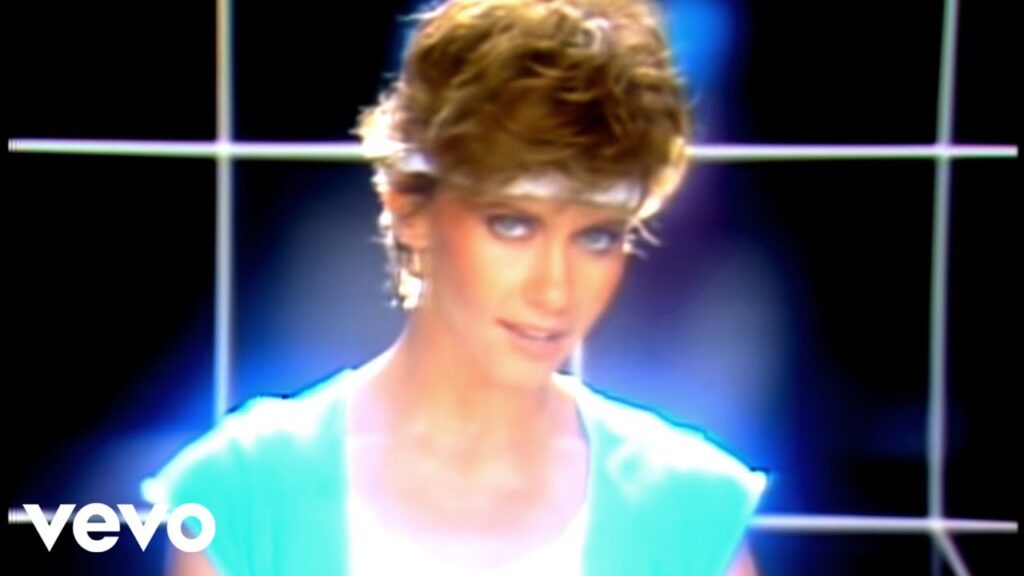
If the song made headlines, the music video made history.
Rather than focusing on romance, the video cleverly leaned into the fitness craze that was sweeping America. Set in a gym, it follows Olivia attempting to motivate an unfit group of men through increasingly energetic workouts.
The story takes an unexpected comedic turn as the formerly awkward participants transform into muscular athletes—only to reveal that many of them are more interested in one another than in Olivia herself.
The humorous ending softened the song’s suggestive reputation while making the video memorable for reasons beyond its lyrics.
At a time when MTV was rapidly becoming one of the music industry’s most powerful promotional tools, “Physical” became one of the network’s signature early videos.
It won a Grammy for Video of the Year and helped establish the music video as an essential part of promoting pop singles.
Chart Domination
Few songs have enjoyed the commercial success achieved by “Physical.”
The single spent ten consecutive weeks at No. 1 on the Billboard Hot 100, making it the longest-running chart-topper of the 1980s up to that point.
It also reached the Top 10 across much of Europe, Canada, Australia, and New Zealand while becoming one of the best-selling singles of Olivia Newton-John’s career.
Billboard ultimately named it the No. 1 song of 1982.
That level of success transformed “Physical” from simply another hit into a genuine cultural phenomenon.
Why It Became a Classic
A Perfect Reinvention
Artists often struggle when attempting to change their public image.
Olivia Newton-John managed to evolve without abandoning the warmth and likability that made audiences fall in love with her in the first place.
The Hook
Few choruses from the early 1980s are as instantly recognizable.
Within seconds, nearly everyone knows exactly what song is playing.
Clever Marketing
The humorous fitness-themed video helped broaden the song’s appeal while keeping it in constant rotation on MTV.
Perfect Timing
America’s growing obsession with aerobics, exercise, and health clubs made the title “Physical” feel especially relevant, even for listeners who ignored the song’s romantic implications.
Cultural Impact
“Physical” helped reshape Olivia Newton-John’s legacy.
Instead of being remembered solely for Grease and her soft adult contemporary hits, she became one of the defining pop stars of the early MTV generation.
The song also influenced countless artists who realized that image, music videos, and carefully timed reinvention could dramatically extend a career.
Even today, references to “Physical” appear in television shows, films, sporting events, commercials, and fitness-related media.
The song has become shorthand for the aerobics craze that swept the early 1980s.
Legacy
Looking back, it’s remarkable how successfully “Physical” balanced commercial appeal with genuine artistic risk.
The song could easily have been dismissed as a gimmick, yet its memorable melody, polished production, and charismatic vocal performance elevated it far beyond novelty status.
For Olivia Newton-John, it represented the boldest moment of her recording career and demonstrated her willingness to evolve alongside changing musical trends.
Although she recorded many wonderful songs before and after it, “Physical” remains her signature recording.
It captures a unique moment when pop music, fashion, television, and fitness culture all collided to create one unforgettable hit.
Final Thoughts
“Physical” is far more than an early-’80s dance anthem. It is a masterclass in reinvention, proving that an artist can successfully reshape their public image without losing what made them popular in the first place.
Olivia Newton-John embraced a bold new direction with confidence, humor, and charm, while Steve Kipner, Terry Shaddick, and producer John Farrar created a recording that remains one of the most recognizable songs of the decade.
Whether remembered for its groundbreaking music video, its record-breaking chart run, or its endlessly catchy chorus, “Physical” continues to stand as one of the defining pop singles of the 1980s.
This post has already been read 41 times!