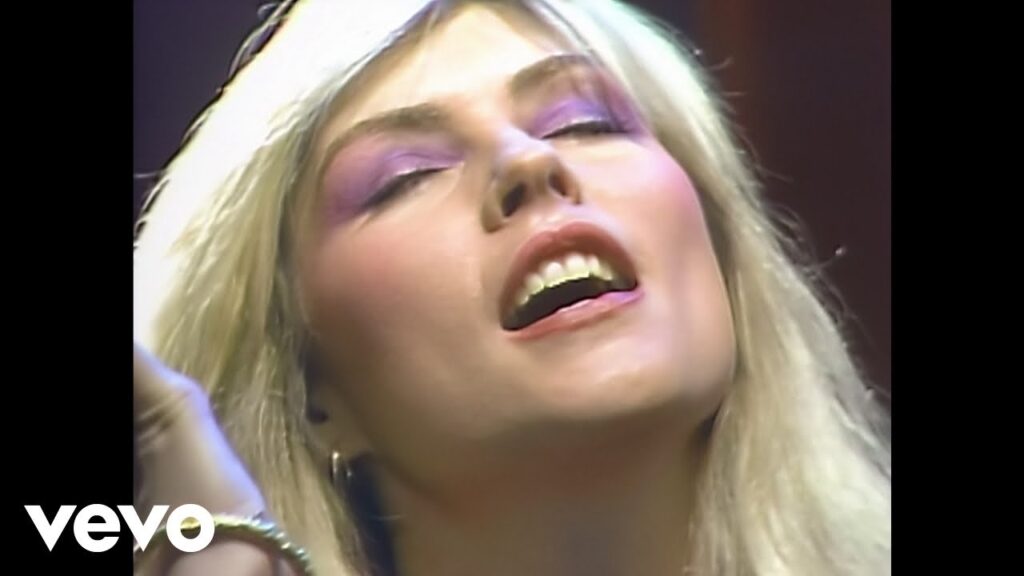
When “Rapture” hit radio in 1981, it sounded unlike anything else in the Top 40. Part disco, part funk, part new wave, part rock, and part hip-hop, the song ignored musical boundaries at a time when most artists stayed comfortably within a single genre. The result was one of the boldest and most influential singles of the early 1980s.
Performed by Blondie, “Rapture” became a commercial smash while making music history. It was the first song featuring rap vocals to reach No. 1 on the Billboard Hot 100, introducing millions of mainstream listeners to a style of music that was still largely confined to New York City’s clubs and neighborhoods.
Today, “Rapture” stands as more than just another Blondie hit. It represents a pivotal moment in popular music, helping bridge the gap between underground hip-hop culture and the worldwide audience it would eventually reach.
Blondie Was Never Easy to Define
By the late 1970s, Blondie had already established themselves as one of the most adventurous bands in rock.
Formed in New York City by vocalist Debbie Harry and guitarist Chris Stein, the group emerged from the legendary CBGB music scene alongside acts like Talking Heads, Television, and the Ramones. Unlike many of their peers, however, Blondie refused to be limited by one musical style.
They embraced punk.
They embraced pop.
They embraced reggae, disco, electronic music, and dance rhythms.
Each new album expanded their sound while maintaining the catchy songwriting that made them commercial favorites.
“Rapture” continued that tradition of fearless experimentation.
Discovering Hip-Hop Before Most of America
Long before hip-hop became a global phenomenon, Debbie Harry and Chris Stein were fascinated by the emerging culture developing in New York.
They attended club performances featuring pioneering DJs and rappers, watched breakdancers perform in parks, and admired the creativity unfolding in neighborhoods far removed from mainstream radio.
Unlike many established rock musicians, Blondie didn’t dismiss the new movement.
They embraced it.
Their admiration was genuine rather than opportunistic.
That respect shaped the creation of “Rapture.”
Rather than mocking or exploiting hip-hop, the band celebrated it.
A Musical Fusion
Musically, “Rapture” begins as an irresistibly smooth funk-influenced groove.
Producer Mike Chapman keeps the arrangement remarkably restrained.
A steady bass line anchors the song.
Clean guitar rhythms provide movement.
Subtle keyboards and percussion create atmosphere without overwhelming the melody.
Debbie Harry’s cool vocal delivery glides effortlessly over the rhythm.
Then, midway through the recording, the song takes an unexpected turn.
Harry transitions into a spoken rhythmic performance inspired by early rap.
For many pop listeners, it was unlike anything they had ever heard.
Debbie Harry’s Historic Rap
Debbie Harry’s rap remains one of the song’s most discussed features.
While she was not a hip-hop artist in the traditional sense, her performance acknowledged and celebrated a rapidly growing musical movement that had yet to receive widespread commercial exposure.
Her playful lyrics introduce colorful characters while referencing New York’s creative energy and imagination.
Importantly, the rap also includes mentions of pioneering hip-hop figures Fab Five Freddy and Grandmaster Flash, helping expose influential artists to audiences unfamiliar with the emerging culture.
Those references reflected Blondie’s genuine involvement with New York’s music scene rather than distant observation.
A Number One Milestone
Released as the lead single from the album Autoamerican, “Rapture” quickly climbed the charts.
In March 1981, it reached No. 1 on the Billboard Hot 100, becoming the first chart-topping single to feature rap vocals.
That achievement represented far more than a commercial success for Blondie.
It demonstrated that mainstream audiences were willing to embrace musical ideas previously considered too unconventional for pop radio.
The breakthrough helped pave the way for countless hip-hop artists who would dominate charts during the decades that followed.
An MTV Favorite
Although MTV wouldn’t launch until several months after the song first topped the charts, “Rapture” became an early staple of the network.
Its imaginative music video featured surreal imagery, colorful costumes, and appearances by graffiti artist and rapper Fab Five Freddy.
The video’s artistic approach perfectly matched Blondie’s adventurous musical identity.
Rather than relying on glamorous performance shots alone, it embraced creativity, humor, and visual experimentation.
The combination strengthened the song’s already considerable cultural impact.
More Than a Gimmick
One reason “Rapture” continues earning respect is that it never feels like a novelty.
The rap section wasn’t included merely to shock listeners.
It served as a natural extension of the band’s curiosity about new musical directions.
Everything surrounding it—the groove, Debbie Harry’s vocal performance, the arrangement, and the production—remains exceptionally strong.
Even listeners unfamiliar with its historical significance can appreciate the song simply because it’s so well crafted.
The innovation succeeds because it’s supported by excellent songwriting.
Influencing Future Generations
The impact of “Rapture” extends far beyond Blondie’s own career.
Countless artists have cited the song as an early example of genres successfully crossing traditional boundaries.
Its willingness to combine rock, funk, pop, disco, and rap anticipated the increasingly fluid musical landscape that defines modern popular music.
Today, collaborations between rappers and rock bands are commonplace.
In 1981, they were revolutionary.
Blondie helped demonstrate that musical experimentation could also become mainstream success.
A Signature Song for Blondie
Blondie produced numerous classics throughout their remarkable career, including “Heart of Glass,” “Call Me,” “One Way or Another,” and “The Tide Is High.”
Yet “Rapture” occupies a unique position within their catalog.
It represents the band at its most adventurous while remaining completely accessible.
Its catchy groove, memorable vocal performance, and groundbreaking rap sequence continue making it one of the most fascinating recordings of the early 1980s.
Few songs manage to entertain while simultaneously changing the direction of popular music.
“Rapture” accomplished both.
A Legacy That Still Resonates
More than forty years after its release, “Rapture” remains one of the most important crossover recordings in modern music history. It introduced millions of listeners to the possibilities of hip-hop while proving that great artists thrive by exploring unfamiliar territory rather than avoiding it.
Blondie never set out simply to follow trends. Instead, they embraced the sounds emerging around them and transformed those influences into something uniquely their own. Debbie Harry’s fearless performance, Chris Stein’s musical vision, and the band’s willingness to take risks resulted in a song that permanently expanded the boundaries of mainstream pop.
For Blondie, “Rapture” wasn’t merely another No. 1 hit. It became a landmark recording—one that opened doors, inspired generations of musicians, and demonstrated that the future of music often begins when artists dare to cross lines everyone else assumes are fixed.
This post has already been read 76 times!