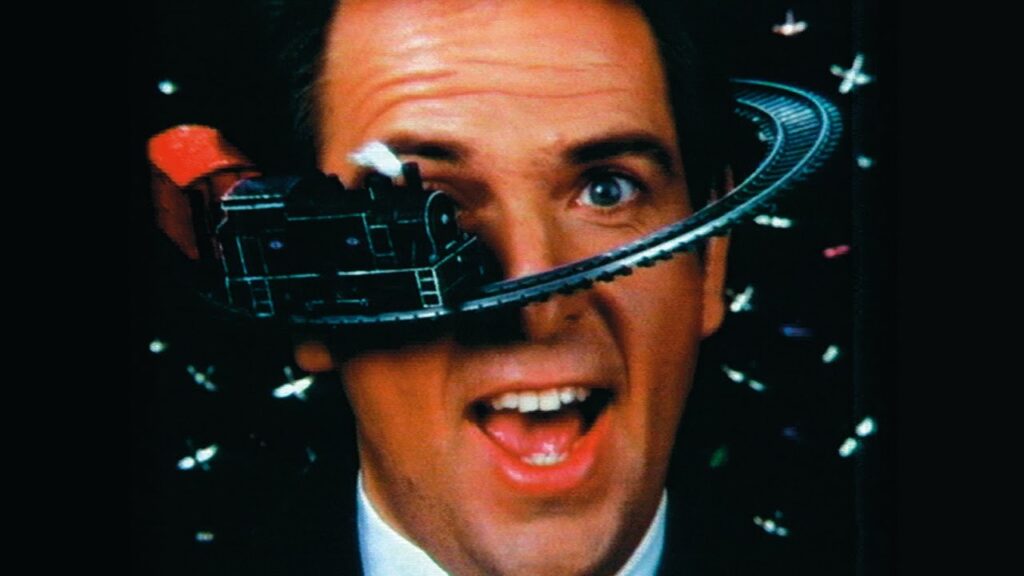
Released in April 1986 as the second single from So, “Sledgehammer” became the biggest commercial success of Peter Gabriel’s solo career and one of the most groundbreaking music videos ever created. Blending funk, soul, pop, and rock into an irresistibly danceable groove, the song reached No. 1 on the Billboard Hot 100, knocking Genesis—Gabriel’s former band—out of the top spot with their hit “Invisible Touch.” Featuring a driving horn section, infectious rhythm, and playful lyrics, “Sledgehammer” introduced Gabriel to a massive new audience while demonstrating that artistic ambition and mainstream success could go hand in hand.
More than forty years later, the song remains one of the defining recordings of the MTV era and a landmark achievement in both music and visual storytelling.
Reinvention Through So
Peter Gabriel had already earned enormous respect as both the original lead singer of Genesis and an adventurous solo artist.
Albums such as Melt and Security showcased his willingness to experiment with world music, electronic textures, and unconventional songwriting. While critics admired his work, his commercial success remained modest compared to many of his contemporaries.
That changed dramatically with So.
Released in 1986, the album struck a perfect balance between artistic sophistication and pop accessibility. “Sledgehammer” became its breakout hit and transformed Gabriel into an international superstar.
A Playful Double Meaning
On the surface, “Sledgehammer” is a joyful celebration of personal renewal and confidence.
Its lyrics describe someone eager to embrace change, overcome stagnation, and move forward with new energy. At the same time, Gabriel fills the song with playful double entendres and humorous metaphors that give it a flirtatious edge.
The clever writing allows the song to work on multiple levels.
Listeners can enjoy it simply as an upbeat dance track or appreciate its layered wordplay and themes of transformation.
That versatility has helped it remain engaging for decades.
An Effortlessly Charismatic Vocal
Peter Gabriel delivers one of the most spirited performances of his career.
His voice is relaxed, expressive, and filled with personality, moving effortlessly between soulful phrasing and playful enthusiasm. Rather than overwhelming the groove, his vocals become another rhythmic element within the arrangement.
Gabriel sounds like he’s enjoying every moment.
That sense of fun is contagious and gives the recording much of its lasting appeal.
Inspired by Classic Soul
Produced by Daniel Lanois and Peter Gabriel, “Sledgehammer” draws heavily from the sounds of 1960s soul and R&B while incorporating contemporary production techniques.
Punchy horns, funky bass, crisp drums, Hammond organ, layered percussion, and tasteful synthesizers combine to create one of the richest arrangements of the decade. Gabriel even recruited members of the legendary Memphis Horns to help capture an authentic soul feel.
Every instrument serves the groove.
The result is both nostalgic and unmistakably modern.
A Career-Defining Hit
“Sledgehammer” became the biggest commercial success of Gabriel’s career.
The single reached No. 1 on the Billboard Hot 100, topped charts around the world, and helped So become a multi-platinum album. It introduced Gabriel to millions of listeners who had never followed his earlier progressive rock or experimental recordings.
The song demonstrated that thoughtful musicianship and chart success could coexist.
It remains his signature recording.
The Music Video That Changed MTV
If the song made “Sledgehammer” a hit, the music video made it a phenomenon.
Directed by Stephen R. Johnson and created with Aardman Animations and the Brothers Quay, the groundbreaking video combined stop-motion animation, clay animation, pixilation, and practical visual effects in ways television audiences had never seen before. Gabriel famously endured hours of filming while lying beneath a sheet of glass so individual animation frames could be captured.
The result was extraordinary.
The video won a record-setting nine MTV Video Music Awards in 1987 and has frequently been cited as one of the greatest music videos ever made.
Its influence on visual storytelling remains enormous.
Why It Still Feels Fresh
“Sledgehammer” has aged remarkably well because it avoids chasing musical trends.
Instead, Gabriel built the song around timeless funk grooves, soulful instrumentation, and unforgettable melodies. The production still sounds vibrant, while the rhythm remains impossible to resist.
The video’s creativity also continues to impress new generations.
Together, the music and visuals created one of pop culture’s most complete artistic statements.
A Perfect Balance of Art and Pop
Many artists struggle to satisfy both critics and mainstream audiences.
“Sledgehammer” accomplished exactly that.
It retained Peter Gabriel’s adventurous spirit while delivering one of the catchiest songs of the decade. The recording demonstrated that innovation doesn’t require sacrificing accessibility, and accessibility doesn’t require abandoning creativity.
That achievement helped redefine expectations for sophisticated pop music.
Legacy
“Sledgehammer” stands as Peter Gabriel’s greatest commercial achievement and one of the defining songs of the 1980s. Its infectious groove, soulful production, playful lyrics, and groundbreaking music video combined to create a cultural phenomenon that continues to inspire musicians and filmmakers alike.
The song’s chart-topping success, record-breaking MTV recognition, and enduring popularity have secured its place among the essential classics of the MTV generation. More importantly, it proved that an artist known for experimentation could embrace mainstream success without compromising originality or artistic integrity.
More than forty years after reaching No. 1, “Sledgehammer” remains every bit as inventive, joyful, and exhilarating as the day it was released. Funky, imaginative, and endlessly entertaining, it stands as one of Peter Gabriel’s finest accomplishments and one of the greatest pop recordings ever made.
This post has already been read 88 times!